The Holsteiner horse is one of the most respected sport horses on the planet. Bred in northern Germany for centuries, it has moved from farm work and war to the top of international show jumping. This guide covers where the breed came from, what it looks like, how it behaves, and what it needs to stay healthy.
Table of Contents
What Is a Holsteiner Horse?
The Holsteiner is a German warmblood from the Schleswig-Holstein region, the narrow strip of land between the North Sea and the Baltic Sea. It is widely considered the oldest warmblood breed, with roots in the 13th century. The official breed registry is the Holsteiner Verband, and the American Holsteiner Horse Association serves as its North American breeding district.
The breeding population is relatively small, yet the Holsteiner consistently produces top performers in show jumping, dressage, eventing, show hunters and combined driving.
History of the Holsteiner Horse
Monastery Beginnings
The breed's story starts in the marshlands along the Elbe River. In the early 13th century, Count Gerhard I granted the Uetersen monastery grazing rights for its horses. The monks kept careful records and bred the small native marsh horses into larger, stronger animals. These horses worked the heavy, wet soil and carried riders into battle.
From Warhorse to Carriage Horse
As armoured knights gave way to cavalry, breeders crossed their horses with Spanish and Neapolitan bloodlines to add agility. The Holsteiner became so sought after that King Philip II of Spain bought them for his royal stud in Córdoba. After the Protestant Reformation in the 16th century, breeding passed from the monks to local farmers and landowners.
Holsteiners also helped shape other breeds. In 1735, twelve black Holsteiner stallions were bought to establish the Celle State Stud, which laid the foundation for the Hanoverian.
In the 19th century, better roads and the arrival of the railway reduced the need for heavy coach horses. Breeders brought in Yorkshire Coach Horses and Cleveland Bays from Britain to create a more elegant carriage horse.
Reinvention After the Second World War
After the Second World War, tractors replaced horses on farms and the number of breeding mares fell sharply. Rather than let the breed fade away, the breeders' association bought its own stallions and set a new goal: a modern riding and sport horse.
Thoroughbred stallions such as Ladykiller xx, Cottage Son xx and Marlon xx added speed, refinement and a lighter frame. The Selle Français stallion Cor de la Bryère was perhaps the most important addition of all, bringing jumping technique, elasticity and scope. His influence is still visible in today's pedigrees. The association's stallions now stand at the central stud in Elmshorn, home to the famous riding and driving school.
Appearance and Physical Traits
Build and Conformation
The Holsteiner is a medium-framed, athletic horse with a harmonious build. Its best-known features are a high-set, arched neck and powerful hindquarters, which act as the engine behind its jumping ability. Most have a strong back, a sloping shoulder and sturdy legs.
Older Holsteiners had a pronounced Roman nose. Selective breeding has replaced this with a finer, expressive head and large, intelligent eyes.
Height Requirements
Holsteiners are tall horses. To be approved for breeding, stallions must stand at least 16 hands and mares at least 15.2 hands. Because of their size, they may not suit smaller or younger riders.
Coat Colours
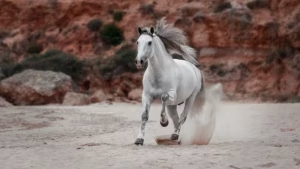
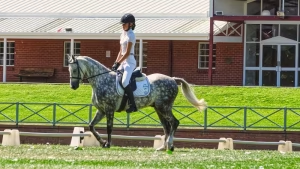
The breed comes in solid colours, including bay, black, brown, chestnut and grey. White markings are kept to a minimum. Horses with large white patches suggesting pinto patterning, or with leopard-spotting traits, are excluded from the registry.
Movement
Holsteiners move with round, elastic, ground-covering strides and strong impulsion from behind. Their canter is typically their best gait: light, balanced and powerful. Some still show the knee action of their coach-horse ancestors.
How to Identify a Holsteiner
The easiest way to spot a registered Holsteiner is the brand on its left hip, a crowned shield with the letter "H". Foals receive this brand when they are inspected for their papers.
Names give another clue. Many males have names starting with "C" or "L", a nod to the influential sire lines of Cor de la Bryère, Cottage Son xx and Ladykiller xx. Fillies are named by a letter assigned to their year of birth.
Holsteiner Temperament and Personality
Holsteiners are intelligent, willing and quick to learn. Many have strong nerves and stay composed under pressure in the show ring. This combination makes them reliable competition partners and pleasant horses to handle day to day.
That said, every Holsteiner is an individual. Some lines are known for a calm, uncomplicated nature, such as the descendants of Capitol I. Others are bolder and more sensitive, which suits professional riders better. When buying a Holsteiner, match the horse's temperament to your experience and goals rather than relying on the breed name alone.
What Is the Holsteiner Horse Used For?
Show Jumping
Jumping is the breed's greatest strength. Even an average Holsteiner tends to have power, scope and correct technique. Classic Touch won individual show jumping gold at the 1992 Barcelona Olympics, and the bay stallion Meteor became a legend under German rider Fritz Thiedemann.
Dressage
Top-level dressage Holsteiners are less common, but they do exist. Granat won individual gold at the 1976 Montreal Olympics, and Montevideo was part of West Germany's gold-medal dressage team in 1984.
Eventing
Holsteiners with Thoroughbred sires often have the speed and stamina eventing demands. Marius, a Holsteiner by Condrieu xx, won individual eventing gold at the 2008 Beijing Olympics.
Driving and Hunting
The breed has not lost touch with its carriage-horse past. In 1976, Emil Jung won the combined driving world championship with a team of four Holsteiners. In North America, Holsteiners are also popular show hunters, and their size and calm nature make them good hunting horses.
How Holsteiners Are Selected for Breeding
The Holsteiner Verband is known for strict breeding standards. Stallions must pass several inspections, where judges assess their conformation, movement and jumping ability, either loose or under a rider. They must then prove themselves through performance testing or competition before they receive a lifetime breeding licence. Mares are evaluated on type, topline, forehand, hindquarters and their walk, trot and canter.
Breeders also assign each mare family a stem number. This allows them to track the performance of female lines across generations, one reason the breed has kept its distinct character.
Caring for a Holsteiner Horse
General Health
Holsteiners are generally a healthy, hardy breed. Like all sport horses, those in heavy training or competition can develop injuries and lameness if they are overworked or don't get enough rest. Reducing stress during training and travel helps keep them sound.
Feeding
Holsteiners are easy keepers and can put on weight quickly. Base the diet on good-quality forage, and consider hay that is low in starch and sugar. Horses in hard work may need extra energy from feeds like oats or concentrates. Poor feeding can also lead to dental problems, so ask your vet or an equine nutritionist to help plan a diet suited to your horse's age and workload. Always provide fresh water and a salt lick.
Grooming and Hoof Care
Grooming is simple. Brush the coat several times a week, or daily if possible, using a curry comb, dandy brush, body brush and mane and tail brush. Pick out the hooves every day and check for cracks or abscesses. A farrier should trim and balance the hooves every six to eight weeks.
Housing and Company
A Holsteiner needs a roomy stable of roughly 3.7 by 4.3 metres, or a paddock with proper shelter such as an open barn or three-sided shed. These are social animals that do best in a settled group and with people they know. Keeping them isolated can cause real distress.
Lifespan
With good care, a Holsteiner can live for 20 to 30 years.
Frequently Asked Questions
How Much Does a Holsteiner Horse Cost?
Prices vary widely. A horse's age, training, competition record and bloodlines all affect its value. A young, untrained horse or gelding will usually cost far less than a proven competitor or a breeding stallion. Foals from famous show jumping lines, such as descendants of Landgraf I or Capitol I, command the highest prices.
Is the Holsteiner Horse Right for You?
The Holsteiner horse combines centuries of careful breeding with modern athleticism. If you want a talented jumper, a capable all-rounder or a strong, willing riding partner, this breed has a lot to offer. Choose an individual whose size and temperament match your riding level, and it can be a rewarding partner for decades.
Is a Holsteiner a warmblood?
Yes. The Holsteiner is a German warmblood and is widely considered the oldest warmblood breed, dating back to the 13th century. Over the years, breeders added Thoroughbred blood to make it lighter, faster and more athletic, while keeping the strength and stamina of its working ancestors.
What is the difference between a Holsteiner and a Hanoverian?
Both are German warmbloods that compete across several disciplines, but the Holsteiner comes from Schleswig-Holstein and the Hanoverian from Hanover. The Holsteiner is also the older of the two breeds. In fact, twelve black Holsteiner stallions helped found the Celle State Stud in 1735, which became the foundation of the Hanoverian breed.
Are Holsteiners good for beginners?
Some can be. Many Holsteiners are intelligent, willing and strong-nerved, which makes them easy to work with. However, temperament varies between bloodlines. Some are calm and uncomplicated, while others are sensitive and better suited to experienced riders. Their large size can also be a challenge for smaller riders, so a beginner should try the individual horse before buying and ideally get advice from a trainer.