The destrier was the most prized medieval warhorse of them all: the “Great Horse” that carried an armoured knight into battle and, above all, down the tilt of the tournament field. When most people picture a jousting horse, they imagine this animal, and much of what they picture is myth. The real destrier was not a lumbering giant but a compact, hot-blooded stallion bred for courage, balance and controlled aggression. This guide traces the jousting horse from the Norman knight’s mount to the baroque breeds ridden by re-enactors today, and sorts the history from the legend along the way.
What is a destrier?
A destrier was not a breed. It was a role, and the most expensive one a horse could hold in the medieval world. The word comes from the Latin dextrarius, meaning “right-handed”, because a squire led the warhorse with his right hand while riding his own mount. The knight rode the destrier only at the moment it mattered: the charge, the melee or the joust. Contemporary chroniclers called it the Great Horse, not because it was enormous, but because of its status and its price, which could match that of a small farm.
The destrier sat at the very top of the medieval horse hierarchy. It had to be strong enough to carry a rider in mail or plate, agile enough to turn and stop on command, and brave enough to gallop straight at another horse and a levelled lance without flinching. Most destriers were entire males, kept as a stallion for their fire and forwardness, though this made them notoriously difficult to handle off the field.
The medieval warhorse hierarchy: destrier, courser, charger and palfrey
Medieval writers did not classify horses by breed the way we do. They classified them by job. Understanding this hierarchy is the key to understanding the jousting horse and the knight’s horse more broadly.
- Destrier: the finest and costliest warhorse, reserved for the joust and the heavy cavalry charge. Powerful, collected and hot-tempered.
- Courser: a lighter, faster warhorse, cheaper than a destrier and often preferred for the open battlefield where speed and stamina mattered more than raw weight.
- Charger: a general term for any warhorse ridden in the charge. A charger might be a destrier or a courser depending on a knight’s means.
- Rouncey: an ordinary, all-purpose riding horse used by squires, men-at-arms and lighter cavalry.
- Palfrey: a smooth-gaited riding horse valued for long-distance comfort rather than combat. A good palfrey could still cost as much as a courser and was a status symbol for nobles and ladies.
The destrier and courser were the true fighting animals. For a fuller picture of how these types developed into the breeds we know now, see our guide to war horse breeds through history.
How big was a destrier?
This is where legend and evidence part company. Popular imagination, and a good deal of Victorian fiction, turned the destrier into a horse the size of a modern Shire horse. The archaeology tells a very different story. A major study of medieval horse bones by the University of Exeter’s Warhorse project found that most English warhorses stood well under 16 hands, and many were closer to 14 to 15 hands at the withers. By modern measures, that is the size of a large pony or a small riding horse.
What set the destrier apart was not height but build and temperament. Typical characteristics included:
- Height: roughly 14 to 15.2 hands, about 1.42 to 1.57 metres at the withers.
- Weight: an estimated 450 to 550 kilograms, muscular rather than massive.
- Build: a short, strong back, deep chest, powerful hindquarters and a proud, arched neck, similar in stamp to today’s baroque breeds.
- Temperament: bold, responsive and trainable to aggression, able to bite and strike on command.
In other words, the destrier was closer to a heavyweight Andalusian than to a draught horse. The true giants of the horse world, such as the record-setting largest horse ever recorded, came much later and were bred for the plough and the dray, not the lance.
A short history of the jousting horse
The jousting horse evolved alongside the tournament itself, changing as armour grew heavier and the sport moved from battlefield rehearsal to royal spectacle.
Norman origins and the early joust (1066 to 1200)
The mounted knight became the decisive force of Western European warfare after the Norman Conquest of 1066. Early tournaments, or melees, were chaotic mass mock-battles fought across open country, and they doubled as training for real war. The warhorse of this period was a robust, agile mount, prized more for endurance and courage than for size. There was as yet no barrier and no formal one-on-one joust.
The high medieval tilt (1200 to 1400)
By the thirteenth century the individual joust, a single pass between two riders with lances, had emerged as the showpiece of the tournament. Heavier mail and early plate demanded a stronger horse, and selective breeding across Europe produced increasingly powerful destriers. Spanish, Italian and Flemish bloodlines were especially sought after, and a top warhorse became one of a knight’s most valuable possessions.
The Tudor tilt yard (1400 to 1600)
The late medieval and Tudor period was the golden age of the joust. The tilt, a wooden barrier running down the centre of the field, was introduced in the fifteenth century to stop the horses colliding and to standardise the pass. Henry VIII was a passionate and skilled jouster until a serious fall in 1536. Purpose-built tilt yards, such as the one at Hampton Court, hosted lavish tournaments where the jousting horse was as much a symbol of prestige as a piece of sporting equipment.
Decline and revival (1600 to present)
Gunpowder ended the battlefield reign of the heavy cavalry lance, and the joust faded as a serious pursuit through the seventeenth century. It survived as pageantry and romantic revival, notably the ill-fated Eglinton Tournament of 1839. From the 1980s onward, competitive jousting returned in earnest, with modern knights training year-round and international tournaments reviving the sport as a genuine, and genuinely dangerous, athletic contest.
Breeds behind the medieval warhorse
Because the destrier was a type rather than a breed, no single modern horse is its direct descendant. Instead, several breeds carry the conformation and temperament that once defined the jousting horse.
Historical bloodlines
The Iberian and Flemish horses of the Middle Ages are the closest ancestors of the destrier. Their influence survives most clearly in the Andalusian and the closely related Lusitano of the Iberian Peninsula, and in the powerful, black Friesian of the Low Countries. These baroque breeds combine strength, a naturally collected way of going and the calm boldness that a warhorse needed.
Modern jousting and re-enactment horses
Today’s competitive jousters and historical re-enactors choose horses that can carry an armoured rider and hold a straight, brave line. Common choices include:
- Friesians and Andalusians: baroque breeds that look the part and have the temperament for close, noisy work.
- Draught crosses: Percheron, Shire and Clydesdale crosses that add substance without losing rideability.
- The Warlander: an Andalusian crossed with a Friesian, popular for its baroque presence.
- The Spanish-Norman: an Andalusian crossed with a Percheron, bred specifically to recreate the destrier stamp.
These heavier types share much with the heavy horse breeds developed for farm and haulage work, and with historic British warmbloods such as the Cleveland Bay. For the full sweep of martial breeds, our overview of war horse breeds through history is a useful companion piece.
Armour and tack of the jousting horse
A fully equipped warhorse wore its own armour, known as barding. In the tournament, this protection was both practical and a canvas for a knight’s heraldry. The main pieces were:
- Chanfron: plate protecting the horse’s face and forehead, often with a spike or crest.
- Criniere (crinet): articulated plates or mail guarding the neck.
- Peytral: armour covering the chest and shoulders, the area most exposed in a head-on pass.
- Croupiere (crupper): protection for the hindquarters.
- Flanchards: plates shielding the flanks and linking the front and rear armour.
- Caparison: a decorative cloth trapper displaying the knight’s colours and arms.
Full barding was heavy and expensive, so complete sets were reserved for the wealthiest knights and for grand tournaments. The saddle itself was built high at the front and back to lock the rider in place against the shock of impact. The Royal Armouries holds one of the finest collections of tournament armour in the world; you can explore it through the Royal Armouries.
The rules of the medieval joust
By the late medieval period the joust had become a structured contest with clear scoring, not a free-for-all. The essentials were:
- The pass: two riders galloped at each other along opposite sides of the tilt, lances couched, closing at a combined speed of around 50 miles per hour.
- The lance: typically 9 to 12 feet long. A joust of peace used a blunt, crown-shaped tip called a coronel; a joust of war used a sharpened head.
- Scoring: points were awarded for striking the opponent’s shield or helm, more for shattering the lance cleanly, and most of all for unhorsing the opponent.
- Fouls: striking the opposing horse was strictly forbidden, then as now, and heavily penalised.
The combined closing speed and the mass of horse, rider and armour made every pass genuinely dangerous, which was much of the appeal for spectators and competitors alike.
Training a jousting horse
Then and now, the hardest part of jousting is not the lance work but the horse. A jousting horse must gallop a dead-straight line towards a charging opponent, ignore a flapping banner, a shattering lance and a roaring crowd, and stop calmly at the end of the run. This runs against every prey-animal instinct.
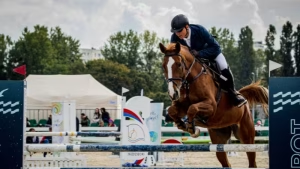
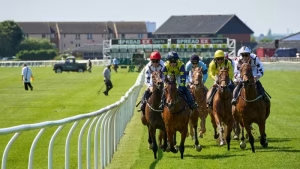
Modern trainers build this confidence gradually, desensitising the horse to noise, movement and contact over months or years. Many competitors favour a steady gelding over the fiery stallions of legend, precisely because temperament matters more than tradition. The groundwork echoes the discipline seen in other equestrian sports, from the precision of show jumping to the raw pace of horse racing.
Where to see jousting in the UK today
Britain is one of the best places in the world to watch live jousting, thanks to a strong re-enactment scene and a wealth of historic venues. English Heritage stages regular tournaments at castles such as Kenilworth, Pendennis and Bolsover through the summer; you can find dates on the English Heritage knights and jousts events calendar. Warwick Castle’s Knights of Middle England, the Knights of Royal England at Hever Castle, and displays at the Royal Armouries in Leeds all offer the chance to see a modern jousting horse at work. For a scholarly overview of the animal itself, Encyclopaedia Britannica’s entry on the destrier is a reliable starting point.
Frequently asked questions about the jousting horse
What breed of horse was a destrier?
None, strictly speaking. The destrier was a type of warhorse defined by its role, not a breed. Its closest modern relatives are baroque breeds such as the Andalusian, Lusitano and Friesian, which share its build and temperament.
How big was a medieval jousting horse?
Smaller than most people think. Archaeological research suggests most medieval warhorses stood around 14 to 15.2 hands, the size of a modern large pony or small riding horse, rather than the towering draught horse of legend. They were powerful and muscular for their height, not tall.
What is the difference between a destrier and a courser?
Both were warhorses, but the destrier was the heavier, more expensive and more prestigious mount, favoured for the joust and the heavy charge. The courser was lighter, faster and cheaper, often preferred on the open battlefield.
Were horses harmed in jousting?
Striking the opposing horse was a serious foul in the medieval joust and remains banned today. Modern jousting is governed by strict rules and welfare standards, and the horses are highly trained athletes rather than expendable equipment.
Can you still see jousting horses in action?
Yes. Competitive jousting was revived from the 1980s, and the UK hosts regular tournaments and displays at castles and heritage sites through English Heritage, the Royal Armouries and professional re-enactment teams.