Table of Contents
Desert Orchid — “Dessie” — is one of the most loved racehorses in British jump racing history. A striking flea-bitten grey with a bold front-running style, he won 34 of his 72 starts, defied repeated predictions that he would fail on soft ground and left-handed tracks, and filled grandstands wherever he ran. His 1989 Cheltenham Gold Cup, run in a blizzard on ground that should have beaten him, is still replayed every March as the definition of a horse’s heart. This is the story of the underdog who became a national treasure.
Desert Orchid at a Glance
- Foaled: 11 April 1979, in Leicestershire
- Sire: Grey Mirage · Dam: Flower Child (by Brother)
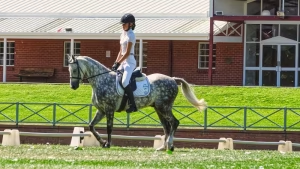
- Colour: Grey (flea-bitten as he aged)
- Owner: Richard Burridge and family
- Trainer: David Elsworth (Whitsbury Manor)
- Regular jockey: Simon Sherwood, later Richard Dunwoody
- Career: 72 starts, 34 wins, 11 placings, 1983–1991
- Total earnings: £654,066
- Major wins: Cheltenham Gold Cup (1989), King George VI Chase × 4 (1986, 1988, 1989, 1990), Irish Grand National (1990), Whitbread Gold Cup (1988), Tingle Creek Chase (1988, 1989)
Breeding and Early Years
Desert Orchid was bred at James Burridge’s small stud in Leicestershire. His sire, Grey Mirage, was an ordinary Flat horse, and his dam, Flower Child, was by Brother out of a mare who’d won nothing of note. On paper, the pedigree promised little. What the breeding didn’t show was the engine.
He was broken in as a four-year-old and sent to David Elsworth’s yard in Whitsbury. Elsworth was an unconventional trainer with a gift for bringing the best out of quirky horses — a perfect match for a big, excitable grey who would need careful handling. Even in early work, Dessie had two defining traits: he galloped himself into the ground if allowed, and he attacked his fences rather than waiting for them.
A Disastrous Debut
Desert Orchid’s first race, a novice hurdle at Kempton in January 1983, ended in a crashing fall at the final flight when he was out on his own and seemingly home. He was found unconscious on the track and feared dead. The photograph of him laid out on the turf circulated in the racing press, and several commentators wrote him off before he’d even started.
What happened over the next eight seasons turned that image inside out.
The Front-Running Style
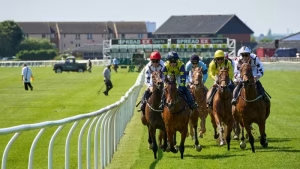
Dessie raced one way: from the front. He jumped boldly, set a gallop his rivals couldn’t live with, and dared them to come and catch him. Simon Sherwood, who rode him through his peak years, rarely tried to restrain him — it was easier and safer to let him stride on. That style made him magnetic to watch. You could follow Desert Orchid’s races without a commentary because he was almost always in the picture.
The trade-off was that tight, left-handed tracks with stiff fences close together didn’t suit him. He was widely believed to dislike Cheltenham, which would make his 1989 Gold Cup victory one of the great performances in jump racing.
The King George VI Chase Years
Kempton Park, a right-handed track with long finishing run, was made for Desert Orchid. He won the King George VI Chase a record four times: 1986, 1988, 1989, and 1990. No other horse has won it four times in the modern era. The 1986 King George was his breakthrough into the top rank — he beat a field that included Wayward Lad and Combs Ditch, and the racing public adopted him on the spot.
By the time he won the 1988 King George, beating the Grand National hero Rhyme ‘N’ Reason and Cavvies Clown, he was the most popular horse in training. Kempton on Boxing Day became a Desert Orchid festival.
The 1989 Cheltenham Gold Cup
This is the race that sealed his legend. On 16 March 1989, the Friday of the Cheltenham Festival, the Cotswolds were under a blizzard. Snow fell in horizontal sheets. The ground went from good to heavy to near-unraceable in the space of a morning, and the stewards nearly abandoned the meeting.
Desert Orchid hated left-handed Cheltenham and hated soft ground. His connections nearly withdrew him. His price drifted from 5–2 to 7–2 in the morning betting, and his jockey Simon Sherwood spent the walk to the start wondering if they were making a mistake.
They weren’t. In front from the second fence, Dessie jumped with his customary gusto, was headed by Yahoo at the top of the hill, clawed back an apparent defeat on the climb to the line, and won by a length and a half. The grandstands erupted. Channel 4’s Peter O’Sullevan called it “the most extraordinary performance I can ever remember seeing from a National Hunt horse.” It is still, in the view of many, the greatest Gold Cup ever run.
The Irish Grand National, 1990
A month after winning his fourth King George in 1989, Desert Orchid went to Fairyhouse to contest the 1990 Irish Grand National under a top weight of 12st. He was a 9-year-old carrying the sort of weight most horses would have folded under. He won by 12 lengths. It remains one of the most dominant top-weight Irish Grand National wins of the modern era.
Injuries, Retirement, and the End
Desert Orchid kept racing until he was 12. His final race, the King George VI Chase at Kempton on Boxing Day 1991, was a heavy fall three out. He got up, unhurt, and David Elsworth retired him on the spot. There was a standing ovation from the Kempton crowd that lasted several minutes.
He retired to the Burridge family home in Leicestershire and became a regular on the parade circuit — opening shows, leading Grand National winners at Aintree, and carrying the famous Cheltenham paint-splattered flea-bitten coat back through the parade ring every March. He stood as an unofficial ambassador for jump racing until his death on 13 November 2006, aged 27.
His ashes were buried at Kempton Park, and a bronze statue by Philip Blacker stands at the racecourse where he won four King Georges. A second statue stands at Cheltenham.
Why Desert Orchid Still Matters
Racehorses come and go. A handful become household names. Very few cross over into genuine popular culture. Desert Orchid did. He was the subject of BBC Sports Personality of the Year honours, a Blue Peter regular, a poll-topping “favourite racehorse of all time” in multiple surveys, and the inspiration for fan clubs that still meet to this day.
Part of that was timing — he arrived at the moment ITV Racing and Channel 4 Racing were reaching their largest audiences. Part of it was the look — a flea-bitten grey is the most visible horse on a muddy winter racecourse. But most of it was character. Dessie raced with a boldness and a visible relish that made the grandstands believe he wanted to win as much as they wanted him to.
Desert Orchid’s Legacy in British Racing
His impact goes beyond personal achievements:
- The Desert Orchid Chase is now run at Kempton on Boxing Day, alongside the King George that he made his own
- Cheltenham’s Dessie statue is a meeting point for racegoers each March
- Grey Thoroughbreds gained popularity in jump racing — owners and the public both wanted the next Dessie. His success opened the door for later greys including One Man, Rooster Booster, and more recently, Al Boum Photo
- The front-running chaser became a viable style once more. For years the fashion was hold-up horses; Dessie made attacking racing popular again
His breeding — by a modest Flat sire out of a modest jumping mare — also reminded the industry that great chasers don’t need glamorous pedigrees. Heart and trainability often matter more than a page of stud-book black type.
Key Facts About Desert Orchid
- Highest Timeform rating: 187 — among the top handful of chasers ever assessed
- Won on every type of ground from firm to heavy, despite widespread belief that he needed good ground
- Won races at 10 different British racecourses
- Featured as the cover horse of the Timeform Chasers & Hurdlers annual three separate times
- His trainer, David Elsworth, was a rare dual-purpose handler — he won the 1988 Grand National with Rhyme ‘N’ Reason and later trained the top-class stayer Persian Punch, but never had another chaser to match Dessie
Frequently Asked Questions
How many Cheltenham Gold Cups did Desert Orchid win?
One — the 1989 Cheltenham Gold Cup. He ran in the Gold Cup four times in total and also finished third in 1988. His 1989 victory, in a snowstorm on very soft ground, is regarded as one of the greatest ever.
What colour was Desert Orchid?
Grey. Technically he was a flea-bitten grey — a greying pattern with fine dark hairs scattered through the white coat. The older he got, the more pronounced the pattern, which is why photographs from his later racing years show him with a distinctive speckled appearance.
Is Desert Orchid still alive?
No. He died on 13 November 2006, aged 27. His ashes were buried at Kempton Park, where statues of him stand today alongside a second bronze at Cheltenham.
Who owned Desert Orchid?
Richard Burridge, his father James Burridge, and Midge Burridge — a family syndicate from Leicestershire. Richard Burridge was a screenwriter by trade, and he wrote the definitive biography The Grey Horse.
Was Desert Orchid faster than Arkle?
Arkle‘s Timeform rating of 212 is the highest of any National Hunt horse ever. Desert Orchid’s best rating of 187 places him firmly in the top handful of chasers of the modern era, but he rates below Arkle on the Timeform scale. In terms of winning races that weren’t “supposed” to suit him, however, Dessie arguably has the more emotional record.
The Enduring Appeal of Dessie
Thirty-odd years on, Desert Orchid still draws a crowd. Clips of the 1989 Gold Cup and the Boxing Day King Georges play through every Cheltenham build-up and every Kempton Christmas preview. He was a horse whose personality transmitted itself through a television screen. You could see him enjoying himself — ears up, jumping with élan, seeing out every race as if it mattered to him personally.
For anyone new to British jump racing, Desert Orchid is a good place to start. Read Richard Burridge’s The Grey Horse, watch the ’89 Gold Cup on YouTube, and you’ll understand why the sport loved him — and why, when he died, the tributes ran across the front pages of national newspapers alongside the sports sections.
For more on the sport he graced, see our guides to British horse racing and the Thoroughbred breed. You may also enjoy the stories of fellow jump-racing icons Red Rum and Kauto Star. External authority: British Horseracing Authority.