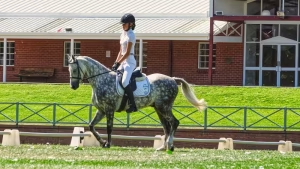
The Irish Sport Horse (ISH), also known as the Irish Hunter, is Ireland's most successful competition horse and one of the most respected sport horse breeds in the world. It was created by crossing the powerful native Irish Draught with the speed and refinement of the Thoroughbred, producing an athlete that blends stamina, scope, jumping ability and a famously level head. The result is a versatile all-rounder equally at home in the hunting field, the eventing arena and the show ring.
This breed profile covers the Irish Sport Horse in full: where it came from, how it differs from the Irish Draught, its physical characteristics and temperament, the disciplines it excels at, how the studbook works, and what to look for before you buy. Whether you are researching the breed out of interest or shortlisting your next horse, this guide brings the essentials together in one place.
Table of Contents
Table of Contents
What Is an Irish Sport Horse?
The Irish Sport Horse is a performance horse breed developed in Ireland, traditionally from crosses between the Irish Draught and the Thoroughbred. It is not a single fixed type so much as a proven recipe: draught substance, bone and sense on one side, blood, speed and athleticism on the other. That combination has made the Irish Sport Horse a byword for a brave, sound, trainable competition horse that can turn its hoof to almost anything.
Today the studbook is managed by Horse Sport Ireland, the national governing body for sport horse breeding. Modern Irish Sport Horses may also carry a measure of Continental Warmblood blood, which has broadened the breed's reach in the pure show-jumping and dressage arenas while the traditional type continues to dominate in eventing and the hunting field.
History and Origins of the Breed
The roots of the Irish Sport Horse reach back to the 18th and 19th centuries, when Irish landowners crossed the powerful local Irish Draught with imported Thoroughbreds. The aim was a horse that could carry weight all day across hunting country and jump the imposing banks, ditches and stone walls of the Irish landscape. The result was the original Irish Hunter: bold, sound, fast enough for the chase and brave enough for whatever stood in its way.
The type was formalised into a recognised studbook in the 1920s, and oversight passed through the Irish Department of Agriculture before moving to Horse Sport Ireland in the mid-2000s. HSI now governs the studbook, runs the grading inspections, and represents Irish breeders internationally through the World Breeding Federation for Sport Horses (WBFSH), where Ireland is a regular presence at or near the top of the eventing studbook rankings.
Irish Draught vs Irish Sport Horse
The two breeds are closely related but distinct, and the difference matters when you are buying. The Irish Draught is the foundation native breed; the Irish Sport Horse is its more athletic, sport-bred descendant.
| Feature | Irish Draught | Irish Sport Horse |
|---|---|---|
| Role | Foundation breed; farm, hunt and light draught origins | Modern competition and all-round riding horse |
| Breeding | Pure native draught bloodlines | Irish Draught x Thoroughbred (sometimes with Warmblood) |
| Build | Heavier, more substance, greater bone | Lighter, more refined, more blood |
| Best at | Hunting, hacking, foundation breeding | Eventing, show jumping, hunting, all-round sport |
| Typical temperament | Very calm, honest, willing | Bold and sensible, with more sharpness |
In short: the Irish Draught brings the substance, soundness and sense, while the Thoroughbred adds the speed, scope and athleticism. The Irish Sport Horse is the best of both.
Traditional vs Modern Irish Sport Horse
Within the breed there is a further useful distinction between the Traditional Irish Horse and the Modern Irish Sport Horse. The two share a registry but are different products of selective breeding.
- Traditional Irish Horse (TIH): A horse with a defined minimum of Irish Draught blood and no recent Continental Warmblood input. This is the classic ISH formula, prized for toughness and stamina.
- Modern Irish Sport Horse: Combines Irish Draught and/or Thoroughbred genetics with Continental Warmblood lines such as the Holsteiner or Selle Francais to add jumping technique and rideability. Most modern show-jumping ISHs sit in this category.
- Why it matters: Eventing buyers often lean towards the traditional type for its grit across the cross-country phase, while pure show-jumping buyers may prefer the modern type for a cleaner front end and extra scope. Choose according to the job you have in mind.
Physical Characteristics
The Irish Sport Horse is a substantial, athletic type built for jumping and galloping. There is natural variation between the heavier traditional horses and the lighter modern ones, but the following ranges are typical.
- Height: Roughly 15.2 to 17.0 hands (about 158 to 173 cm), with 16.0 to 16.2hh a common sweet spot for a riding horse.
- Weight: Around 550 to 650 kg depending on type and condition.
- Colour: Bay is the most common, but grey, chestnut, brown, black and roan all occur. White markings are common.
- Conformation: A sloping shoulder, deep girth, well-muscled hindquarters, good clean bone and correct limbs. The traditional type is generally stockier; the modern type lighter and more refined.
- Movement: An athletic, ground-covering trot, a balanced canter, and a powerful, careful jump with a quick front leg.
- Lifespan: Commonly into the mid-to-late twenties with good care, with many horses competing well into their teens.
Temperament
Temperament is arguably the Irish Sport Horse's greatest asset. The breed is widely described as sensible but bold: willing in its work, tolerant of a rider's mistakes, and generally unflustered by unfamiliar surroundings. Compared with many Continental Warmbloods, the typical ISH is less reactive and quicker to settle, which is one reason so many of them thrive in the pressured cross-country phase of eventing, where mental composure between fences counts for as much as physical scope.
The trade-off is that some Irish Sport Horses mature more slowly than their Warmblood counterparts. A young ISH may still be developing physically and mentally at an age when a Warmblood is already competing, so patience during the early years usually pays off with a long, sound competition career. As with any horse, individual temperament varies, so it is always worth assessing the horse in front of you rather than relying on breed generalisations. Our guide to understanding equine temperament explores this in more detail.
Disciplines the Irish Sport Horse Excels At
Versatility is the hallmark of the breed. The Irish Sport Horse is best known as an eventer, but it turns its hoof to a wide range of jobs.
- Eventing: The breed's flagship discipline. Ireland is consistently one of the strongest nations in the WBFSH eventing studbook rankings, and Irish-bred horses are a familiar sight on eventing podiums thanks to their blend of speed, stamina and bravery across country. See our guide to the demands of cross country for horses.
- Show jumping: A major strength, particularly for the modern type. Irish-bred horses have long been a fixture in international show jumping. Our overview of show jumper horses sets the scene.
- Foxhunting: The original purpose of the breed, and still a gold-standard hunt horse for its stamina, jump and sensible head in a crowd.
- Dressage: Less dominant than at the jumping disciplines, but Irish Sport Horses are increasingly competitive at riding-club and lower affiliated levels, and the modern type can be very trainable on the flat.
- Showing and all-round riding: A reliable hunter, working hunter and general riding-club horse, popular for its willingness and rideability.
The ISH Studbook and Grading
Horse Sport Ireland operates a structured studbook designed to identify and promote breeding stock with genuine sport potential. Understanding the basics is useful when you are reading a horse's papers.
- Studbook sections: Horses are recorded in defined sections according to parentage and eligibility, which affects a foal's registration status and competition eligibility.
- Stallion grading: Stallions are inspected and assessed on conformation, movement and free-jumping before approval for breeding, so an approved sire has passed an objective standard.
- Mare classification: Broodmares can be classified on conformation, performance and progeny record, giving buyers of youngstock a sense of the dam's quality.
- Performance recording: HSI records competition results against registered horses, which feeds back into breeding decisions and stallion-mare matching.
Because grading and registration standards can change over time, always confirm the current detail of a horse's papers directly with Horse Sport Ireland rather than relying on assumptions.
Health, Care and Nutrition
Irish Sport Horses are generally hardy and low-maintenance for a competition breed, but there are a few recognised management considerations worth knowing.
- Forage-led feeding: Good-quality hay or haylage should form the base of the diet, topped up with a balancer and, for horses in hard work, a suitable concentrate to maintain condition. Our guide to feeding for weight gain is a useful starting point for poorer doers.
- Joint health: As with many sport horse breeds, developmental conditions such as osteochondrosis (OCD) can occur in some lines, which is why pre-purchase X-rays are sensible for a horse intended for serious work. Conditions such as sidebone are also worth checking in a vetting.
- Hoof and skin care: The breed generally has strong, hard-wearing feet on a standard farriery cycle. The more heavily feathered traditional types can be prone to mud fever over a wet winter, so keep an eye on the lower legs.
- Routine health: A standard vaccination programme for tetanus and equine influenza, with strangles cover increasingly common on busy yards, plus an evidence-based worming programme built around worm-egg counts.
Buying an Irish Sport Horse
The Irish Sport Horse is one of the most widely traded sport horses in the world, and the UK is a major market for Irish-bred stock. Several thousand foals are registered in Ireland each year, and many make their way abroad before they reach competition age. There are three broad buying routes:
- Direct from Irish breeders and sales: Often the best value, but it requires a trip and reliable local knowledge. Established Irish sport horse sales are a good place to see quantity and quality in one visit.
- Specialist dealers: More expensive, but usually easier for vetting, trials and after-sales support, which can be worth the premium for a first-time buyer.
- Private sale and online marketplaces: The widest selection, but the most variable in provenance. Verify registration and any claimed competition record carefully before you commit.
Prices vary enormously with age, training and competition record. The table below is an indicative guide only; the market moves, and an individual horse can sit well outside these ranges.
| Type | Indicative UK Price | What You Typically Get |
|---|---|---|
| Foal or yearling | Low thousands | Bred but unstarted; a project with time on its side |
| Backed young horse (3-4yo) | Mid four to low five figures | Lightly schooled, ready to produce |
| Riding-club all-rounder (5-8yo) | Low to mid five figures | Schooled, hacking and hunting fit |
| Established competition horse | Upper five figures and up | A proven record at affiliated level |
| Top-level performer | Six figures and beyond | Genuine international potential |
Buyers outside Ireland and the UK, including in South Africa, should also budget for transport and any required quarantine, which can add significantly to the total cost. Wherever you buy, a thorough pre-purchase vetting and honest assessment of the horse against your own ability and goals are the two best investments you can make.
Frequently Asked Questions
The Irish Sport Horse remains the benchmark for an honest, brave, all-purpose competition horse. Whether you are hunting, eventing, jumping or simply hacking out, the right ISH is hard to beat: an enduring product of two centuries of careful breeding and the big, open country that shaped it. To explore the breed's official standards and studbook in more depth, visit Horse Sport Ireland or the FEI's own profile of the breed.