High in the mountains of North Wales lives one of Britain’s best-kept equine secrets: the Carneddau ponies. This small herd of hardy, semi-feral ponies has roamed the Carneddau range of Eryri (Snowdonia) for centuries — long enough, in fact, that science has confirmed them as a genetically distinct and ancient breed found nowhere else on Earth. This is the story of the Carneddau ponies: where they came from, what makes them unique, the dramatic gather that keeps the herd healthy, and where you might catch a glimpse of them.
Table of Contents
Who Are the Carneddau Ponies?
The Carneddau ponies are a small population of semi-feral ponies that live wild across the Carneddau — the high, rolling mountain range that forms the north-eastern corner of Eryri (Snowdonia) National Park in Conwy, North Wales. The herd ranges over roughly 13,500 acres of open upland, grazing the slopes between summits such as Carnedd Llewelyn, Foel-fras, and Drum.
Numbering somewhere around 200 to 300 animals, they live entirely outdoors year-round, foaling on the mountain and surviving some of the harshest weather in Britain without shelter or supplementary feeding. They are owned collectively by local hill farmers — the commoners who hold ancient grazing rights on the mountain — but to the walker who meets them, they appear every bit as wild as the landscape itself.
A Distinct, Ancient Breed
For generations the Carneddau ponies were assumed to be simply feral examples of the Welsh Mountain Pony. That changed in 2013, when scientists at Aberystwyth University analysed the herd’s DNA and made a striking discovery: the Carneddau ponies are a genetically distinct and unique breed, isolated in their mountains for so long that they had diverged from other Welsh ponies.
The study, reported widely by the BBC, suggested the ponies had been cut off and breeding among themselves for centuries — with their lineage on the mountain thought by many to stretch back to the Bronze Age. In other words, these are not escaped domestic ponies but a living relic of Britain’s deep equine past, comparable in significance to other rare native breeds profiled in our guide to British horse breeds.
Appearance and Character
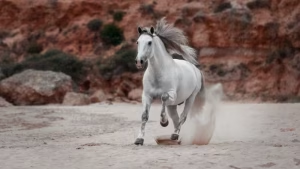
Carneddau ponies are small, standing at around 10 to 11 hands, but what they lack in height they make up for in toughness. Centuries of natural selection on an unforgiving mountain have produced a compact, stocky animal with dense bone, a thick weatherproof coat, and a full mane and tail. Most are bay, brown, or black, the better to blend into the moorland.
Their hardy conformation is no accident: only the soundest, most weather-resistant ponies survive to breed, so the herd is naturally selected for resilience rather than fashion. Unlike the heavily feathered legs of some native breeds, the Carneddau pony carries relatively clean limbs suited to picking its way across rock and bog. They are wary of people, as truly wild-living animals should be, and react quickly to disturbance.
Carneddau Ponies at a Glance
| Location | Carneddau range, Eryri (Snowdonia), North Wales |
| Population | Around 200–300 semi-feral ponies |
| Height | 10–11 hands |
| Status | Genetically distinct breed (confirmed 2013) |
| Colours | Mainly bay, brown, and black |
| Lifestyle | Live wild outdoors year-round |
| Managed by | Local commoners / Carneddau Pony Society |
| Pronunciation | “Car-NETH-eye” (Welsh) |
Life on the Mountain
The Carneddau ponies are remarkable survivors, but their existence is precarious. In the spring of 2013, a brutal late snowstorm buried the mountains and killed a large number of ponies, with some estimates suggesting around half the herd perished. The disaster brought national attention to the herd and underlined how finely balanced their survival is against the Welsh weather.
In a normal year, the ponies manage entirely on their own: grazing the rough mountain grasses, finding shelter behind crags and walls, and raising foals without human help. This self-reliance is exactly what has shaped them over the centuries — but it also means the herd needs careful, light-touch oversight to stay healthy, which is where the annual gather comes in.
The Annual Gather
Once a year, usually in autumn, the local farmers bring the ponies down off the mountain for the gather — one of the most dramatic events in the Welsh upland calendar. Historically this was done on horseback, with riders sweeping the slopes to drive the herd into holding pens. Today the gather is more often carried out using quad bikes and on foot, with hill farmers such as Gareth Wyn Jones among those keeping the tradition alive.
The gather is essential welfare and management work. The ponies are health-checked, wormed, and identified; foals are weaned and some are sold on to new homes, helping to control numbers; and the rest are turned back out onto the mountain for another year. It is a centuries-old ritual that combines hard physical work, deep local knowledge, and genuine affection for the herd.
Wildlife Warriors
The Carneddau ponies are far more than a picturesque curiosity — they are a vital part of the mountain ecosystem. Their grazing keeps coarse grasses, gorse, and scrub in check, maintaining the short, varied sward that many upland species depend on. This kind of low-intensity “conservation grazing” benefits ground-nesting birds, rare plants, and invertebrates, and helps preserve the open character of the Carneddau landscape.
For this reason the ponies have been dubbed “wildlife warriors”: by simply living and grazing as they always have, they support the biodiversity of one of Britain’s most important upland habitats. Protecting the herd is therefore also about protecting the mountain itself.
How to See the Carneddau Ponies
The best way to see the Carneddau ponies is on foot, walking the high paths of the Carneddau range. Popular approaches include the routes up from Llanfairfechan, Aber Falls (Rhaeadr Fawr), and the ridge towards Drum and Foel-fras. It is rare to spend a day up there without spotting a pony or two grazing among the rocks.
If you are lucky enough to meet them, treat them as the wild animals they are: keep your distance, never feed them, keep dogs under close control, and do not attempt to touch or approach foals. Admiring them quietly from a respectful distance is the best way to enjoy these ancient mountain ponies — and to help ensure they remain free on the Carneddau for centuries to come. For a closer look at their domesticated cousins, see our guides to the Welsh C pony and other native breeds.
Threats and the Future of the Herd
For all their toughness, the Carneddau ponies face real pressures. The most immediate is the weather: as the catastrophic 2013 snowstorm showed, a single severe winter can wipe out a large share of the herd in days. With no shelter or feeding on the open mountain, the ponies are entirely at the mercy of the conditions, and a run of harsh seasons could threaten the population’s viability.
There are economic pressures too. Maintaining a free-living herd depends on hill farmers continuing to exercise their ancient grazing rights and to carry out the demanding annual gather — work that brings little financial reward. As upland farming becomes harder and younger generations move away, the human knowledge and effort that the ponies quietly rely on cannot be taken for granted.
The 2013 confirmation that the Carneddau ponies are a genetically unique breed has, however, strengthened the case for their protection. Conservationists, the national park authority, and local commoners increasingly recognise the herd as both a living piece of heritage and a working tool for upland conservation. Their value as conservation grazers — keeping the habitat open for rare wildlife — gives them a role in the modern landscape as well as a place in its history. Securing their future means supporting the farmers who manage them, monitoring the herd’s health and numbers, and valuing these ancient ponies as the irreplaceable natural treasure they are.
Frequently Asked Questions
How many Carneddau ponies are there?
The herd numbers roughly 200 to 300 semi-feral ponies, living wild across the Carneddau mountains in North Wales. Numbers fluctuate with the weather and the annual gather, and dropped sharply after a severe snowstorm in 2013.
Are Carneddau ponies truly wild?
They are best described as semi-feral. They live wild outdoors year-round, foal on the mountain, and survive without shelter or feeding, but they are owned collectively by local commoners and gathered once a year for health checks and management.
What makes Carneddau ponies special?
A 2013 DNA study by Aberystwyth University confirmed they are a genetically distinct and ancient breed, isolated in their mountains for centuries and different from other Welsh ponies. Their lineage is thought by many to date back to the Bronze Age.
Where can I see the Carneddau ponies?
Walk the Carneddau range in Eryri (Snowdonia), with popular approaches from Llanfairfechan, Aber Falls, and the ridge towards Drum and Foel-fras. Keep your distance, never feed them, and keep dogs under control.
How do you pronounce Carneddau?
In Welsh it is roughly “car-NETH-eye”, with the “dd” pronounced as a soft “th” sound as in the English word “the”. The name refers to the Carneddau mountain range itself.