The Konik pony is one of Europe's most quietly remarkable native breeds — a small, dun-coloured, dorsal-striped pony from Poland that traces its lineage to the now-extinct wild Tarpan. Tough, frugal, and almost impossibly hardy, the Konik (Polish for "small horse" or "little pony") now plays a starring role in Europe's biggest rewilding projects, from the Oostvaardersplassen in the Netherlands to Wicken Fen in Cambridgeshire and Wild Ennerdale in the Lake District.
If you are weighing up a Konik pony as a hardy native ride, a conservation grazer, or simply a quiet family pony with bombproof feet, this guide pulls together the breed's history, true physical specification, behaviour, ridden suitability and care requirements — written for UK and South African owners who want substance over romance.
What Is a Konik Pony?
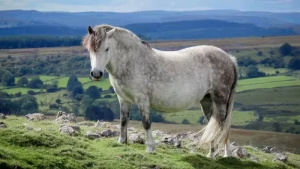
The Konik (also spelled "konik polski") is a small, primitive-looking pony native to Poland. Adults stand between 12.2 and 13.3 hands (130–140 cm), are almost universally mouse-dun or blue-dun in colour with a sharp dark dorsal stripe and faint zebra-like leg barring, and weigh roughly 350 to 400 kg. They are square-built, deep-bodied, short-legged and famously dense-boned — closer in outline to the extinct Tarpan than any other modern equine.
What separates Koniks from other primitive ponies — and what has driven their recent surge in popularity across European conservation projects — is their combination of three rare traits: extreme cold tolerance, the ability to thrive on coarse low-nutrient grazing that would starve a Thoroughbred, and a remarkably calm, biddable temperament around humans despite their semi-feral background.
Origin and History of the Konik Pony
The Tarpan link
The Tarpan was the wild horse of the European steppe and forest — a small dun-coloured equine that ranged across eastern Europe and western Asia until the late nineteenth century. The last truly wild Tarpan was reportedly killed in the Ukrainian steppe around 1879, and the last captive specimen died in a Russian zoo in 1909. Local Polish peasants, however, had been working with Tarpan-cross horses for centuries, particularly around the Białowieża region.
Tadeusz Vetulani and the Białowieża experiment
In the 1920s and 1930s Polish zoologist Tadeusz Vetulani set out to "back-breed" a horse resembling the lost Tarpan using the most primitive farm ponies he could find in the Biłgoraj region. Vetulani named the resulting type konik polski and in 1936 established a free-living reserve population at Białowieża, the famous primaeval forest straddling the Polish-Belarusian border. That reserve population is essentially the genetic foundation of every Konik pony alive today.
Post-war stud books
The Polish national Konik stud book has been maintained since 1962, and the breed is now recognised by Poland's National Research Institute of Animal Production. Two distinct breeding lines exist:
- Stable-bred Koniks — kept at studs and farms, easily handled, used for light riding and driving.
- Reserve Koniks — live free in protected reserves with minimal human intervention. These form the breeding nucleus for conservation projects abroad.
Arrival in the UK and the Netherlands
The first Koniks arrived in the Netherlands in the 1980s for the pioneering Oostvaardersplassen rewilding project, where free-roaming herds were used to mimic the grazing pressure of vanished European megafauna. The UK followed in the early 2000s, with the Wildlife Trusts importing Konik herds to Wicken Fen (Cambridgeshire), Stodmarsh (Kent), Redgrave & Lopham Fen (Suffolk), the Norfolk Broads and, more recently, Wild Ennerdale in the Lake District and several Scottish peatland restoration sites.
Konik Pony Characteristics
Height and weight
- Height: 12.2hh to 13.3hh (130–140 cm at the withers). Some stud-bred individuals can reach 14hh.
- Weight: typically 350–400 kg for adults — heavier-built than they look thanks to dense bone.
- Cannon bone circumference: often 18–20 cm, which is exceptional for a pony of this height and explains the breed's weight-carrying capacity.
Coat colour and primitive markings
The Konik is almost always mouse-dun (grullo) or blue-dun, with a coat that lightens through the body but stays sooty along the topline. Defining primitive markings include:
- A sharp black dorsal stripe running from withers to tail.
- Faint horizontal zebra bars on the upper forearm, hocks and sometimes shoulder.
- Dark mane and tail, often with a frosted white edge.
- Dark muzzle and ear tips.
- Cobwebbing on the face is rare but does occur.
Pure chestnut, bay or black Koniks are extremely uncommon and not preferred by the Polish stud book. Any modern Konik pony you meet in the UK should display the classic dun colouration with intact primitive markings — if it does not, question the parentage.
Conformation
- Head: straight or slightly convex profile, broad forehead, alert dark eyes set well apart.
- Neck: short, well-muscled, set fairly low on a deep shoulder.
- Body: deep, short-coupled, ribcage well-sprung. Often described as "barrel-shaped".
- Hindquarters: rounded and muscular rather than long, with a low-set tail.
- Legs: short, very straight, with hard hooves that almost never need shoeing.
- Feathering: minimal — clean legs, sometimes with light fetlock hair.
Temperament
Koniks are famously level-headed. Even reserve-bred individuals tend to handle well once they understand a human is not a threat. They are intelligent, slightly stoic, patient with children, and notably less reactive than most British native ponies. The temperament does carry a stubborn streak — they are problem-solvers, and a bored or under-stimulated Konik can become a fence inspector.
Konik Ponies in Conservation Grazing
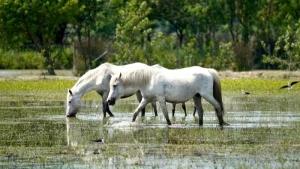
The Konik pony's biggest modern role is as a conservation grazer. Their willingness to eat coarse, tough vegetation that cattle and sheep avoid — rushes, reed regrowth, willow scrub, even ragwort in small quantities — makes them invaluable for restoring grazed-out wet meadows, fenlands and lowland heath. Their hard-wearing hooves create the broken ground that wading birds and rare invertebrates need without compacting wetland soils the way cattle do.
UK conservation sites with Konik herds
- Wicken Fen (National Trust, Cambridgeshire) — established 2003, the founding UK Konik herd.
- Wild Ennerdale (Lake District) — Cumbria's rewilding flagship.
- Stodmarsh National Nature Reserve (Kent) — Natural England.
- Redgrave and Lopham Fen (Suffolk Wildlife Trust).
- Strumpshaw Fen and the Broads (RSPB).
- The Wildwood Trust (Kent) — runs the largest Konik herd in the UK, supplying ponies to other conservation projects.
Koniks now play a similar role in continental projects from the Danube delta to the Letea forest in Romania, the Veluwe in the Netherlands and the Côte d'Or wetlands in France.
Are Konik Ponies Good for Riding?
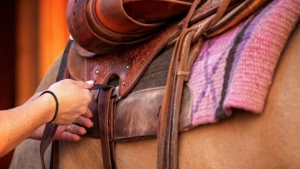
Yes — though with caveats. A stable-bred Konik that has been handled from foalhood makes a sensible, sure-footed riding pony for children, very small adults and for trail-riding work where carrying ability and stamina matter more than speed or showring polish.
- Weight-carrying: exceptional for the size. Their dense bone, deep girth and short back let them carry adults up to around 75–80 kg comfortably across short distances — better than many ponies of similar height.
- Gaits: active, ground-covering walk and trot; canter can be a little four-square but improves with schooling.
- Stamina: outstanding. Koniks were historically used for long-distance peasant transport and trekking.
- Hardiness: they barely notice British winters and require no rugs in normal conditions.
- Disciplines: trail riding, light driving, Pony Club, agility, gymkhana, dressage to elementary level, low-level jumping. Not built for serious cross-country speed or pure dressage at higher levels.
Reserve-bred Koniks taken out of a free-living herd require considerable groundwork before they are ready to be ridden. Expect to spend the first six to twelve months on handling, halter, picking up feet and basic in-hand work before backing.
Care, Feeding and Management
Feeding
Koniks are easy keepers — sometimes worryingly so. They evolved on the poor grazing of the Polish forest fringe and convert calories with terrifying efficiency on UK pasture, where they will quickly become overweight if not restricted. Treat them like a Fell, Exmoor or Dartmoor pony in terms of grazing management:
- Strip-graze on poor pasture, or use a track system to keep them moving.
- Soak hay to reduce sugars if the pony is pre-laminitic, but do not treat a set soak time as making the hay safe: Longland, Barfoot & Harris (Vet Rec 2011) found a mean 27% loss of water-soluble carbohydrate (range 6-54%) after up to 16 hours, with seven of the hays tested still over the 100 g/kg DM ceiling suggested for laminitis-prone animals. Have the hay analysed.
- Avoid all hard feed unless the pony is in heavy work — a vitamin and mineral balancer is usually sufficient.
- Restrict spring and early summer grass aggressively to avoid laminitis.
- Provide unlimited fresh water and a salt lick year-round.
Hoof care
Koniks have famously hard, well-shaped feet that rarely need shoeing. A six-week farrier or barefoot trimmer cycle is enough in most cases. Watch out for stretched white lines and central sulcus thrush if they live on permanently wet ground — common in conservation grazing settings.
Health and disease susceptibility
- Laminitis: the single biggest threat. Koniks are not metabolically adapted to UK or SA spring grass.
- Equine metabolic syndrome (EMS) and PPID: the breed sits in the higher-risk native-pony bracket. Test if you suspect issues.
- Sweet itch: some lines are prone — provide fly rugs through midge season.
- Mud fever and rain scald: uncommon thanks to their dense winter coats, but still possible.
- Worm burden: reserve-bred ponies often arrive with significant strongyle and tapeworm burdens — quarantine and worm before mixing with established herds.
Living arrangements
Koniks are designed to live out year-round and most owners do exactly that. They cope with British winters and South African Highveld frosts equally well. A simple field shelter is enough — heavy rugging is counterproductive because their double coat insulates extraordinarily well and they need to be able to thermoregulate.
Konik vs Tarpan vs Fell vs Exmoor: How Does It Compare?
| Breed | Height | Origin | Coat | Best at |
|---|---|---|---|---|
| Konik | 12.2–13.3hh | Poland | Mouse-dun, dorsal stripe | Conservation grazing, all-round family pony |
| Tarpan (extinct) | ~13hh | European steppe | Dun, falcate mane | Wild forage |
| Exmoor | 11.1–12.3hh | South-west England | Bay, mealy muzzle | Hardy native riding |
| Fell | 13.0–14.0hh | Cumbria | Black, brown, grey | Trekking, driving |
| Dartmoor | 11.1–12.2hh | Devon | Bay, brown, black | First ridden, native showing |
Genetically, modern Koniks are not Tarpans — DNA studies (Cieslak et al. 2010, and follow-up work by Janczyk 2019) confirm they share ancestral haplotypes with Polish farm horses rather than being a direct living relic of the wild Tarpan. The breed is best understood as a Tarpan-influenced primitive Polish pony, not a recreated wild horse.
Buying a Konik Pony in the UK or South Africa
Koniks remain niche in both markets but are slowly becoming more available.
UK
- The Wildwood Trust occasionally sells surplus Koniks from their herd.
- Several private studs in Norfolk, Cumbria and the Welsh borders import directly from Poland.
- Expect to pay £1,500–£3,500 for a handled riding pony, £800–£1,500 for an unhandled conservation reject.
- Always ask for Polish stud book papers — without them you cannot verify pure breeding.
South Africa
- True Koniks are virtually unknown in SA — fewer than a handful of confirmed individuals.
- Most "Konik-type" South African ponies are dun-coloured natives without verifiable Polish ancestry.
- If genuine breed papers matter, direct import from Poland or Germany via an experienced equine shipper is the only reliable route. Budget R150,000+ all-in including quarantine.
Frequently Asked Questions
What is a Konik pony?
A Konik is a small (12.2–13.3hh), dun-coloured native pony from Poland, developed in the early twentieth century to resemble the extinct wild Tarpan. They are hardy, sure-footed and now widely used in European conservation grazing as well as for riding and driving.
Are Koniks the same as Tarpans?
No. The Konik was bred to look like the Tarpan but is genetically a domestic Polish pony with Tarpan influence, not a living wild horse. The true wild Tarpan went extinct in 1909.
How big is a Konik pony?
Adults usually stand 12.2 to 13.3 hands high (130–140 cm), weighing 350–400 kg. Some stud-bred examples reach 14hh.
Can adults ride Konik ponies?
Yes. Despite their small size, Koniks are weight-carrying ponies thanks to their dense bone and short backs. Riders up to around 75–80 kg are usually well within the pony's capability for trail riding and lighter work.
Where can I see Konik ponies in the UK?
Wicken Fen in Cambridgeshire, Wild Ennerdale in the Lake District, Stodmarsh in Kent, and several of the Norfolk Broads nature reserves all have established herds. The Wildwood Trust in Kent runs the UK's largest captive Konik herd and welcomes visitors.
What do Konik ponies eat?
In a wild setting Koniks happily eat rushes, reed regrowth, low-quality hay, brambles and rough pasture. Domesticated Koniks need their grazing restricted because they evolved on much poorer forage than modern UK or SA pasture, and they fatten easily.
Final Word on the Konik Pony
The Konik is exactly the sort of pony we are going to see more of in Europe and beyond. As rewilding shifts from a niche conservation idea to mainstream land management — and as climate-pressured grazing systems push toward animals that thrive on what already grows rather than what we have to import — the dun, dorsal-striped, unflappable Konik pony fits the brief almost too neatly. Whether yours is grazing fenland reeds for the Wildlife Trust or carrying a Pony Club child around a paddock in Surrey, you have a genuinely tough, ancient little horse on your hands. Look after the feed, respect the brain, and a Konik will outlast you.