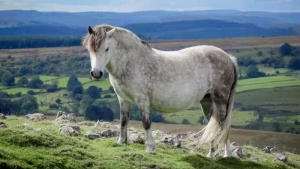
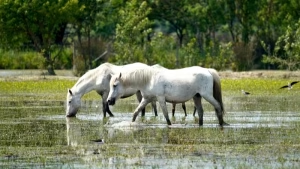
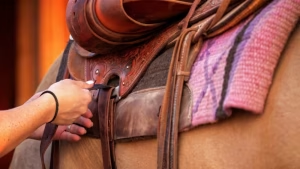
The Fjord horse — sometimes called the Norwegian Fjord, the Fjording, or by its Norwegian name fjordhest — is one of the world’s oldest pure breeds and the unmistakable symbol of rural Norway. Compact, strong, dun-coloured and crowned with the upright two-tone mane that gives the breed its trademark profile, the Fjord horse has been carrying Vikings, ploughing Scandinavian fields and now teaching British and South African children to ride for over four thousand years. There are roughly 80,000 Fjords worldwide, with about 5,800 in Norway and a small but growing population in the UK registered with the Fjord Horse National Studbook of Great Britain. This guide covers everything you need to know if you are researching, considering or already living with a Fjord horse: history, the five recognised colour variations, conformation, character, modern uses, UK buying advice and the practical realities of ownership. For the quick-reference summary, see our Fjord horse breed profile.
Table of Contents
Origin and History
The Fjord horse traces its ancestry to the wild horses that migrated to western Norway after the last Ice Age, around 4000 BC. Archaeological evidence, including the carved stones of the Tune Ship burial and Viking-era harness remains, shows that selective breeding had begun by 2000 BC. The Vikings used Fjords as warhorses, and by the medieval period the breed was a fixed type — dun, primitive-marked, around 13.2 to 14.2 hands, and unusually strong for its size.
Western Norway’s mountainous geography selected ruthlessly for sure-footedness, hardiness, longevity and an economical metabolism. Horses that couldn’t survive on rough mountain forage and rocky terrain didn’t reproduce. The Fjord that emerged is genetically remarkable: it is one of the only breeds in the world to consistently express all the primitive markings — the dorsal stripe, leg barring (zebra stripes on the lower legs), and dark forelock and mane. Dun is the only colour permitted in the studbook. The Norwegian Fjord Horse Studbook, Norges Fjordhestlag, was formally established in 1910 to protect breed integrity, and the breed’s ancient lineage is well documented by the Fjord horse breed record.
By the late 1800s, the Fjord had spread to Denmark and northern Germany, and by the early 20th century to North America and the UK. The Fjord Horse National Studbook of Great Britain was established to maintain UK pedigrees in line with Norwegian standards. Today every UK-registered Fjord can trace its pedigree back to Norwegian-foundation breeding stock.
Physical Characteristics
The Fjord horse is best described as a small, light draught horse. The breed standard tolerates very little variation in conformation, so Fjords look strikingly similar across continents.
- Height: 13.1 to 14.3 hands (135–150 cm). The breed standard prefers 13.2–14.1.
- Weight: 400–500 kg.
- Colour: Always dun, with primitive markings (see below).
- Head: Small, broad forehead, large kind eyes, small alert ears.
- Neck: Strong, well-muscled, crested in stallions and geldings.
- Body: Deep, broad chest. Strong, short back. Sloping powerful croup.
- Legs: Short, strong cannons. Excellent feet — typically blue-black, dense, hard hooves that often go barefoot all year.
- Mane: Stiff, upright, two-toned (light hair flanking the dark central dorsal stripe). Traditionally trimmed in a crescent shape (see below).
- Tail: Set on slightly low; same two-tone pattern as the mane.
- Lifespan: 25–30 years, with many remaining sound and ridden into their late 20s.
The Five Recognised Colours
The Norwegian breed standard recognises five dun variations. All five have a black dorsal stripe and most show leg barring. The colour you most often see is brunblakk (brown dun), which accounts for around 90% of registered Fjords. The other four are increasingly rare and prized by enthusiasts.
- Brunblakk (Brown Dun) — pale yellow-brown body, black dorsal stripe, dark mane and tail with light outer hairs. Around 90% of Fjords.
- Rødblakk (Red Dun) — pale reddish-yellow body, red-brown dorsal stripe, red-brown mane and tail with cream outer hairs. Around 5%.
- Grå (Grey Dun) — silver-grey body, black dorsal stripe, black mane and tail with silver outer hairs. Around 4%. Note: this is “true grey dun”, not the greying gene found in Andalusians or Lipizzaners.
- Ulsblakk (White Dun / Pale Dun) — almost cream/yellow-white body with very pale skin. Black dorsal stripe and pale mane. Around 1%.
- Gulblakk (Yellow Dun) — pale yellow body, similarly pale mane and tail with cream highlights. Extremely rare; less than 0.5% of registered Fjords.
The dun colour is genetically dominant, so a Fjord crossed with a non-dun horse usually produces a dun foal — but only purebred Fjords with verified pedigree can be registered as Fjord horses. Crossbreds, no matter how Fjord-typey, are not Fjords in the studbook sense.
The Famous Mane and Trimming Tradition
The two-tone upright mane is the breed’s most photographed feature, and the traditional way of trimming it is unique to the Fjord. The mane stands naturally upright because the hair is short, stiff and densely set. Owners trim the mane into a gentle crescent shape, slightly shorter at the withers and the poll, so that the dark central stripe (the midtstol) becomes the highest point. The lighter outer hair (ljosfaks) is trimmed slightly shorter so the dark stripe is fully exposed when viewed from the side.
The look isn’t decorative. Trimming the mane this way preserves its upright carriage, prevents the lighter outer hair from flopping over, and emphasises the breed’s distinctive profile. Pulled or hogged manes are not permitted at registered Fjord shows. The forelock is normally left long and natural, although competition trimming sometimes shortens it.
Temperament and Character
The Fjord horse’s character is the single biggest reason for its modern popularity. Centuries of close human contact in small Norwegian smallholdings — where the family horse worked alongside children daily — selected ruthlessly for trainability and a stable temperament.
- Calm and balanced — Fjords are exceptionally unflappable in traffic, in busy showgrounds and around children.
- Intelligent and willing — they pick up new tasks quickly and remember training well.
- Strong-willed but cooperative — they can be opinionated and benefit from a clear, fair handler. Heavy-handed riding produces a stubborn Fjord; quiet, consistent work produces a willing one.
- Hardy and economical — they hold weight on minimal feed and tolerate cold and wet conditions exceptionally well.
- Versatile — equally suited to a nervous adult learner, a Pony Club child or an experienced driver.
Modern Uses and Disciplines
The modern Fjord is a true all-rounder, and contemporary UK and SA owners use them in almost every discipline below WBFSH-level competition.
- Riding schools — bombproof temperament makes them a fixture in BHS-approved riding schools across the UK.
- Therapy and Riding for the Disabled (RDA) — calm nature and sturdy build make them ideal RDA mounts for both children and adult riders.
- Driving — the Fjord’s draught heritage shows in driving sport. They compete successfully in single, pair and team driving at national level.
- Endurance — short, well-conditioned Fjords compete competitively at limited distance level (40–80 km) endurance rides.
- Combined driving and Le Trec — both disciplines suit their character and conformation.
- Pleasure riding and trekking — sure-footedness on rough ground makes them ideal trekking ponies.
- Working draught — small-scale forestry, ploughing competitions and traditional farming demonstrations across Scandinavia and the UK.
Because they top out at 14.3 hh, Fjords are not registered with British Showjumping at adult level except in pony classes — but at Pony Club and unaffiliated level they jump perfectly competently up to 1m.
How the Fjord Compares to Other Native Breeds
Buyers weighing up a Fjord horse often shortlist it alongside other hardy native and draught-type breeds. The comparisons below help place the Fjord’s size, temperament and workload against familiar alternatives.
- Fjord vs Haflinger — the closest lookalike. Both are short, sturdy mountain draughts with kind temperaments, but the Haflinger is always chestnut with a flaxen mane and carries Arabian ancestry, while the Fjord is always dun and far older.
- Fjord vs Icelandic horse — both are Nordic natives bred for hardiness and sure-footedness. The Icelandic is smaller, gaited (with the distinctive tölt) and comes in every colour, whereas the Fjord is a non-gaited, dun-only light draught.
- Fjord vs Welsh Cob — a good British comparison for buyers wanting substance and versatility. The Welsh Cob is typically taller with more knee action and feather, while the Fjord offers a calmer, heavier draught temperament in a slightly smaller package.
The Fjord Horse in the UK
The UK Fjord population is small but stable. The Fjord Horse National Studbook of Great Britain maintains the official register and works in close contact with the Norwegian parent body. UK-registered Fjords are eligible for inclusion in the Norwegian Studbook, and stallions intended for breeding require formal Norwegian inspection and grading.
The British Horse Society now lists the Fjord on its native and rare breed support pages. Annual UK shows include classes at the Royal Welsh, the New Forest Pony Show and dedicated breed gatherings hosted by the studbook. The breed is also represented at the Equiblues festival in France and the FEIF gatherings of native breeds.
South African Fjords are far rarer. Most SA-based Fjords have been imported individually from European breeders and are not yet supported by a national stud organisation. SA Fjord owners typically register with the Norwegian or UK studbook by import certificate.
Buying a Fjord Horse
Demand for Fjords in the UK and Europe routinely outstrips supply, and prices have risen sharply since 2020. As of 2026, expect:
- Unbroken weanlings/yearlings: £3,000–£5,500
- Backed 4–6 year olds: £6,000–£10,000
- Schoolmasters with show or driving record: £8,000–£15,000+
- Norwegian-bred imports: £8,000–£20,000+ depending on lineage and grading
Where to look:
- The Fjord Horse National Studbook of Great Britain breeders directory.
- Direct contact with established UK breeders (largely concentrated in mid-Wales, the Scottish Borders and East Anglia).
- Norwegian Fjord Horse Society of Great Britain Facebook group — well-moderated, active community.
- European auction sites such as ehorses.co.uk for direct Norwegian and Dutch imports.
Pre-purchase considerations
- Always commission a full vetting (5-stage if intended for ridden work). Fjords are mostly very sound, but check for windgalls, foot symmetry and back palpation.
- Verify pedigree through the Studbook. Crossbreds are sometimes advertised as Fjords; only registered horses count.
- Ask about the dam line — well-bred Norwegian dam lines command premium prices but produce more consistent type.
- Test ride on hill, road and arena. A genuine Fjord should be unfazed.
- Check teeth and hooves — Fjords commonly remain in work into their late 20s, but sound dental and farriery history matters at any age.
Care and Management
Fjords are easy keepers — and that’s both a blessing and a curse. Their efficient metabolism, evolved for sparse mountain forage, makes them prone to obesity and equine metabolic syndrome (EMS) on UK grass.
Feeding
- Most leisure Fjords need no hard feed. A high-fibre, low-sugar forage base — soaked hay if grass is rich — covers their needs.
- Grass restriction in spring and autumn flush periods is essential. Track systems, grazing muzzles or strip grazing all work.
- A vitamin and mineral balancer is sufficient for most adults.
- Performance Fjords in driving or endurance need carefully calibrated supplementation, ideally guided by a registered nutritionist.
Health considerations
- Laminitis and EMS — the most important health risk. Strict grass management and a body condition score 5/9 maximum.
- Hooves — most Fjords are barefoot all year on UK terrain. Six-weekly trimming.
- Sweet itch — like other native breeds, susceptible. Fly rugs from April to October.
- Mud fever — feathering is light but the deep flexures are vulnerable. Daily checks in winter.
Work
Fjords thrive on regular varied work — schooling, hacking, ground work, the occasional jump. They are not built for high-impact gallop work but excel at sustained low-intensity exercise.
Frequently Asked Questions
How much does a Fjord horse cost in the UK?
2026 UK prices range from £3,000 for an unbroken youngster to £15,000 or more for a registered competition or driving schoolmaster. Norwegian imports with strong dam lines can exceed £20,000. Expect to pay a premium for any of the four rarer colours (rødblakk, grå, ulsblakk, gulblakk).
Are Fjord horses good for beginners?
Yes — they are widely recommended as a first horse for both children and adult learners. Their calm temperament, manageable size and easy keeping make them one of the safest breeds available. They are forgiving of beginner mistakes without being so quiet that they lack response.
How tall are Fjord horses?
Fjord horses stand 13.1 to 14.3 hands (135–150 cm), with the breed standard preferring 13.2 to 14.1 hands. Although that places them within pony height, their heavy, draught-type build means they are always referred to as horses rather than ponies, and they comfortably carry adult riders.
Can Fjord horses be ridden by adults?
Absolutely. Despite their pony-sized stature (13.1–14.3 hh), Fjords are built like small draught horses and comfortably carry adult riders up to around 95 kg, depending on individual conformation and conditioning. They are popular with adult amateur riders and instructors across the UK.
Why is the Fjord horse always dun?
Dun is genetically dominant in the breed and the only colour permitted in the studbook. Centuries of breeding to a strict colour standard have eliminated all other coat colours. The breed’s primitive markings — dorsal stripe, leg barring, dark mane stripe — make it one of the closest living descendants of the ancestral wild horse.
How long do Fjord horses live?
25–30 years is typical, with many Fjords remaining in light ridden or driving work into their late 20s. Their longevity reflects their hardy genetics, sound conformation and economical metabolism — all qualities selected over thousands of years in harsh Norwegian conditions.
Are Fjord horses related to Haflingers?
Both breeds are short, sturdy small draughts from mountainous regions, and both are known for kind temperaments — but they are genetically distinct. Haflingers originate in the South Tyrol and Austria, are always chestnut with flaxen mane, and trace much of their ancestry to Arabian crosses. Fjords are much older, always dun, and contain no Arabian influence. The two breeds are sometimes compared but should not be confused.