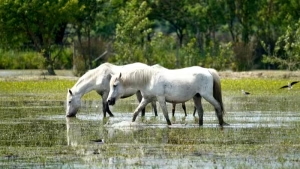
Horse body language is the primary way horses communicate, and reading it accurately is one of the most useful skills a rider or handler can develop. Horses use ears, eyes, nostrils, lips, head carriage, posture, legs and tail to broadcast comfort, curiosity, fear, pain or warning. They do this constantly, and they do it long before they escalate to vocal noises, kicks or bolting. The handlers who stay safest, and the riders whose horses progress fastest, are the ones who notice the small signals.
Because horses are prey animals, their bodies are tuned to telegraph threat assessments to the rest of the herd in fractions of a second. That same hard-wiring means a horse is constantly leaking information about how he feels, whether you are tacking up, leading him in from the field, or sitting on his back. This guide breaks the subject down by body part, gives you a quick-reference chart, then pulls the parts together into the emotional pictures you will meet day to day. Where pain is suspected, the Horse Grimace Scale gives a structured way to confirm it.
Table of Contents
Horse body language chart: quick reference
Use this horse body language chart as an at-a-glance summary. It is deliberately blunt, and every line carries the same caveat: no single signal is reliable on its own. Read the whole horse, then read the situation.
| Body part | What you see | Most likely meaning |
|---|---|---|
| Ears | Both pricked forward | Alert, interested, focused on something ahead |
| Loosely sideways (“airplane”) | Relaxed, dozing, or mildly bored | |
| One forward, one back | Dividing attention — normal under saddle | |
| Pinned flat to the neck | Warning: anger, fear or pain. Give space | |
| Eyes | Soft, almond-shaped, no white showing | Relaxed |
| Wide and round, sclera showing | Fear, surprise or sharp pain | |
| Squinting, tension above the eye | Pain — check against the Horse Grimace Scale | |
| Nostrils and mouth | Soft, rounded nostrils; drooping lower lip | Relaxed or lightly asleep |
| Nostrils drawn into a sideways slit; pinched lips | Pain or acute stress | |
| Head and neck | Low and level, soft topline | Low arousal, settled |
| High, hollow back, tight underline | High arousal — loaded to spook or bolt | |
| Lowered and swung side to side (“snaking”) | Threat. A charge or bite may follow | |
| Legs | Hind leg loosely cocked, hip dropped | Resting |
| Hind leg lifted and held firm, body tense | Loading a kick | |
| Pawing the ground repeatedly | Frustration or impatience — or early colic | |
| Tail | Carried softly | Neutral, relaxed |
| Clamped tight to the hindquarters | Fear, cold, or pain over the back | |
| Carried high like a flag | Excitement or alarm | |
| Sharp, repeated swishing | Irritation or discomfort |
Read the whole horse first
No single body part tells the full story
The most common mistake riders make with horse body language is reading one body part in isolation. Ears pricked forward can mean alert curiosity or rigid alarm. A swishing tail can be a fly response or a clear warning. A cocked hind leg can mean a snoozing horse or a kick loading up. Context decides the meaning, and context comes from the whole body plus the situation around it.
Work top to bottom: ears, eyes, nostrils, mouth, head height, neckline, back, tail, weight distribution, breathing rate. Then look at what is going on around the horse. A horse with sideways ears and a low head near hay is dozing. The same horse with sideways ears and a low head in the middle of a busy yard, motionless, may be shut down rather than relaxed.
Establish a baseline for your horse
Every horse has a personal default. Some carry the head high naturally; some stand close to the bottom of the door; some always rest the off-hind. Watch your own horse for ten minutes at a time when nothing is happening — at hay, in the paddock, on cross-ties. Note the resting posture, the typical ear angle, how often the tail flicks, where the eye sits. The moment that default changes, you have spotted information.
This baseline is what separates “the horse is being awkward today” from “something is wrong”. It is also the foundation of catching subtle health issues early, before they show as overt lameness or colic. For the wider picture of why horses do what they do, our guide to the behaviour of horses covers the herd instincts sitting underneath these signals.
Horse ear positions and what they mean
The ears are the most mobile part of a horse and the first thing most riders notice. They rotate independently and almost always point towards whatever the horse is paying attention to. Reading horse ear positions on their own is unreliable, but combined with eye and body cues they are the fastest indicator of mood and focus.
Pricked forward
Both ears pointing forward, often with a raised head, mean the horse has spotted something of interest. The horse is alert and gathering information. Whether this becomes a spook or settles into curiosity depends on the rest of the body. Forward ears combined with a soft eye and a loose body is curiosity. Forward ears with a fixed stare, tight nostrils and a raised back foreshadow a spook — our guide on what to do when a horse spooks on the trail covers riding the moment out.
Loosely sideways or “airplane” ears
Ears flopped softly to the sides, often with a half-closed eye and a low head, mean relaxation, dozing, or sometimes mild boredom. This is a horse with the brain on standby. Approach with your voice first so you do not startle them.
One ear forward, one ear back
The horse is dividing attention. This is common under saddle: one ear listens to the rider, the other monitors the environment. It is normal working focus. When both ears flick rapidly back and forth, the horse is anxious about what is behind and ahead at the same time — manage the environment or your aids before it escalates.
Softly back
Ears angled gently back, neither tense nor pinned, usually signal concentration, or listening to a rider or another horse behind. Combined with a relaxed body, this is engagement rather than aggression. The distinction that matters is muscle tone: soft ears lie back loosely, angry ears are pressed hard and flat.
Pinned flat
Ears pressed hard against the neck, often paired with a wrinkled nose, exposed teeth or a tight body, are an unambiguous warning. The horse is angry, threatened or in pain. Give space immediately and identify the trigger. Persistent ear pinning under saddle or at the girth almost always points to discomfort — investigate girth fit, saddle fit, dental issues or back pain rather than labelling the horse “grumpy”.
Eyes, face and the Horse Grimace Scale
The face is the most reliable place to read pain in a horse, which is why veterinary researchers have built structured tools around it. The Horse Grimace Scale (HGS) was published by Dalla Costa and colleagues in PLOS ONE in 2014, in a study titled Development of the Horse Grimace Scale (HGS) as a Pain Assessment Tool in Horses Undergoing Routine Castration. It scores six facial action units, each from 0 (not present) to 2 (obviously present).
The six facial signs of pain
- Stiffly backwards ears — held back and apart, with the inside of the ear pointing backwards or outwards.
- Orbital tightening — the muscle around the eye contracts, narrowing the eyelid and giving a “squinting” look.
- Tension above the eye — a clear depression or wrinkle above the eye, deepening the bony arch.
- Prominent chewing muscles — the muscle running from the cheekbone to the lower jaw stands out and the jaw looks set.
- Strained mouth and chin — pinched lips, exposed chin muscle, the mouth almost squared off.
- Strained nostrils with flattening — nostrils pulled into a sideways slit instead of softly round.
Two or more of these signs persisting at rest is a strong indicator of pain and warrants veterinary assessment. The HGS does not replace a vet exam, but it gives owners a vocabulary for what they can already see, and it forces you to read the face systematically rather than impressionistically.
Soft eye versus “whale eye”
A relaxed horse has a soft, almond-shaped eye with no white showing. A wide, round eye with sclera visible — often called “whale eye” — means fear, surprise or sharp pain. Know your individual horse, though: the Appaloosa is one of several breeds in which visible white sclera is a normal breed characteristic rather than a stress signal.
Lips, licking and chewing
A soft, drooping lower lip on a still horse with half-closed eyes is deep relaxation or light sleep — perfectly normal. A drooping lip in an alert horse can signal nerve damage or facial paralysis and warrants a vet call.
“Licking and chewing” is one of the most overinterpreted signals in horse training. It is not, on its own, “submission”. It most reliably marks a transition out of a sympathetic (fight-or-flight) state and back towards a parasympathetic (rest-and-digest) one. You will often see it just after a moment of tension resolves: the horse held its breath, then released it, and saliva returns. Reading it as submission encourages handlers to keep applying pressure the horse has already answered.
Head, neck and overall posture
Head height
Head height is the single best gauge of arousal. A high head with a hollow back, tight underline and visible neck muscle is a horse on full alert — the body is loaded to spook, spin or bolt. A low, level head with a soft topline is the opposite: relaxed, low arousal. A very low head with a dull expression and no interest in food or company can indicate depression, illness or pain, especially if the horse stands apart from herd-mates.
Where a high head goes with a horse that habitually takes off, treat it as a training and safety priority rather than a quirk — see our guide on how to stop a bolting horse.
Head nodding and head shaking
Rhythmic head nodding is one of the most commonly misread signals, partly because it looks like a human “yes”. In practice it usually means one of four things:
- Anticipation or frustration — the classic head-bobbing over the stable door at feed time. This is a learned, food-related behaviour, not agreement.
- Flies or irritation — sharp, intermittent tossing, usually alongside ear flicking and tail swishing in summer.
- Tack or dental discomfort — head tossing that appears only under saddle, or only on one rein, points at the bit, the bridle fit or the teeth. A dental check is the cheapest place to start.
- Headshaking syndrome — violent, repetitive vertical flicking, often worse in bright light and often accompanied by nose-rubbing or snorting. This is a recognised clinical condition rather than a behavioural one, and it needs veterinary investigation.
A nodding head at walk, in time with the stride, is simply normal locomotion. A nod that appears at trot, on one diagonal only, is a lameness sign rather than a communication signal — the horse lifts its head as the sore limb takes weight. Our guide to lameness in horses explains how to spot it.
“Snaking”
A horse lowering the head and swinging the neck side to side at another horse or at a person is “snaking” — a strong threat signal, classically seen in stallions herding mares or in field bullies driving subordinates. Step aside; this often precedes a charge or a bite.
Hollow back and raised neck under saddle
Under saddle, a hollow back with the head raised and the ears pinned is often labelled “naughty” but is more often pain. The usual causes are an ill-fitting saddle, sharp molars catching on the bit, back soreness, or a poorly fitted bridle. A horse that has previously gone forwards but suddenly hollows and braces deserves a saddle check, a dental check and a conversation with your vet before any further training intervention. Knowing the parts of the saddle and where they bear on the withers makes those conversations far more productive.
Legs, feet and warning behaviour
Pawing
Pawing means “I want this to change”. That might be impatience at a tie ring, frustration in a trailer, anticipation of feed, or the early phase of colic. A horse pawing repeatedly in the stable, especially if it is also looking at its flank, rolling, or skipping food, should be examined for colic immediately.
Stomping
Most often a fly response, but it can also signal irritation with handling, with the farrier, or with a rider’s aids. Watch the rest of the body — a relaxed horse stomping at flies is a horse stomping at flies. A tense horse stomping with pinned ears is escalating.
Striking
A forward kick with a front leg: rare, but dangerous. It is almost always preceded by clear warnings — pinned ears, raised head, blocked retreat. Stallions strike during interactions, and any horse may strike if cornered. Never crowd a horse against a wall during handling, and never approach a tied horse from directly in front when its ears are back.
Hind leg lifted or cocked
A loosely cocked hind leg with the toe touching the ground and the hip dropped is a resting horse. The same leg lifted slightly higher and held firm, with the body tense and the ears back, is loaded for a kick. The clearest tell is muscle tone behind the gaskin and over the hip — soft for rest, fixed for kick.
Tail language
The tail mirrors the spine and is a fast indicator of mood and physical comfort. It is also the signal riders are least likely to see from the saddle, which is exactly why it is worth checking deliberately from the ground.
- Softly carried — relaxed, neutral.
- Clamped tight to the hindquarters — fear, discomfort, cold, or pain over the back or hindquarters. A clamped tail under saddle often points to a tight lumbar region, sacroiliac joint pain, or saddle pressure.
- High flag tail — excitement or alarm. A naturally high carriage is normal in the Arabian and Arab-cross types, but a sudden flag in a normally calm horse is arousal.
- Fast, sharp swishing — irritation. Under saddle, repeated swishing during transitions, lateral work or one specific gait should prompt a fit check on the tack and an honest look at the rider’s aids before it is dismissed as fly-related. Gastric ulcers are a frequently missed cause.
- Wringing — a circular tail motion, indicating escalating frustration. It is often seen in horses being driven through pressure they cannot resolve.
- Rapid clamping and releasing — frequently seen in mares in season, alongside squealing and urination. Our guide to managing mares in season covers the pattern.
Sleep, rest and relaxation postures
Adult horses sleep in short bursts totalling roughly three hours in 24, split between standing slow-wave sleep and lying-down REM sleep. Crucially, REM sleep only happens lying down, and a healthy adult needs somewhere in the region of 30 to 60 minutes of recumbent sleep across a 24-hour period. Recognising sleep postures matters for two reasons: an unwary handler can wake a deeply sleeping horse into a startle response, and a horse that has stopped lying down is telling you something important. Our full guide to equine sleep patterns breaks the cycles down by life stage.
Standing rest
Hip dropped on one side, opposite hind leg cocked, lower lip soft, eyes half-closed, ears loosely sideways. The stay apparatus locks the leg joints so the horse can doze without falling. Use your voice before approaching to avoid startling the horse.
Lying flat (lateral recumbency)
The horse on its side with legs extended is in REM sleep. This is normal and healthy, and it is the only posture in which true REM occurs. Horses that never lie flat may be in pain, in an unsafe paddock, on a wet or inadequate bed, or under social pressure from herd-mates. Sustained REM deprivation can lead to collapse episodes, where the horse buckles at the knees while standing.
Sternal (sphinx) lying
Legs tucked under the body, head up. This is light, non-REM sleep, and often a halfway position between standing and full recumbency. A horse that only ever lies sternally is still accumulating REM debt.
Common emotional states decoded
Relaxed and content
Soft eye, sideways or neutral ears, lowered or level head, soft tail, one hind leg cocked, slow blink rate, slow breathing. Common when grazing in company in a familiar field. A horse showing this in a new yard within a week is settling well — regular turnout with company is the fastest route there.
Curious or alert
Head and tail raised, ears pricked forward, eyes wide but soft, nostrils slightly flared, body oriented towards whatever has caught its attention. The horse is gathering information. Allow time for it to assess; pushing forward into something the horse has not yet read is what turns curiosity into a spook.
Anxious or stressed
High head, tight underline, fixed eye with sclera showing, flared nostrils, ears flicking rapidly, blowing or snorting, sweating without exertion, frequent droppings, weight shifting from side to side. Common in new environments, on lorries, at competitions, or when separated from a bonded companion. If it shows up mainly in transit, our advice on travelling with horses is the place to start.
Angry or defensive
Pinned ears, hard eye, lifted lip, head snaked low or thrust forward, raised hind leg or pawing front leg. The horse is asking for space. Ignore the warning and a bite or a kick is the next step.
Fearful
Body braced backwards, whale eye, head high or thrown from side to side, snorting in short bursts, clamped tail. Fear and aggression both produce defensive behaviour, but they feel different to handle — frightened horses retreat if given a clear escape route, angry horses advance.
Depressed or shut down
Low head, dull eye, ears static and slightly back, body still for unusually long periods, reduced interest in food or herd, withdrawn from interaction. This is often misread as “calm” or “well-behaved”. True relaxation includes ear movement, eye blinks and natural shifts of weight; shutdown is stillness without any of them. Persistent flat affect needs a vet visit — chronic pain, gastric ulcers and welfare-related learned helplessness all present this way. Repetitive behaviours such as crib-biting often sit alongside it and point at the same underlying management problem.
How to tell if a horse likes you
This is one of the most searched questions in horse body language, and it deserves an honest answer rather than a sentimental one. Horses do form durable, selective attachments — to other horses, and to particular people — but they express them in the currency of a prey animal: proximity, relaxation and tolerance. What they do not do is perform affection on demand.
Signals that genuinely suggest a positive association
- Voluntary approach in an open space. A horse that walks over to you in the middle of a large field, when it could carry on grazing, is choosing your company. This is the single most meaningful signal.
- Relaxation in your presence. A lowering head, soft eye, cocked hind leg and a sigh while you stand beside them means your presence is not raising their arousal. For a prey animal, that is high praise.
- Orientation and attention. An ear kept on you as you move around the yard, without tension anywhere else in the body.
- Mutual grooming offers. Horses groom each other along the neck and withers. A horse nibbling gently at you in that region is offering allogrooming — a genuine affiliative behaviour, though one worth redirecting for safety if the horse gets enthusiastic.
- Following without pressure. Walking with you at liberty, matching your pace, with a loose body.
Signals that get over-read
- Nickering when you appear. Usually a food-anticipation greeting. It is genuine, but it is about the bucket more often than about you. Test it by turning up without feed.
- Resting the head on your shoulder. Sometimes affection, sometimes a horse leaning into your space because nobody has taught it not to. Check whether the body is soft or pushy.
- Blowing into your face. Horses exchange breath as a normal greeting between individuals. It is investigation as much as endearment.
- Standing still to be handled. This can be trust, and it can be shutdown. The difference is whether the horse is soft and mobile, or frozen and flat.
The practical takeaway: judge the relationship on whether the horse’s arousal drops when you arrive, and whether it chooses to be near you when it is free not to be. Both are observable, and neither requires you to guess at what the horse is feeling.
A pre-ride body language check
Before tacking up, run a 60-second scan in the same order every time. Consistency is what makes the check useful, because it forces you to compare today against yesterday.
- From five metres away: head height, eye softness, ear angle, body orientation.
- Approaching: does the horse turn an ear, soften the eye, take a step towards you, or stay flat and disengaged?
- At the shoulder: facial muscle tone, especially around the eye and the mouth. Run the six HGS points mentally.
- A hand along the back and girth area: any flinch, tail clamp, ear pin or shift away is information.
- Pick up each foot: reluctance to lift, sharp withdrawal or off-balance shifting are early lameness or back-pain signs.
- During grooming: note any change from baseline at the same brush strokes you use every day.
If two or more signals have changed from baseline, address what you have found before riding. A slight change today is much easier to manage than a bigger one next week.
When body language points to pain or illness
Body language tells you something is wrong, but rarely what. A few patterns are worth recognising:
- Looking at the flanks, restless pawing, repeated lying down and rising — suspect colic. Call your vet now; do not wait for it to “pass”.
- Persistent ear pinning, or an HGS-positive face at rest — chronic pain, often dental, gastric or musculoskeletal.
- A sudden change in head height, in willingness to be touched on the back, or a refusal to bend one way — suspect back, saddle or sacroiliac problems. Assessment by a vet, with onward referral to equine physiotherapy or equine osteopathy, is the sensible next step.
- Standing apart from the herd, low head, dull eye, off feed — assume illness until proven otherwise. Take a temperature, pulse and respiration reading and compare it against your horse’s normal figures.
For ongoing behavioural concerns, UK welfare organisations generally recommend working with your vet alongside a qualified clinical animal behaviourist — in Britain, one registered with the Animal Behaviour and Training Council. The behaviourist maps triggers by watching body language across multiple contexts while the vet rules out pain. The two routes work together, not in opposition. Our explainer on what a horse behaviourist does sets out what to expect. The RSPCA, the British Horse Society and World Horse Welfare all publish free owner guidance on equine behaviour and welfare.
Learning horse body language is not a one-off skill; it sharpens every time you actually look. The best riders are not reading a textbook. They are noticing today’s ears against yesterday’s ears, and acting on the difference before it becomes a problem.
Frequently Asked Questions
What are the main signs of a relaxed horse?
A relaxed horse has a soft, almond-shaped eye, sideways or neutral ears, a level or lowered head, a soft tail, and often a cocked hind leg. The lower lip may droop slightly. Breathing is slow, and the horse blinks and shifts weight naturally rather than standing rigidly still. If a horse looks “calm” but is completely motionless with a flat expression, that is shutdown rather than relaxation.
How can I tell if my horse is in pain from its face?
The Horse Grimace Scale, published by Dalla Costa and colleagues in PLOS ONE in 2014, identifies six facial signs: stiffly backward ears, orbital tightening (squinting), tension above the eye, prominent chewing muscles, a strained mouth and chin, and strained nostrils with sideways flattening. Two or more present at rest strongly suggests pain. The scale supports a veterinary assessment rather than replacing one.
Why do horses pin their ears back?
Pinned ears are a warning of anger, fear or pain. A horse pinning its ears at feeding time is asserting space; one pinning its ears at the girth or saddle is most often signalling discomfort. Persistent ear pinning under saddle should prompt a saddle-fit, dental and back-pain check rather than being treated as a training issue.
How can you tell if a horse likes you?
The most reliable signal is voluntary approach: a horse that chooses to walk over to you across an open field, when it could carry on grazing, is choosing your company. Look also for arousal dropping in your presence — a lowered head, soft eye and cocked hind leg while you stand beside them. Nickering at your arrival is usually food anticipation rather than affection; test it by turning up without a feed bucket.
What does it mean when a horse swishes its tail under saddle?
Occasional swishing is normal, especially at flies. Repeated, sharp tail swishing during specific movements — transitions, lateral work, or one particular rein — is usually irritation or discomfort. Common causes include rider aid intensity, saddle pressure, gastric ulcers and back soreness. Investigate the cause before assuming it is a training problem.
Why does my horse nod its head up and down?
Most head nodding is anticipation or frustration — the familiar bobbing over the stable door at feed time. It can also be a fly response, or discomfort from the bit, bridle or teeth if it only appears under saddle. Violent, repetitive vertical flicking that is worse in bright light may indicate headshaking syndrome, a recognised clinical condition needing veterinary investigation. A rhythmic nod in time with the stride at walk is simply normal movement.
Do horses really need to lie down to sleep properly?
Yes. Horses can doze standing up using the stay apparatus, but REM sleep only occurs lying down, and a healthy adult needs roughly 30 to 60 minutes of recumbent sleep across each 24-hour period. Horses that never lie down accumulate REM debt and can develop sleep deprivation, including buckling-knee collapse episodes. A horse that is not lying down may be in pain, on a wet or inadequate bed, feeling unsafe, or socially stressed.
Is “licking and chewing” really a sign of submission?
Not really. Licking and chewing most reliably signals a shift out of a tense, sympathetic state and back towards a relaxed, parasympathetic one. It typically follows a moment of held breath. Reading it as “submission” can mislead handlers into maintaining pressure the horse has already answered.