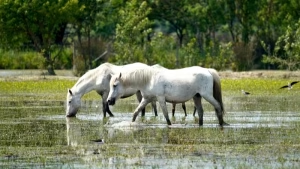
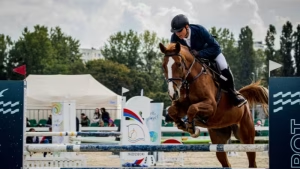
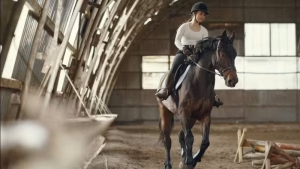
The Caspian horse is one of the world’s oldest and rarest horse breeds — a small, refined animal whose origins reach back at least 5,000 years to the foothills of the Elburz Mountains in northern Iran. For centuries it was thought extinct, known only from carvings on Persepolis and the seal of King Darius the Great. Its rediscovery in 1965 by American-born horsewoman Louise Firouz, in a remote village near the Caspian Sea, is one of the great equestrian stories of the twentieth century. Today fewer than 2,000 Caspians exist worldwide, but small breeding populations in the United Kingdom, the United States, Australia and Iran are slowly bringing the breed back from the brink.
Table of Contents
Caspian Horse Breed Overview
| Trait | Detail |
|---|---|
| Origin | Northern Iran (Caspian Sea region) |
| Height | 10–12.2 hands (102–127 cm) |
| Weight | 180–250 kg |
| Colours | Bay, chestnut, grey, black; minimal white markings |
| Lifespan | 25–30 years |
| Temperament | Intelligent, willing, sensitive, kind |
| Best for | Children’s mount, driving, in-hand showing, endurance |
| Conservation status | Critically endangered (Rare Breeds Survival Trust) |
Despite its small size, the Caspian is classified as a horse rather than a pony. Its conformation, proportions and movement are all those of a miniature horse rather than a stocky native pony. The breed standard reflects this distinction — Caspians display a fine head, large eyes, a slender neck, sloping shoulder and clean limbs.
Ancient Origins and Rediscovery
The Ancient Persian Horse
Bas-reliefs at Persepolis — built by Darius the Great around 515 BC — depict small horses pulling royal chariots and presenting tribute to the king. The seal of Darius shows him hunting lions from a chariot drawn by horses of remarkably similar proportions to the modern Caspian. Earlier evidence pushes the breed back further: a bronze figurine from Susa, dated to around 3000 BC, shows a small refined horse closely matching the Caspian type.
Most scholars now accept that the Caspian is a direct descendant of the small Mesopotamian horses that influenced the development of nearly every light, refined breed in the world — including the Arabian. DNA studies in the early 2000s, led by the University of Kentucky, found genetic markers in Caspians that predate those of other modern breeds, lending weight to the theory.
The Centuries of Obscurity
After the fall of the Persian Empire, the small horse of the south Caspian shore disappeared from official record. It survived only as a local working animal in the villages of Mazandaran and Gilan provinces, used to pull carts, work in rice fields and carry children. Outside northern Iran, the breed was assumed extinct for over a thousand years.
Louise Firouz and the 1965 Rediscovery
In 1965 Louise Firouz, an American horsewoman who had married into the Iranian aristocracy, was looking for small mounts for her riding school in Tehran. A friend mentioned the existence of unusually fine, small horses in the village of Amol, near the Caspian Sea. Firouz travelled there and discovered a stallion named Ostad pulling a cart. Recognising the breed’s significance, she purchased him and several mares and began a systematic breeding programme to preserve them.
By the early 1970s Firouz had established a breeding herd, exported foundation stock to the United Kingdom (with the late Prince Philip and the Caspian Stud UK), and began the painstaking work of building a registered breeding base. The Iranian Revolution of 1979 nearly destroyed her work — many horses were lost — but enough survived in Iran and abroad to preserve the breed.
Physical Characteristics
The Caspian is unmistakably a small horse rather than a pony. Standing typically 10 to 12.2 hands at the withers, it has the proportions of a 16-hand horse in miniature.
- Head: Short, fine, with a flat or slightly dished profile, large nostrils and small, alert ears. The forehead is broad with widely set, expressive eyes.
- Neck: Slender, well set on, with a slightly arched crest in stallions.
- Shoulder: Long and well sloped — a key feature underlying the breed’s smooth gaits.
- Body: Deep through the heart, with a short, strong back and well-sprung ribs.
- Hindquarters: Muscular, level croup, well-let-down hocks.
- Legs: Clean, dense bone — typically 13–15 cm of bone below the knee. Tendons are well defined and pasterns of medium length.
- Feet: Small, oval, very tough — the Caspian is famous for its rock-hard hooves and rarely needs shoeing.
- Coat: Fine and silky in summer, denser in winter. Mane and tail are long and luxuriant.
Most Caspians are bay, chestnut, grey or black, often with no white at all. White markings, when present, are limited to a small star or snip and white socks below the fetlock.
Temperament and Trainability
The Caspian’s temperament is one of its great selling points. They are intelligent, sensitive, quick to learn and notably brave. Owners describe them as having a horse’s mind in a small frame — they will think their way through new situations rather than panic.
The breed is exceptionally gentle with children. A well-handled Caspian gelding is a superb first ridden mount: small enough for a child to manage from the ground, big enough not to be quickly outgrown, and bold enough to lead from the front in a Pony Club ride. Many UK Caspian breeders specifically pitch the breed to families looking for a mount that lasts beyond the cute Shetland stage.
Stallions tend to retain their gentlemanly temperament even when used for breeding. They are commonly shown alongside mares and geldings without incident — uncommon among most breeds.
Movement and Gaits
Caspians move with the long, low, sweeping action of a much larger horse. The walk is free and active; the trot is elastic, with a noticeable suspension phase; the canter is balanced and uphill. Many Caspians make natural jumping ponies and clear obstacles considerably bigger than their size would suggest — a 12-hand Caspian jumping 90 cm tracks is not unusual.
The smooth gait makes them exceptionally comfortable to ride. Endurance riders training small mounts have noted the breed’s ability to maintain a steady working trot for long distances on undulating terrain.
Uses and Disciplines
- Children’s riding pony: The most common modern use. Suits Pony Club, lead-rein and first ridden classes, gymkhana and small jumping.
- Driving: Caspians are excellent in single, pair and team harness. The British Caspian Horse Society runs an active driving section, and several teams compete at national level.
- In-hand showing: A staple of Royal International, Royal Welsh and Horse of the Year Show in-hand classes for rare breeds.
- Endurance: Small mounts capable of long distances on a light rider — popular with junior endurance riders.
- Therapy and education: Their calm, people-focused nature makes them ideal for educational programmes and therapeutic settings.
- Breed conservation: Most Caspian owners participate in the breed’s worldwide conservation programme, registering foals with the breed society.
Health and Conformation
Caspians are hardy, long-lived and remarkably free of breed-specific health problems. Their strong feet, dense bone and thrifty metabolism reflect 5,000 years of natural selection in mountainous terrain. Most Caspians live to 25–30 years; some have reached their late thirties.
Common Considerations
- Obesity: Like most native and ancient breeds, Caspians are good doers and gain weight quickly on rich UK or SA pasture. Restrict grazing or use a track system to manage intake.
- Laminitis risk: Follows directly from obesity risk. Pay careful attention to spring and autumn flushes of grass.
- Inbreeding considerations: The very small global population means careful matings are essential. Reputable breeders use the worldwide pedigree database to maintain genetic diversity.
- Worming and dental: Standard equine routine — no breed-specific quirks.
The breed is genetically very pure, and bloodlines are tracked carefully. The Caspian Horse Society of the Americas, the British Caspian Horse Society and the International Caspian Stud Book maintain coordinated registries to support genetic management.
Caring for a Caspian Horse
Day-to-day Caspian care follows native pony principles: lots of forage, restricted access to rich grass, plenty of turnout, minimal fuss.
- Feeding: Mature meadow hay or haylage forms the bulk of the diet. A balancer suited to good-doers covers minerals and vitamins. Hard feed is rarely needed unless the horse is in heavy work.
- Turnout: 24/7 turnout suits Caspians well. They tolerate UK winters with sensible shelter and a New Zealand rug for older horses or clipped competition animals.
- Hooves: Most Caspians live their entire lives barefoot. A six- to eight-week trim cycle is standard. See our guide to why horses need shoes for the wider context.
- Worming: Faecal egg count programme, treating only as needed.
- Dental: Annual check by a qualified equine dental technician.
- Vaccination: Annual flu and tetanus per BEVA / WCF guidelines.
Conservation Status
The Caspian is listed as critically endangered by the UK’s Rare Breeds Survival Trust. Global numbers are estimated at fewer than 2,000 horses, with active breeding populations in:
- Iran — the original heartland, with a state-supported preservation programme
- United Kingdom — around 250 registered Caspians (British Caspian Horse Society)
- United States — Caspian Horse Society of the Americas
- Australia and New Zealand — small breeding herds
- Continental Europe — scattered breeders, mainly in Germany and France
Buyers interested in the breed should always purchase from a registered breeder and ensure the foal is registered with the appropriate national society, contributing to the global pedigree record.
Caspian vs Other Small Breeds
| Breed | Height | Type | Best For |
|---|---|---|---|
| Caspian Horse | 10–12.2 hh | Refined small horse | Children’s riding, driving, showing |
| Shetland Pony | Up to 10.2 hh | Stocky native pony | Lead-rein, first pony, driving |
| Exmoor Pony | 11.1–12.3 hh | Hardy native pony | Conservation grazing, children’s riding |
| Welsh Section A | Up to 12 hh | Refined native pony | Showing, lead-rein, ridden classes |
| Falabella | Up to 8.2 hh | Miniature horse | In-hand only — not ridden |
Where a Shetland or Welsh A is unmistakably a pony — short-legged, stocky, with a thick mane and characteristic native head — the Caspian is unmistakably a small horse, with longer legs in proportion, a finer head and the gaits of a much larger animal.
Frequently Asked Questions
Is a Caspian a horse or a pony?
The breed registry classifies the Caspian as a horse, despite typically standing under 14.2 hands. The classification reflects conformation and movement — long sloping shoulder, level croup, smooth gaits — which are typical of a horse rather than a pony.
How big does a Caspian horse get?
Caspians stand between 10 and 12.2 hands (102–127 cm) at the withers. Anything over 12.2 hh would be unusual and may indicate crossbreeding.
Can adults ride Caspian horses?
Light adults — under about 60 kg — can ride mature Caspians for short distances or in driving harness. The breed is principally a children’s mount, however, and most adult interest centres on driving, in-hand showing and breeding.
How much does a Caspian horse cost in the UK?
Registered Caspians typically sell for £3,000–£8,000 in the UK in 2026, with broodmares and proven competition or breeding stock fetching more. Foals from established lines start around £2,500. Always buy registered stock from a Caspian Horse Society member.
Are Caspians good for first-time horse owners?
The breed’s calm temperament suits experienced families looking for a children’s mount, but the conservation context means buyers should engage with the breed society, attend shows, and ideally visit several breeders before purchasing. The British Caspian Horse Society offers excellent guidance for newcomers.
How long do Caspian horses live?
25 to 30 years is typical, with many Caspians remaining ridden or driven well into their twenties. Their longevity is one of the breed’s great virtues.
Where can I see Caspian horses in the UK?
The Caspian Horse Society of the British Isles holds an annual show and stallion grading. Caspians compete in rare-breed classes at the Royal Welsh Show, Royal International Horse Show, and the Horse of the Year Show. Several breed-society stud farms welcome visitors by appointment.
For more on rare and ancient breeds, explore our profiles of the Akhal-Teke, Exmoor Pony, and Arabian.