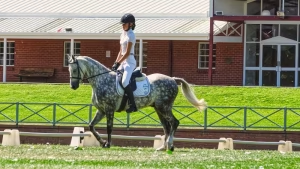
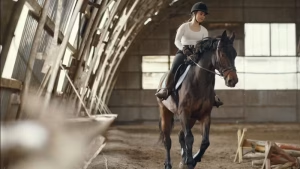
The sitting trot is the diagonal two-time gait ridden without rising, and for most riders it is the gait that exposes every weakness in their seat, balance and core. Done well, the sitting trot is one of the most beautiful pictures in horsemanship: rider and horse moving as one, with the rider’s seat absorbing the suspension of the trot stride and the horse swinging unrestricted through the back. Done badly, it bumps the horse’s spine, stiffens the rider, and wrecks any chance of producing soft, true work.
This guide is a complete, practical breakdown of how to sit the trot: the biomechanics of the gait, how the sitting trot differs from rising trot, the rider’s position, the muscles that actually do the work, the exercises that build a usable seat, the common faults and how to fix them, and the differences between a working sitting trot and the collected sitting trot of advanced dressage.
Table of Contents
What Is Sitting Trot?
The sitting trot is the trot ridden with the rider’s seat in continuous contact with the saddle, rather than rising out of the saddle on every other beat. The trot itself is a two-time, diagonal gait — the horse’s diagonal pairs of legs (off-fore with near-hind, near-fore with off-hind) move together, with a moment of suspension in between. That moment of suspension produces an upward thrust, and the rider’s job in sitting trot is to absorb that thrust without stiffening, gripping or bouncing.
Sitting trot has several legitimate uses:
- Dressage — required from Elementary level upwards in most national tests, and used throughout an advanced test for collected and extended trot.
- Schooling — sitting trot allows the rider to use the seat as an aid for shorter steps, transitions, lateral work and engagement.
- Canter and walk transitions — many riders sit the last few strides of trot before a transition for better balance and clarity of aid.
- Showing — a moment of sitting trot is part of the test in most show classes from Hunter Pony upwards.
It is not the trot you ride for hour after hour on a hack, nor what you ask of an unfit horse, nor what you should attempt for any length of time before you have built the postural strength to do it without bumping. Knowing when to sit, and when to rise, is part of riding well.
The Biomechanics of the Trot
The trot has three phases that matter for the rider:
- Stance — one diagonal pair of legs is on the ground, supporting the horse’s weight. The horse’s back is at its lowest position.
- Suspension — both diagonals are off the ground momentarily. The horse’s back rises and the rider receives an upward push.
- Landing — the opposite diagonal lands. The back drops again.
This produces a rhythmic up-down-up-down movement of the horse’s back at the rate of the trot beat — typically 75 to 90 beats per minute at working trot, faster at extended trot, slower at collected. The rider’s seat must move with the horse’s back without resisting it, anticipating it, or being launched out of the saddle by it. If you are still learning to feel the diagonal beat, our guide to trotting basics is the place to start before you tackle the sitting seat.
The amplitude of the suspension differs hugely between horses and gaits. A small native pony at working trot offers very little to absorb. A big Warmblood doing extended trot offers an enormous suspension that even an experienced rider must work hard to sit. This is why riders often comment that one horse is “easy to sit” and another is “impossible” — the gait, suspension and back movement vary that much.
Sitting Trot vs Rising Trot
Every rider learns rising trot — known as posting trot in the United States — before they ever attempt to sit. In rising trot the rider lifts the seat softly out of the saddle on one beat of the diagonal and returns to it on the next, spreading the work over two strides. In sitting trot the seat never leaves the saddle; it stays and absorbs. Both are correct; they simply do different jobs.
| Rising (posting) trot | Sitting trot | |
|---|---|---|
| Seat | Rises and falls on alternate beats | Stays in the saddle throughout |
| Best for | Hacking, long trot work, warming up, green or unfit horses | Schooling, transitions, lateral work, dressage from Elementary |
| Demand on the rider | Lower — easier to balance | Higher — needs core strength and a supple lower back |
| Seat as an aid | Limited | Full use of the seat for half halts and engagement |
| Effect on the horse’s back | Generally easier over long periods | Very kind when soft; punishing when the rider bounces |
Is sitting trot harder than rising trot? For the rider, almost always yes — it asks far more of the core, the hip mobility and the postural muscles. For the horse the answer depends entirely on the rider. A soft, following sitting seat can encourage the horse to lift and use the back, whereas a bouncing sitting trot hammers it. That is why good instruction insists on quality over quantity: a few strides of quiet sitting trot are worth far more than a long, tense slog. Use rising trot to warm up, cover ground and rest the horse’s back, and switch to sitting trot when you want the seat available as an aid.
Rider Position for Sitting Trot
A correct sitting trot position starts at the head and ends at the heel, with the seat as the central point. Picture a vertical line: the rider’s ear, shoulder, hip and heel should align when viewed from the side. This is the same balanced framework covered in our guide to the correct horse riding position, refined for a seat that never leaves the saddle.
- Head — directly over the shoulders, eyes up, looking through the horse’s ears, not down at the saddle.
- Shoulders — back and down, soft, not braced. A rider who pulls the shoulders back forcibly creates tension that runs straight to the seat.
- Spine — neutral, with a small natural lumbar curve. Not arched, not collapsed.
- Pelvis — upright, with the seat bones bearing equal weight. The pubic bone, the two seat bones and the tailbone form a triangle pointing down into the saddle.
- Hips — open, allowing the thigh to drape down the saddle without gripping.
- Thighs — long, soft, hanging from the hip. Not clamped on.
- Knees — bent and relaxed, not pinching.
- Lower legs — softly against the horse’s sides, with the heel slightly below the toe.
- Hands — quiet, carried in front of the saddle, in line with the horse’s mouth via a soft elbow.
The seat must be the most active part of the body, but its activity is internal — the muscles of the deep core, the pelvic floor and the lower back work continuously to absorb movement. Externally, a good sitting trot looks still.
How to Sit the Trot Without Bouncing, Step by Step
Bouncing is the single complaint every rider brings to the sitting trot, and it is always a symptom of tension rather than a lack of trying. If you have a usable rising trot but a struggling sitting trot, the path to a quiet, bounce-free seat is six clear steps.
1. Build a Quiet Seat at Walk First
Before sitting any trot, learn what a quiet, following seat feels like at walk. Drop the stirrups for a few minutes at walk and feel the horse’s back swing through your seat bones. Each seat bone should rise and fall in time with the corresponding hind leg. If you cannot feel this at walk, you cannot sit it at trot.
2. Lengthen the Leg
A short, gripping leg is the single biggest cause of bouncing in sitting trot. The stirrup leather should drop you naturally into the deepest part of the saddle, with the inside of the thigh and knee resting softly on the saddle, never clenching. Drop your stirrups for short periods to feel the leg lengthen.
3. Sit Down Through the Transition
Begin at walk, sit down deeply into the saddle, and ask for trot from the seat — a soft squeeze of both legs and a forward thought through the seat. The transition itself sets the tone. If you snatch yourself up onto the saddle as the horse trots off, you will be behind the movement for the next twenty strides.
4. Allow, Don’t Push
The most common cue I give pupils is “stop trying so hard.” Sitting trot is mostly about allowing — letting the seat be moved by the horse’s back, not driving the seat into the saddle. Imagine your seat is liquid, pouring into the contours of the saddle. The horse’s back lifts you; gravity returns you.
5. Engage the Deep Core, Not the Surface
Tension in the rectus abdominis (the surface “six-pack”) locks the pelvis. The muscles that absorb trot are deeper: the transversus abdominis, the pelvic floor, the multifidus along the spine. Engaging these is closer to a quiet “drawing-up” feeling than a sit-up. A Pilates teacher’s instruction to “lift the pelvic floor” and “draw the navel back” is a far better cue than “tighten the abs.”
6. Breathe
Most riders hold their breath in sitting trot. Holding the breath locks the diaphragm, the diaphragm braces the spine, and the spine then transmits every bump through the seat. Breathe slowly and continuously — in through the nose, out through the mouth, deep into the belly. If you catch yourself bouncing, breathe out hard on the next stride; you will usually feel the seat drop back down.
Exercises to Build a Sitting Trot Seat
The seat is built off the horse as much as on it.
On the Horse
- Lunge lessons without stirrups — the gold standard. Five minutes of sitting trot on a quiet, well-going lunge horse, with the rider doing arm-circling and twisting exercises, builds a deeper seat in a fortnight than a year of own-yard riding.
- Trot poles in sitting trot — five poles set at trot distance encourage the horse to engage the back and the rider to follow it. Our note on pole work explains how to set the distances correctly.
- Walk-trot-walk transitions in sitting trot — three to five strides of trot, back to walk, repeat. Builds the habit of sitting through the transition rather than scrambling for it.
- Short sitting trot intervals — five to ten strides at a time, alternating with rising. Most riders try to sit too long and fall into bad habits. Five good strides are worth five hundred bad ones.
- Half halts in sitting trot — once stable, begin using the seat aids that sitting trot enables. The half halt, transitions, shoulder-fore and leg yield all sharpen the seat.
Off the Horse
- Pilates and yoga — particularly any practice focused on pelvic mobility, hip opening and core control. Riders who do regular Pilates have measurably better sitting trot.
- Plank and side plank — for transverse abdominal strength, not for surface-level “abs.”
- Hip flexor stretches — tight hip flexors pull the pelvis forward and prevent the seat from sitting deeply. Couch stretch, kneeling lunge stretch, half pigeon.
- Glute and inner-thigh strengthening — squats, single-leg sit-to-stand, ball squeezes between the knees. The seat is supported by these muscles, not by gripping.
- Deep breathing practice — three to five minutes a day of slow, diaphragmatic breathing. Cheap, dull, and shockingly effective for any rider who tenses under pressure.
Common Faults and Fixes
Bouncing
Cause: gripping with the thigh, holding the breath, or sitting against the movement rather than with it. Fix: lengthen the leg, breathe out, soften the thigh, ride a quieter horse on the lunge until the feeling returns.
Collapsed Hip
Cause: one seat bone bearing more weight than the other, often combined with a tilted shoulder. Fix: ride circles in both directions and check evenness of seat-bone contact. A mirror in the school is invaluable.
Tipping Forward
Cause: collapsing through the front of the body, often with hands resting on the neck. Fix: lift the sternum, take both reins in one hand briefly to free the upper body, ride sitting trot with the free hand on top of the helmet to stay tall.
Driving Seat
Cause: pushing the pelvis into the saddle on every stride. Fix: think “absorbing” not “driving.” A driving seat is a tense seat. Ride circles thinking “swing-swing-swing” rather than “push-push-push.”
Stiff Back
Cause: bracing the lumbar spine against movement. Fix: micro-movement through the pelvis. The pelvis must rotate gently in time with the horse’s back. Imagine balancing a glass of water on your sacrum and letting it tilt with the horse.
Bracing in the Stirrup
Cause: pushing the heel down hard rather than letting it drop. Fix: ride for short periods without stirrups. The sitting trot improves dramatically the moment the heel stops bracing.
The Horse’s Side of the Equation
It is not all about the rider. A horse that is on the forehand, hollow, tense, or unfit will be far harder to sit than one working through from behind into a soft hand. Some considerations:
- Work the horse forward and round before asking for sustained sitting trot. A horse working over the back swings through the rider’s seat. A hollow horse jolts.
- A young or green horse may not yet have the back strength for prolonged sitting trot. Five-stride bursts, not five-minute slogs.
- An unfit horse tires through the back muscles before the legs. The trot stiffens, the back drops, sitting becomes punishing for both. Rise instead.
- A horse with a sore back, kissing spine, or saddle-fit issue will brace through the back and make sitting trot impossible. If the horse is suddenly unsittable, suspect saddle fit or a back problem first.
Sitting Trot in Dressage
Within British Dressage and FEI tests, sitting trot is required from Elementary upwards (BD) and from Novice International upwards in FEI tests. If you are still finding your feet with the discipline, our beginner-friendly overview of what dressage is and our deeper look at dressage as the art of horse training put the movement in context. The expectations rise with the level:
- Working sitting trot — quiet seat, soft contact, the horse working forward in self-carriage. Required at Elementary.
- Collected sitting trot — shorter, higher steps with greater engagement, an even higher demand on the rider’s seat to follow without driving. Introduced at Medium.
- Extended sitting trot — the most challenging movement to sit. Maximum suspension, the seat must absorb without being dislodged. Introduced at Medium and refined upwards.
- Lateral work — shoulder-in, travers and leg yield are all ridden in sitting trot from Medium onwards. The seat aids become the principal control.
It is widely accepted in modern dressage teaching that the seat is the master aid, the leg is the supporting aid, and the hand is the finishing aid. Sitting trot is the gait in which that hierarchy becomes possible.
A Six-Week Progression Plan
For a rider who has a serviceable rising trot but no usable sitting trot.
- Week 1 — five minutes of walk without stirrups daily. Two thirty-second sitting trot intervals on a quiet horse, three times per ride.
- Week 2 — ten minutes of walk without stirrups daily. Lengthen sitting trot intervals to one minute. Add Pilates session twice weekly.
- Week 3 — introduce a lunge lesson with stirrups crossed for ten minutes. Continue Pilates. Start using the seat for half halts in rising trot.
- Week 4 — full lunge lesson without stirrups (twenty minutes). Walk-trot-walk transitions in sitting trot in your own riding. Begin using sitting trot for the last few strides before each walk transition.
- Week 5 — ride entire schooling sessions alternating thirty seconds rising, thirty seconds sitting. Introduce sitting trot for shoulder-in or leg yield.
- Week 6 — sustained two-to-three-minute sitting trot blocks in all schooling work. Introduce sitting trot for transitions to canter. Re-evaluate lameness, saddle fit and horse fitness if it is not improving.
The progression is deliberately conservative. Riders who try to brute-force sitting trot in a fortnight bury themselves and their horses in a deep hole of tension. The sitting trot is built, not grabbed.
Saddle, Stirrups and Kit
The wrong saddle can make a competent sitting trot impossible. If you are not sure what you are looking at underneath you, our guide to the parts of the saddle is a useful primer. Look for:
- A saddle that fits the horse first. A horse in a poorly fitting saddle will hollow and brace through the back. No rider sits well on a hollow horse.
- A saddle that fits the rider second. Wrong seat size, wrong twist width, wrong panel depth — all push the rider out of the deep seat.
- Reasonable stirrup length. A common error is riding one or two holes too short. For schooling and dressage work, the stirrup leather should drop to the rider’s ankle bone with the leg out of the iron. Many riders sit a hole longer for sitting trot than for rising.
- Soft, quiet bit and bridle. Tension in the contact telegraphs into the horse’s back. A horse braced in the jaw is a horse hollow in the back.
Frequently Asked Questions
Why do I bounce so much in sitting trot?
Bouncing is the symptom; tension is the cause. Most riders bounce because they grip with the thighs, hold the breath, brace in the stirrup or push the pelvis against the movement. The fix is in lengthening the leg, breathing out and allowing the seat to be moved by the horse rather than chasing the movement.
What is the difference between sitting trot and rising trot?
In rising trot (called posting trot in the US) the rider lifts the seat out of the saddle on alternate beats; in sitting trot the seat stays in the saddle throughout and absorbs the movement. Rising trot is easier and kinder over long periods, so it suits hacking, warming up and green or unfit horses. Sitting trot gives the rider full use of the seat as an aid and is required in dressage from Elementary upwards.
How long does it take to learn sitting trot?
For an adult amateur rider with a serviceable rising trot, building a usable sitting trot takes around six to twelve weeks of consistent practice — three rides a week, plus core work off the horse. Truly polished sitting trot at collected and extended paces is the work of years, not weeks.
Can I learn sitting trot without lunge lessons?
Yes, but it is much harder. The advantage of a lunge lesson is that the instructor controls the horse, allowing the rider to focus entirely on their own body. Five lunge lessons across the first month of work pay back tenfold in the next year of riding. Find a coach with a sensible lunge horse and book them.
Should I always sit the trot in a dressage test?
Below Elementary in British Dressage, rising trot is permitted throughout the test. From Elementary onwards, sitting trot is required for trot work. Sitting badly is generally penalised more than rising at preliminary levels — judges would rather see a quiet rising trot than a bouncing sitting one.
Is sitting trot harder on the horse’s back?
Done badly, yes — a bouncing or driving rider hammers the back. Done well, no — a soft, following sitting seat may even encourage the horse to use the back better than rising trot does. The variable is the rider, not the gait.
For more on building a balanced position and a soft contact, the British Dressage rulebook is the definitive UK source for movement requirements, while The British Horse Society and the Pony Club both publish excellent grounding on seat and balance for riders at every stage.