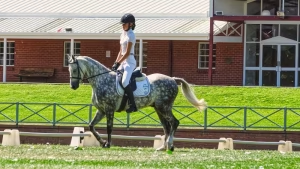
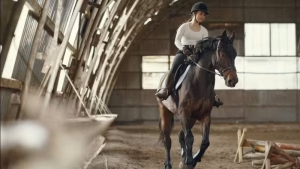
In-hand showing is the discipline of presenting a horse on the ground, led rather than ridden, for a judge’s assessment of conformation, movement, and manners. It is the oldest form of showing in the UK — pre-dating ridden classes by centuries — and remains one of the most accessible entry points for new competitors. In-hand classes are the showcase for youngstock, veterans, stallions, and any horse where riding is not the point. This guide covers every element of a successful in-hand showing campaign: choosing the right class, training the horse to stand and move, turning out horse and handler, and managing the day of the show itself.
Table of Contents
What Is In-Hand Showing?
In-hand showing is a class format where the horse is walked and trotted alongside a handler for assessment by a judge. No rider is involved. The judge inspects the horse from all sides in a standing position, watches it walk and trot in a straight line (and sometimes on a triangle), and compares each entry against the breed or type standard for the class. The best-placed horse is the one whose conformation, movement, and manners most closely match the class specification.
In-hand classes are offered at almost every unaffiliated and affiliated show in the UK, from local riding club events to the Royal International Horse Show and Horse of the Year Show. The format is particularly important for youngstock whose careers start in-hand before they are backed, for breeding stock where conformation is the primary currency, and for older horses who no longer compete ridden.
Why Compete In-Hand
- Education for young horses. A foal, yearling, or two-year-old gains invaluable exposure to a show environment — loudspeakers, crowds, other horses, arenas — without the physical demands of ridden work.
- Showcasing breeding stock. Stud owners use in-hand classes to advertise the quality of their stallions, mares, and young stock.
- Evaluating conformation. Placings in in-hand classes offer an objective opinion from an independent judge, useful for breeders making retention and sales decisions.
- Pathway for producers. Professional producers use in-hand success as the first step in a career that moves to ridden classes once the horse matures.
- Inclusive competition. Veterans, retired horses, and horses recovering from injury can still compete and earn placings, giving owners a way to keep showing without ridden pressure.
- Accessible entry point. Handlers new to showing can learn the discipline without the added complication of riding in a ring.
Types of In-Hand Showing Classes
Youngstock Classes
Split by age: foals, yearlings, two-year-olds, and three-year-olds. These classes focus on type, correct conformation for age, and the early development of movement and manners. Judges expect age-appropriate behaviour — a foal is allowed more exuberance than a three-year-old.
Breed Classes
Breed-specific in-hand classes run under the rules of individual breed societies: the Welsh Pony and Cob Society, the Irish Draught Horse Society GB, the Arabian breed classes under the Arab Horse Society, and many others. Each society has its own standard, turnout conventions, and showing traditions.
Mountain and Moorland (M&M) In-Hand
The nine native British pony breeds — Welsh Section A, Welsh Section B, Welsh Section C, Welsh Section D, Dartmoor, Exmoor, Highland, New Forest, Fell, Dales, and Shetland — have large in-hand sections at native and M&M shows. Turnout rules are strict: traditional M&M ponies are shown with natural manes and tails, not plaited.
Sport Horse Breeding In-Hand
SHB(GB) runs a structured pathway of in-hand classes for sport horse youngstock — foal, yearling, two-year-old, three-year-old — leading to the Futurity evaluations and, ultimately, to ridden hunter and show hunter classes as adults.
Veteran In-Hand
For horses 15 years and over, judged on condition, soundness for age, and manners rather than peak conformation. A popular category for retired competition horses.
Traditional and Coloured In-Hand
For gypsy cobs, gypsy cob horses, and coloured horses of all types. Run under BSPA (British Skewbald and Piebald Association) and Coloured Horse and Pony Society rules.
In-Hand Showing for Beginners
Many local shows run “novice” or “handler” classes where placings are based on the quality of the handler’s presentation and the horse’s obedience, not on conformation alone. These are ideal first classes for a new combination.
Training a Horse for In-Hand Showing
In-hand training uses standard groundwork as its foundation, refined into three specific skills: walking correctly beside the handler, trotting out freely on command, and standing absolutely still for the judge.
Leading at Walk
The horse should walk shoulder-to-shoulder with the handler, head at the handler’s shoulder, maintaining a consistent pace. It should not pull, lag, drift sideways, or anticipate. Practise transitions — walk, halt, walk, halt — at home until the horse moves off when you do and halts as you stop, without a pull on the rope.
Leading at Trot
An in-hand trot-up must be straight, rhythmic, and free. The handler jogs alongside the horse’s shoulder, matching the horse’s stride. A horse that lags behind masks its true movement; a horse that pulls ahead makes the handler look out of control. Train at home by jogging short straight lines with the horse, using voice and a forward step to generate impulsion without pulling on the rein.
Standing
The horse must stand square and still while the judge walks around it. This is often the hardest part of in-hand showing because horses find it boring. Train it in short increments: ask for three seconds standing, release and praise; ask for ten seconds; build to a minute. Use a treat or a soft scratch as the reward. Practise with other people walking around the horse so it is unfazed by the judge’s approach.
Moving Off in Both Directions
Many classes ask for an individual show that includes walking off to the left, standing, trotting to the right on a triangle, and returning. Practise turns in both directions, small figure-of-eights, and the triangle pattern (walk one side, trot two sides, back to the judge) so the horse is unsurprised on the day.
Standing the Horse Correctly for the Judge
A correct in-hand stance depends on the breed, but the general UK convention for most sport horses, hunters, and hacks is:
- Near fore (handler’s side) slightly forward of the off fore.
- Off hind slightly back of the near hind.
- All four legs visible as separate pillars from the judge’s side.
- Head slightly up, ears forward, neck in a natural carriage.
- Weight evenly distributed.
For Arabians, the stretch stance (hind legs slightly extended back, front legs slightly extended forward) is traditional. For Mountain and Moorland ponies, the stance is more natural and less stylised — the pony stands as it would in a field. Know the convention for your class before entering.
The In-Hand Trot-Up
The trot-up is the movement that wins or loses classes. Judges watch from directly behind as the horse trots away, from the side as it turns, and from directly in front as it returns. They assess straightness, evenness of stride, rhythm, and freedom of movement. Common problems:
- Crookedness. A horse that drifts or swings its hindquarters loses marks. Practise straight lines against a wall or fence at home.
- Lack of impulsion. A sluggish trot hides the horse’s real movement. Carry a long whip in the outside hand if rules allow, and use voice and stride to push forward.
- Handler leaning on the rein. The horse should trot on a loose rein or light contact; a handler who is pulling is covering for training gaps.
- Turning on top of the horse. Give the horse space to turn — a 6 m half-circle, not a sharp about-turn on the spot.
Horse Turnout for In-Hand Showing
Coat
A gleaming coat is the product of weeks of correct feeding, grooming, and rug management — not a last-minute bath. Bathe the horse the day before with a gentle equine shampoo, condition the mane and tail, and dry thoroughly. On the morning of the show, finish with a hot cloth and a bristle brush rather than a fresh bath.
Mane and Tail
Plaiting rules vary by class:
- Sport horses, hunters, hacks, cobs (show): plaited mane, plaited or pulled tail.
- Mountain and Moorland natives: natural, unplaited, untrimmed. Whiskers and feather remain.
- Arabians: natural, enhanced with coat oil around the eyes and muzzle.
- Gypsy cobs and traditionals: natural, feather washed and picked out, full mane.
Always check the class schedule and breed society rules.
Feet
Trimmed, oiled, and clean. White socks are scrubbed and, if stained, treated with a whitening product the evening before (not on the morning — the effect is better after a night to settle).
Show Bridle
Most in-hand classes use a show bridle appropriate to the horse’s type: a leather show halter for natives, a double bridle or plain snaffle for sport horses and hunters, or a lightweight in-hand show bridle for Arabians. A lead rope or leather lead rein attaches to the noseband or bit. Check class rules — some do not allow bits for youngstock.
Quarter Markings
Subtle shark’s-teeth or checkerboard markings on the hindquarters catch the eye without looking overdone. Over-stencilled markings look amateurish; plain, clean quarters are often more effective.
Handler Turnout and Dress
Traditional UK in-hand turnout for a handler:
- Beige, buff, or brown trousers (or skirt for traditional ladies’ in-hand).
- White shirt with a tie or stock.
- Tweed or country-check waistcoat.
- Tweed or dark-coloured jacket (optional in warm weather).
- Leather gloves.
- Polished long boots or jodhpur boots.
- Traditional hunt cap or, where required by class rules, a PAS 015/VG1 standard riding hat.
- A long show cane held in the outside hand, never used to strike the horse.
For M&M in-hand, a more country-practical look is appropriate — tweed jacket, tie, cords or breeches, gloves, and boots. For Arabian in-hand, brighter colours and more fitted outfits are traditional. Always match the turnout to the breed and class.
What to Expect on Show Day
- Arrive early. Allow at least 90 minutes between arrival and class time. Youngstock especially need time to settle.
- Walk the ring. Ride and showing rings differ. Know the entry and exit points, the standing position, and where the judge will be.
- Warm up briefly. A 10-minute in-hand walk to settle muscles and the mind. Avoid over-trotting before the class — it tires a young horse and can make it fractious.
- In the ring. Follow the ring steward’s directions promptly. Walk around the ring with the class, then line up as directed.
- The individual show. When called out, walk to the judge, stand, and perform the requested show (usually walk, stand, trot on a triangle, return). Keep eye contact with the judge, not the horse.
- Final walk round. After all horses have shown, the judge usually calls the line in preferred order for a final look. Stay alert to the steward’s signals.
- Collection of prizes. Rosettes are presented on the spot; larger prizes usually collected from the secretary’s office.
Common Mistakes and How to Avoid Them
- Reading the horse badly. A tense, fidgety horse in the ring almost always reflects not enough preparation at home. Train in varied environments, not just in your own arena.
- Handler blocking the judge’s view. Stand so that your body does not obscure the judge’s sightline. Move to the far side when the judge walks to your near side.
- Over-fussing. Constantly adjusting the horse’s stance, petting its nose, or repositioning legs looks amateur and unsettles the horse.
- Loose or long lead. The lead should be neatly held, never dragging. Excess rope is folded into figures of eight in the handler’s off hand.
- Wrong turnout. Plaiting a Welsh Section A, or showing a sport horse with a full natural mane, is an immediate strike. Check the class rules before entering.
- Rushing the trot-up. Too fast a trot produces a short, choppy stride that hides the horse’s natural movement. Aim for a strong, balanced working trot.
- Failing to read the judge. If the judge signals “again” or asks for a specific movement, respond immediately and calmly. A willing handler who cooperates leaves a strong impression even when the horse is not the best on the day.
Frequently Asked Questions
What is in-hand showing?
In-hand showing is a competition class where horses are led rather than ridden for a judge’s assessment of conformation, movement, and manners. It is used for youngstock, breeding stock, veterans, and any horse where a ridden class is not appropriate.
How should a horse stand for an in-hand judge?
For most UK sport horses and hunters, the near fore stands slightly ahead of the off fore and the off hind slightly behind the near hind, so all four legs appear as separate pillars from the judge’s side. The horse should stand square, relaxed, with its ears forward. Breed-specific stances differ — Arabians stand stretched, Mountain and Moorland natives stand naturally.
What should I wear for in-hand showing?
Traditional UK in-hand turnout is beige or brown trousers, a white shirt with a tie or stock, a country-check waistcoat, leather gloves, polished boots, and either a hunt cap or a PAS 015/VG1 riding hat where rules require. Breed-specific conventions apply — more country practical for M&M, brighter for Arabian, more formal for ridden show classes at higher levels.
How do I train my horse for in-hand showing?
Train three core skills: walking calmly beside you, trotting out freely in a straight line, and standing square and still for the judge. Build each skill with short, consistent sessions. Practise with other people walking around the horse, with loudspeaker background noise if possible, and in varied locations to generalise the behaviour beyond your home arena.
Can any horse compete in in-hand showing?
Yes. Classes are available for foals, yearlings, two- and three-year-olds, sport horse youngstock, breed types (natives, Arabians, traditionals, coloureds), veterans 15+, and general conformation classes. There is a category suitable for almost every horse of sound type and reasonable turnout.
What is the difference between in-hand and ridden showing?
In-hand showing is judged from the ground with the horse led by a handler; ridden showing is judged with a rider in the saddle. Ridden classes test way of going, ride quality, and the horse’s behaviour under saddle in addition to conformation. In-hand classes focus on conformation, movement, and manners without the ridden component.
Do I need to plait my horse’s mane for in-hand showing?
It depends on the class. Sport horses, hunters, hacks, and show cobs are plaited, and our step-by-step guide to plaiting a horse’s mane and tail covers the thread method judges expect. Mountain and Moorland natives, Arabians, gypsy cobs, and traditionals are shown with natural manes. Always check the class schedule and the relevant breed society rules before the show.