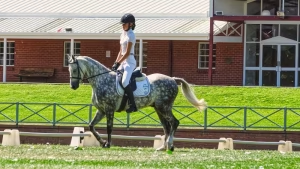
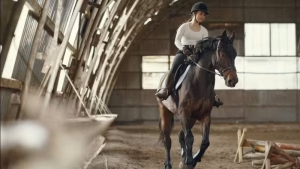
Horse trotting is one of the first skills every rider must master. The trot is a two-beat diagonal gait — faster than a walk but slower than a canter — and it forms the foundation for virtually all ridden work. Whether you are learning to ride, schooling for dressage, or hacking out across open country, understanding how the trot works and how to ride it well will transform your confidence and effectiveness in the saddle.
Table of Contents
How the Trot Works
The trot is a two-beat diagonal gait in which the horse’s legs move in diagonal pairs. The left fore and right hind strike the ground together, followed by the right fore and left hind. Between each beat there is a brief moment of suspension where all four feet are off the ground — this is what gives the trot its characteristic bouncy feel.
The average horse trots at around 13 km/h (8 mph), though this varies considerably depending on the horse’s breed, conformation, and level of training. A Thoroughbred in extended trot will cover far more ground per stride than a Shetland pony in working trot.
The trot is considered the most honest of the horse’s gaits. Because it is symmetrical, any unevenness or lameness is immediately visible — which is why vets always assess soundness at trot rather than walk or canter.
Types of Trot
In ridden work, particularly in dressage, there are four recognised types of trot. Each requires a different degree of collection, impulsion, and stride length:
- Working trot: The horse’s natural, active trot with good forward energy. This is the default trot used in everyday riding and the starting point for all schooling work. The horse should be balanced, rhythmical, and moving freely forward from the hindquarters.
- Collected trot: The horse’s stride shortens while maintaining or increasing energy. The hindquarters engage more deeply, the forehand lightens, and the horse appears to move with elevated, cadenced steps. This requires significant strength and training to achieve correctly.
- Medium trot: The horse lengthens its stride beyond working trot, covering more ground per step while maintaining balance and rhythm. The frame opens slightly and the horse reaches further forward with each stride.
- Extended trot: The horse covers the maximum amount of ground possible per stride without losing rhythm or balance. The legs reach their fullest extension and the moment of suspension is at its most pronounced. Extended trot is a highlight of advanced dressage tests.
The British Dressage test sheets assess transitions between these trot types, looking for smooth, clear changes in stride length while maintaining consistent rhythm.
Rising Trot
Rising trot (sometimes called posting trot in American English) is the first trot technique most riders learn. The rider alternates between rising out of the saddle and sitting back down in rhythm with the horse’s stride: rising for one beat and sitting for the next.
How to Rise to the Trot
- Establish a steady walk and prepare to ask for trot. Shorten your reins slightly to maintain a light, elastic contact.
- Ask the horse to trot by closing both lower legs gently against the horse’s sides. A verbal cue such as a cluck or “trot on” can reinforce the leg aid.
- Let the horse’s movement lift you. As the horse begins to trot, allow the motion of its back to push your hips forward and slightly upward. You should rise forward rather than straight up — think of your pelvis tipping toward the pommel.
- Sit softly for one beat, rise for one beat. The rhythm should be “up-down, up-down” in time with the two-beat gait. Avoid standing in the stirrups or pushing yourself upward with your legs.
- Keep your lower leg stable. Your heel should remain beneath your hip, and your lower leg should stay in contact with the horse’s sides without gripping.
Rising trot is less tiring for both horse and rider over long periods. It is commonly used for hacking, warming up, and schooling at lower levels. It also places less strain on the horse’s back, making it the preferred trot for young or unfit horses.
Sitting Trot
In sitting trot, the rider remains in the saddle throughout, absorbing the horse’s movement through a supple lower back, relaxed hips, and engaged core. It requires more skill and body control than rising trot and is essential for dressage, lateral work, and more advanced schooling.
How to Sit the Trot
- Find the deepest part of the saddle. Sit tall with your weight distributed evenly across both seat bones.
- Relax your lower back and hips. Tension in the lower back is the single biggest cause of bouncing. Allow your pelvis to follow the horse’s movement — imagine your hips drawing small circles in time with the trot.
- Engage your core gently. A light core engagement stabilises your upper body without creating stiffness. Think of supporting your posture from the inside, not bracing.
- Let your legs hang long and heavy. Avoid gripping with your knees or thighs — this pushes you out of the saddle. Instead, let gravity keep your legs in place with soft, draped contact.
- Breathe. Many riders hold their breath when concentrating on sitting trot, which creates tension throughout the body. Consciously breathe out as you settle into the rhythm.
Sitting trot improves with practice and core strength. Riding without stirrups on a lunge line is one of the best exercises for developing a deep, secure sitting trot. For more detail, see our dedicated guide to making sitting trot easier.
Understanding Trot Diagonals
When riding in rising trot, you should rise with a specific diagonal pair of legs. In an arena, the convention is to rise on the outside diagonal — meaning you rise as the outside foreleg moves forward and sit as it comes back.
For example, when tracking left (going clockwise), the outside of the arena is to your right. You should rise as the right foreleg comes forward. If you glance down at the horse’s outside shoulder, you should be rising as that shoulder moves forward.
Why Diagonals Matter
- Balance: Riding on the correct diagonal helps the horse stay balanced through corners and on curved lines.
- Even muscle development: Regularly changing diagonals prevents the horse from favouring one side, which can lead to crookedness over time.
- Convention: Dressage judges and instructors expect to see correct diagonals in arena work.
To change diagonal, simply sit for an extra beat (“sit-sit”) before resuming the rising rhythm. When hacking out on straight lines, change diagonals periodically to keep the horse working evenly on both sides.
Rider Posture and Position
Good posture in trot starts with a straight line from your ear through your shoulder, hip, and heel. This classical alignment keeps you balanced over the horse’s centre of gravity and allows your body to move with the horse rather than against it.
- Head: Look up and ahead, in the direction of travel. Looking down at the horse shifts your weight forward and disrupts your balance.
- Shoulders: Relaxed and open, not rounded forward. Think of drawing your shoulder blades gently together.
- Arms: Elbows bent and close to your sides, with a straight line from elbow through hand to the horse’s mouth. Your hands should be steady but not fixed — allow them to follow the horse’s head movement.
- Core: Lightly engaged to support your upper body. Not braced or rigid.
- Hips: Supple and following the horse’s movement. In sitting trot, your hips are your primary shock absorbers.
- Legs: Long and draped, with the ball of the foot on the stirrup and the heel slightly lower than the toe. Avoid gripping with the knee.
Asking Your Horse to Trot
A good walk-to-trot transition sets the tone for everything that follows. Here is a step-by-step approach:
- Prepare: Ensure the horse is walking actively with good forward energy. A lazy walk produces a sluggish trot.
- Half-halt: Give a brief closing of your fingers on the reins combined with a gentle engagement of your core. This rebalances the horse and signals that something is about to change.
- Apply the leg aid: Close both lower legs against the horse’s sides simultaneously. The pressure should be a squeeze, not a kick. A well-schooled horse will respond to a light aid.
- Allow the movement: As the horse moves into trot, soften your hands slightly to allow the forward motion. Do not pull back on the reins — this sends a conflicting signal.
- Establish rhythm: Once in trot, settle into either rising or sitting trot and focus on maintaining a consistent rhythm and tempo.
To return to walk, sit deep, close your fingers on the reins, and stop following the trot movement with your hips. The horse should step smoothly down into walk without rushing or falling onto the forehand.
Common Trotting Mistakes
Even experienced riders can develop bad habits in trot. Here are the most common problems and how to fix them:
- Gripping with the knees: This pushes the rider out of the saddle and creates tension in the horse’s back. Focus on relaxing the inner thigh and letting gravity keep your leg in place.
- Standing in the stirrups: Rising too high in rising trot wastes energy and unbalances the horse. The rise should be minimal — just enough to clear the saddle.
- Looking down: This rounds the shoulders, tips the weight forward, and often causes the rider to collapse at the waist. Fix it by focusing on a point ahead of you at all times.
- Bouncing in sitting trot: Usually caused by a tense lower back. Practice on the lunge without stirrups, focusing on breathing and relaxing the hip joints.
- Rising on the wrong diagonal: Easily corrected once you learn to feel which diagonal you are on. Glance at the outside shoulder or develop the feel of the horse’s barrel swinging beneath your legs.
- Tipping forward in transitions: Often happens when asking for trot from walk. Maintain your upright posture throughout the transition — the horse should step into trot underneath you, not pull you forward.
Trotting Exercises to Improve Your Riding
These exercises will help develop your balance, feel, and effectiveness at trot:
- Trot without stirrups: The single best exercise for developing a deep, secure seat. Start with short intervals and gradually increase the duration as your balance improves.
- Trot poles: Riding over ground poles at trot improves the horse’s rhythm, engagement, and your ability to maintain position over uneven terrain. Space poles approximately 1.2m to 1.4m apart for a working trot.
- Transitions within trot: Practice lengthening and shortening the trot stride on straight lines. This develops feel for the horse’s balance and improves your ability to influence the tempo.
- Circles and serpentines: Riding accurate figures at trot improves your steering, bend, and ability to maintain rhythm through turns.
- Walk-trot-walk transitions: Frequent transitions sharpen the horse’s response to your aids and improve balance for both horse and rider.
- Two-point position at trot: Rising slightly out of the saddle with your weight in your stirrups and your seat just clear of the saddle. This builds leg strength and balance for jumping and cross-country work.
Trotting Up for Soundness
Trotting up in hand is not just a riding skill — it is also an essential horse management technique used to assess soundness. Vets, physiotherapists, and horse welfare inspectors routinely ask horses to trot in hand on a firm, flat surface to check for lameness.
To trot a horse up correctly:
- Use a bridle or well-fitting headcollar with a lead rope.
- Run alongside the horse at its shoulder, giving it enough rein to move its head freely.
- Trot in a straight line on firm, level ground for at least 30 metres.
- Turn the horse and trot back. The assessor will watch from both sides and from behind.
A sound horse will move evenly and symmetrically in trot. Any head-nodding (a sign of forelimb lameness) or hip-dropping (a sign of hind limb lameness) indicates a problem that needs veterinary attention.
Frequently Asked Questions
What is the difference between rising trot and sitting trot?
In rising trot, the rider alternates between rising out of the saddle and sitting back down in rhythm with the horse’s stride. In sitting trot, the rider stays in the saddle throughout and absorbs the movement through a supple lower back and relaxed hips. Rising trot is easier for beginners and less tiring for the horse over long periods. Sitting trot requires more core strength and body control and is used for dressage, lateral work, and advanced schooling.
How do I stop bouncing when trotting?
Bouncing in trot is almost always caused by tension in the lower back and hips. Focus on relaxing your lower back, letting your hips follow the horse’s movement, and breathing deeply. Avoid gripping with your knees or thighs, as this pushes you out of the saddle. Riding without stirrups on the lunge is the most effective exercise for developing a secure, non-bouncing seat. Start with short intervals and build up gradually.
What are the four types of trot in dressage?
The four types of trot recognised in dressage are working trot (the horse’s natural active pace), collected trot (shorter, more elevated steps with increased engagement), medium trot (a lengthened stride covering more ground), and extended trot (maximum stride length with the fullest possible reach). Each type requires the horse to maintain consistent rhythm and balance while changing the length of stride.
Why is my horse rushing in trot?
A horse that rushes in trot is usually lacking balance, carrying too much weight on the forehand, or responding to tension from the rider. Use frequent half-halts to rebalance, ride circles and transitions to encourage the horse to sit on its hindquarters, and check that you are not inadvertently driving with your seat or gripping with your legs. Trot poles spaced at regular intervals can also help regulate tempo.
How fast does a horse trot?
The average horse trots at approximately 13 km/h (8 mph), though this varies widely. A collected trot may be as slow as 8 km/h, while an extended trot in a warmblood or Thoroughbred can reach 20 km/h or more. The speed depends on the horse’s breed, conformation, level of training, and the type of trot being ridden.