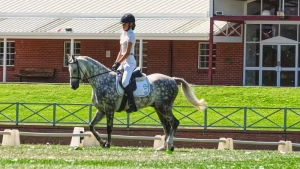
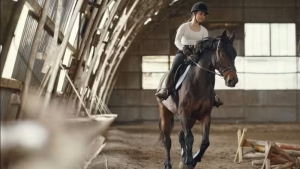
The scales of training are the six-step framework every classical rider, dressage judge and trainer in the UK lives by. Originating from the German military’s Skala der Ausbildung and adopted internationally by British Dressage, the FEI and the BHS, the scales build a horse from a relaxed, rhythmic mover into a balanced athlete capable of advanced collected work. Get them in the right order and you have a logical, kind progression. Get them muddled and you end up forcing posture before there is power to support it.
This guide explains all six scales of training in their correct sequence — Rhythm, Suppleness, Contact, Impulsion, Straightness and Collection — with practical exercises, common faults and a troubleshooting framework you can apply to any horse, in any discipline.
Table of Contents

What Are the Scales of Training?
The scales of training are six progressive building blocks that develop a horse’s physical and mental ability over months and years of correct schooling. They are presented as a pyramid: the foundations (Rhythm and Suppleness) sit at the bottom and carry the most training time, while the apex (Collection) is reached only when everything below it is secure.
The scales matter for every discipline, not just dressage. A show jumper needs rhythm and straightness over a related distance. An eventer needs impulsion that can be regulated through contact. A happy hack needs suppleness to bend through a country lane. The order is what makes the system work — you cannot ask for what comes later until what comes earlier is genuinely there.
1. Rhythm (Takt)
The Foundation of Everything
Rhythm is the regularity, tempo and clarity of the horse’s footfalls in each pace. The walk is a four-beat pace, the trot a two-beat pace, and the canter a three-beat pace. A horse with true rhythm maintains the correct beat and an even tempo whether you are riding a 20-metre circle, a long side or a transition.
Without rhythm, nothing else on the scales can develop. A horse rushing in trot or breaking a four-beat canter is not ready to be asked for contact, impulsion or anything more advanced.
Common Faults
- Hurried, uneven trot strides
- Four-beat canter (where the diagonal pair separates)
- Lateral walk (the legs on the same side moving together)
- Constant tempo changes between corners and long sides
Exercises to Develop Rhythm
- Counted strides — count the footfalls aloud through corners and circles to spot tempo changes
- Pole work — walk and trot poles set at correct distances reinforce a steady cadence
- Long, low and steady — ride large for several minutes letting the horse find its natural rhythm before asking for anything else
2. Suppleness (Losgelassenheit)
Looseness and Mental Relaxation
Suppleness — Losgelassenheit literally means “letting-go-ness” — is the physical and mental release that allows the horse to swing through its back. A supple horse breathes regularly, chews softly on the bit, swings its tail in time with the hind legs and bends evenly in both directions. Tension is the opposite: a hollow back, gripped jaw, swishing tail or grinding teeth.
Suppleness is not the same as flexibility alone. A horse can be flexible in the joints but tense in the muscles. True suppleness is whole-body looseness paired with calm focus.
Common Faults
- Hollow, rigid back
- One-sided horse — bends easily one way, resists the other
- Tense neck and tight poll
- Inability to stretch forward and down on a long rein
Exercises to Develop Suppleness
- Bending lines — figures of eight, serpentines and shallow loops to alternate flexion
- Stretching circles — encourage the horse to stretch forward and down through the topline at the trot
- Shoulder-fore — a precursor to shoulder-in that gently asks for lateral suppleness
- Plenty of walk breaks — tension builds when sessions get too long
3. Contact (Anlehnung)
An Honest Connection from Hindquarters to Hand
Contact is the soft, elastic, consistent connection between the rider’s hand and the horse’s mouth via the reins. Crucially, contact is created from behind. The horse steps under with the hind legs, swings through the back, lifts the base of the neck and seeks the bit. The rider receives that energy in a steady hand — they do not pull it into existence.
Anlehnung translates as “leaning on” — but the horse leans on the rider’s hand the way a confident dance partner takes a frame, not the way a tired horse hangs on a wire. Once contact is genuine, the horse becomes round and through.
Common Faults
- Behind the vertical — head tucked in to escape the bit
- Above the bit — head and neck inverted, back hollow
- Tilting head — one rein heavier than the other
- Snatching the reins forward and down
- Dead, lifeless contact with no feel
Exercises to Develop Contact
- Transitions — walk-trot, trot-canter, and within-pace transitions ask the horse to take the contact forward
- Stretchy chewing the rein out — the test of honest contact is whether the horse follows the bit forward and down
- Riding from leg to hand — never pull the contact closed; ride the hind legs forward into a quiet, waiting hand
If you are struggling to get your horse on the bit, the issue is almost always upstream — rhythm or suppleness — rather than the contact itself.
4. Impulsion (Schwung)
Energy and Spring from Behind
Impulsion is the controlled, contained energy generated by the hind legs — a willingness to go forward with spring and push. It is not speed. A horse can run very fast with no impulsion, and a horse can passage on the spot with enormous impulsion. Schwung is the moment of suspension, the swing through the back, the elasticity that makes the trot bouncy and the canter powerful.
Impulsion only exists once Rhythm, Suppleness and Contact are reliable. Trying to create impulsion in a tense, stiff or short-strided horse just produces rushing.
Common Faults
- Running, falling onto the forehand
- Lazy, behind-the-leg horse with no spark
- Tense impulsion — energy without the elasticity
- Hollow back robbing the spring
Exercises to Develop Impulsion
- Transitions within paces — lengthen and shorten the trot or canter on a 20-metre circle
- Hill work — gentle inclines build the hindquarters honestly
- Trot poles raised at one end — encourage articulation of the hocks
- Forward and back — a few collected strides, then a few medium strides, repeated
5. Straightness (Geraderichtung)
Equal Use of Both Sides of the Body
A horse is straight when its hind legs follow the track of its forelegs — on a straight line and equally on both reins of a circle. Every horse is born one-sided, much like a left-handed or right-handed person, and straightness is the years-long process of equalising the two sides of the body. Without straightness, impulsion goes sideways instead of forward, and collection becomes impossible because the hind legs cannot carry weight evenly.
Common Faults
- Quarters drifting in or out on a straight line or centreline
- Falling in on a circle (the horse leans through its inside shoulder)
- Heavier on one rein than the other
- Better canter on one lead than the other
Exercises to Develop Straightness
- Shoulder-in — the cornerstone exercise; supples and straightens at the same time
- Counter canter — checks and improves balance on the weaker rein
- Riding the centreline — pick a letter and ride absolutely straight to it without drift
- Equal repetitions — every exercise on the right rein gets matched on the left
Sustained one-sidedness is also a welfare issue — uneven loading can predispose horses to back pain and uneven hoof wear, so straightness work pays off well beyond the dressage arena.
6. Collection (Versammlung)
The Highest Level of Training
Collection is the moment when everything below it on the pyramid comes together. The horse lowers its hindquarters, steps further under its body, lightens the forehand and shortens the frame while raising and arching the neck. The strides become more elevated, more cadenced and shorter — passage and piaffe are the ultimate expressions, but you can equally see collection in a balanced canter pirouette or a beautifully executed downward transition.
True collection is years of work. It cannot be created with the hand by pulling the head in. Forced collection is what produces the false roundness and stiffness that pulls horses out of dressage tests.
Common Faults
- “Faked” collection — neck shortened, hind legs trailing
- Tension, loss of rhythm under the demand of collection
- Behind the vertical with a broken poll
- Loss of impulsion and forwardness
Exercises to Develop Collection
- Half-halts — the rider’s primary aid for asking for engagement
- Transitions on a circle — trot-walk-trot or canter-walk-canter
- Lateral work — half-pass, travers and renvers all build collection
- Working through the levels — each British Dressage level (from Prelim to Grand Prix) introduces collection in increments
The Training Pyramid at a Glance
| Scale | German term | What it gives the horse | Key indicator |
|---|---|---|---|
| 1. Rhythm | Takt | Regular, even footfalls | Correct beat and steady tempo |
| 2. Suppleness | Losgelassenheit | Mental and physical relaxation | Swinging back, soft chew |
| 3. Contact | Anlehnung | Honest connection over the back | Steady, elastic feel in the rein |
| 4. Impulsion | Schwung | Energy with spring, not speed | Suspension and push from behind |
| 5. Straightness | Geraderichtung | Equal use of both sides | Hind legs tracking the forelegs |
| 6. Collection | Versammlung | Engagement and self-carriage | Lightened forehand, raised back |
Troubleshooting Using the Scales
The most useful thing about the scales is that they tell you where to look when something goes wrong. The rule is simple: if a problem appears at one scale, the cause almost always sits at the scale below it.
- “My horse won’t accept the contact” — drop down to suppleness and rhythm. Tension and irregular rhythm always show up in the rein
- “My horse has no impulsion” — drop down to contact. If the horse can’t take the rein forward, it can’t push from behind into it
- “My horse can’t collect” — drop down to straightness. Crooked horses cannot carry weight evenly enough to collect
- “My horse is crooked” — drop down to suppleness. A stiff horse is always a crooked horse
This is why riders at every level — including Grand Prix — return to rhythm and suppleness work in their warm-up. The bottom of the pyramid never gets ticked off as “done”.
How to Remember the Order
The classical mnemonic is the first letters of each scale: R-S-C-I-S-C (Rhythm, Suppleness, Contact, Impulsion, Straightness, Collection). British Dressage groups them into three phases:
- Familiarisation phase — Rhythm, Suppleness and Contact
- Development phase — Impulsion and Straightness
- Perfection phase — Collection
Whatever level you ride at, your warm-up should always pass through the familiarisation phase before you ask anything more demanding. The scales are not a ladder you climb once and leave behind — they are the daily checklist that keeps every horse going correctly.
Frequently Asked Questions
What are the six scales of training in order?
The six scales of training, in order from foundation to apex, are Rhythm, Suppleness, Contact, Impulsion, Straightness and Collection. The order matters: each scale builds on the one below it, and you cannot reliably ask for a higher scale until the lower scales are secure.
Where do the scales of training come from?
The scales originated as the Skala der Ausbildung in the German Cavalry training manuals of the early 20th century. They were adopted by the FEI as the international framework for dressage and are now used by British Dressage, the BHS and Pony Club as the standard model for educating any horse, in any discipline.
Do the scales of training only apply to dressage horses?
No. The scales apply to every horse in every discipline. Show jumpers, eventers, hunters and even happy-hackers benefit from rhythm, suppleness, contact, impulsion, straightness and collection. Dressage simply makes the system explicit because tests are scored against it.
Why is rhythm placed first on the training scale?
Rhythm sits at the bottom of the pyramid because nothing useful can be built on a horse that isn’t moving in a regular, even tempo. A horse that is rushing, falling out of canter or losing the four-beat walk cannot be supple, cannot take an honest contact and cannot push from behind with impulsion. Rhythm is the platform.
How long does it take to progress through the scales of training?
Years, not months. A correctly produced horse typically reaches genuine collection — the top of the scales — at around eight to ten years old. The scales are also not “completed” once and forgotten: even Grand Prix horses warm up daily through rhythm, suppleness and contact before doing the demanding work.
What if my horse skips a scale — does it matter?
Yes. Skipping a scale produces compensations rather than correct training. A horse asked for collection without straightness will twist and tilt; a horse asked for contact without suppleness will lock its jaw. Problems higher up the scale almost always trace back to a missing piece lower down.