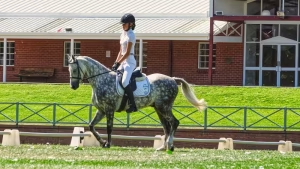
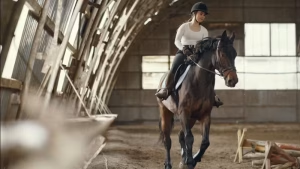
Horse pole exercises are one of the most effective and underused tools in equestrian training. Whether you are working a young horse, rehabilitating one recovering from injury, or improving collection and engagement in a competition horse, a few well-placed poles on the ground can achieve more in a 20-minute session than hours of ordinary flat work. This guide covers how to set up and use pole work for horses effectively — the correct distances, the best beginner exercises, and the trot, canter, and raised variations that build real strength.
Table of Contents
What Is Pole Work for Horses?
Pole work — also called polework, ground poles, or cavaletti work — involves laying poles on the ground (or slightly raised) in patterns the horse navigates at various gaits. The poles create obstacles the horse must consciously step over, which encourages it to engage its core, lift through the shoulder, and increase the flexion in the joints of the hindlimb. The result is improved rhythm, balance, proprioception (body awareness), and engagement.
Pole work can be incorporated into ridden work, lunging, or long-reining sessions. It is used in general schooling, gridwork and jumping development, and rehabilitation programmes. It is low-impact enough for horses in early rehab, yet demanding enough to challenge an advanced competition horse. For the technical glossary definition, see our entries on pole work and ground poles.
Benefits of Horse Pole Exercises
- Builds topline and core strength: Lifting over poles recruits the back and abdominal muscles, helping develop topline without the wear of jumping.
- Engages the hindquarters: Poles ask the horse to step under itself, increasing hindlimb flexion and engagement — the foundation of collection.
- Improves rhythm and balance: Regularly spaced poles regulate stride and teach the horse to carry itself evenly.
- Sharpens proprioception: The horse learns precisely where its feet are, improving coordination and confidence.
- Adds variety and focus: Pole work keeps a horse mentally engaged and is a welcome break from circles and lines.
- Low-impact conditioning: It builds fitness and strength with far less concussion than jumping, making it ideal across all levels.
Equipment and Setting Up
You need very little to start:
- Poles: Three to six sturdy wooden or plastic poles, ideally round and at least 2.5–3 metres long so the horse cannot easily step around them.
- A measuring aid: A tape or marked stick — accurate distances are what make pole work effective.
- Raised supports (optional): Cavaletti blocks, pole pods, or purpose-made raisers for the raised exercises below.
- Boots: Brushing or splint boots to protect the lower legs from knocks.
- A safe surface: Level footing with good grip. Avoid deep or slippery ground.
Always introduce poles one at a time so the horse stays calm and confident, and walk the line yourself first to check your distances.
Pole Distances by Gait
Correct spacing is the single most important factor in pole work. Poles that are too close cramp the stride; too far apart and the horse stretches or trips. These are typical starting distances for an average horse — reduce them slightly for ponies and short-strided horses, and increase a touch for big movers. Always adjust to your individual horse’s natural stride.
| Gait | Distance between poles | Notes |
|---|---|---|
| Walk | 0.8–0.9 m (2.5–3 ft) | Shorter, deliberate steps; great for rehab and suppleness. |
| Trot | 1.2–1.4 m (4–4.5 ft) | The most common pole work pace; regulates rhythm and engagement. |
| Canter | 2.7–3.0 m (9–10 ft) | Encourages a balanced, adjustable canter stride. |
| Raised (trot) | 1.2–1.3 m (4 ft) | Slightly closer than flat trot poles to allow for the extra lift. |
Set the first distance, ride through, and fine-tune: if the horse is reaching or chipping in an extra step, your spacing needs adjusting to suit its stride length.
Beginner Horse Pole Exercises
Start simple and build complexity only once the horse is calm and confident:
- The single pole: Walk and trot over one pole repeatedly until the horse steps over it in a relaxed, even rhythm without rushing or hesitating.
- A line of poles: Progress to three or four evenly spaced poles in a straight line at walk, then trot. This is the bread-and-butter exercise of pole work.
- The channel (or box): Two parallel lines of poles forming a corridor teaches straightness and accuracy.
- The fan: Arrange poles like the spokes of a wheel, narrow at one end and wide at the other. Ride a curve over them: the inside of the fan shortens the stride, the outside lengthens it — superb for suppleness and adjustability.
- The maze: Poles laid in an open grid you weave through at walk, building steering, patience, and confidence in young or nervous horses.
- The Y-shape: Poles arranged so you can ride straight over the stem and then choose either arm, working on accuracy and rideability.
Trot Pole Exercises
Trot is where most pole work happens. Set three to five poles at 1.2–1.4 m and aim for a steady, rhythmic working trot:
- Straight trot poles: Ride dead centre in a consistent rhythm, keeping the contact soft and letting the poles do the work of regulating the stride.
- Trot poles on a curve: Riding the poles on a gentle arc (as in the fan) asks for inside bend and even loading of both hind legs.
- Lengthen and shorten: Once established, alternate slightly more closely spaced poles with wider-spaced sets to develop an adjustable trot.
Trot poles are the cornerstone of building rhythm, cadence, and engagement, and they transfer directly to better flatwork and a more powerful, elastic trot.
Canter Pole Exercises
Canter poles develop balance, adjustability, and the engaged, uphill canter needed for jumping and dressage. Set poles at around 2.7–3.0 m:
- Single canter pole: Begin with one pole to establish a balanced approach and a confident, rhythmic canter over it.
- Line of canter poles: Three poles on a related distance teach the horse to keep its stride consistent and rebalance after each pole.
- Poles on a circle: Placing poles on a 20-metre circle is a classic exercise for developing a rounder, more adjustable canter and even bend.
Canter pole work is more demanding, so introduce it only once the horse is established and balanced over trot poles, and keep repetitions low to avoid fatigue.
Raised Pole Exercises
Raising poles a few inches off the ground dramatically increases the work the horse must do, asking for greater joint flexion, lift, and core engagement. Raised pole exercises (cavaletti) are excellent for strength and topline:
- Raised trot poles: Lift alternate ends or whole poles 10–20 cm off the ground. The horse must lift each leg higher, building strength through the back, abdomen, and hindquarters.
- Alternate-end raises: Raising opposite ends of consecutive poles encourages even, careful footwork and is great for proprioception.
- Progressive height: Increase height gradually over several sessions; never start high, as raised work is genuinely strenuous.
Because raised poles are hard work, keep sessions short and watch for tiredness — quality of movement matters far more than the number of repetitions.
In-Hand and Lunge Pole Work
You do not have to ride to benefit from poles. In-hand pole work — leading the horse over poles from the ground — lets you observe its movement, build confidence in youngsters, and rehabilitate without a rider’s weight. The same skill sits at the heart of horse agility, where weaving through poles and backing over them are scored obstacles rather than schooling exercises. Pole work on the lunge adds engagement and core work to a normal lunging session; keep the circle large and the poles arranged like a fan so the spacing stays correct on the curve. Both are valuable additions to a varied fitness routine and pair well with stretching exercises.
Pole Work for Rehab and Fitness
Pole work is a mainstay of equine rehabilitation because it builds strength and proprioception with minimal concussion. Walk poles in particular are often prescribed early in a recovery programme to re-activate the core and stabilising muscles. Always follow a programme set by your vet or equine physiotherapist rather than improvising after injury.
For general fitness, pole work improves the way the horse uses its body — understanding the biomechanics of movement shows exactly why stepping over poles recruits muscle so effectively. Build it into a weekly routine alongside hacking, schooling, and, where appropriate, jumping.
Common Pole Work Mistakes
- Incorrect distances: The number-one error. Poles spaced wrongly for the horse’s stride cause tripping or rushing — always measure and adjust.
- Too much, too soon: Pole work, especially raised, is strenuous. Long sessions cause fatigue and poor technique.
- Rushing: A horse that flies over poles is not engaging correctly. Re-establish a calm rhythm first.
- Poles that roll or are too short: Lightweight or short poles get knocked and stepped around. Use proper, heavy poles.
- Drilling one exercise: Vary the patterns to keep the horse thinking and to work it evenly on both reins.
- Ignoring straightness: Always aim to ride the centre of the poles; drifting teaches crookedness.
Frequently Asked Questions
How far apart should trot poles be?
For an average horse, set trot poles around 1.2 to 1.4 metres (4 to 4.5 feet) apart. Reduce the distance slightly for ponies and short-strided horses, and increase it a little for big movers. Always ride through and fine-tune so the horse meets each pole in the middle of a relaxed, even stride.
Do pole exercises build muscle?
Yes. Pole work, especially raised poles, recruits the core, back, and hindquarter muscles as the horse lifts and engages over each pole. Used consistently, it is one of the best low-impact ways to build topline and strength without the concussion of jumping.
How many poles do I need to start?
You can begin meaningful pole work with just three to four poles. A single pole is enough to introduce the idea, while three or four lets you build a line of trot poles, a channel, or a small fan. Six poles open up most beginner and intermediate exercises.
Are raised poles better than ground poles?
They are not better, just harder. Ground poles are ideal for rhythm, suppleness, and starting out; raised poles add intensity, asking for more lift and core strength. Establish good work over ground poles first, then introduce raised poles gradually as the horse gets stronger.
How do pole exercises engage the hindquarters?
Stepping over poles asks the horse to flex its hocks, stifles, and hips more than on flat ground and to step further under its body. This increased hindlimb flexion and reach develops engagement and the carrying power of the hindquarters, which underpins collection and athletic movement.