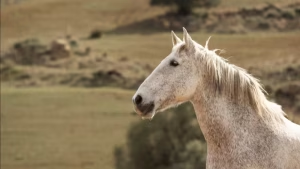
A mare in season — the period when she is hormonally receptive to a stallion — can show a striking change in temperament that catches even experienced owners off guard. Tail-swishing, squealing, frequent urination, sensitivity to the leg, and a general unwillingness to focus are all part of the natural oestrus cycle, not bad behaviour. Understanding what’s happening physiologically and how to manage it makes life easier for both mare and rider, particularly during the busy spring and summer competition season.
Table of Contents
What “Mares in Season” Actually Means
“In season” — also called in oestrus, “on heat”, or “showing” — is the phase of the reproductive cycle when a mare’s ovaries contain a maturing follicle and she is hormonally and behaviourally receptive to a stallion. The reproductive system has done its job long before the mare shows it: the brain releases gonadotrophin-releasing hormone, the pituitary follows with FSH and LH, and the ovaries produce oestrogen. Rising oestrogen against falling progesterone is what flips the behavioural switch.
Mares are seasonally polyoestrus, which is the academic way of saying they cycle repeatedly during one part of the year and not at all during another. In the UK, most mares cycle from roughly April to October, with a transitional spring and autumn either side. During the deep winter months, the majority of mares enter anoestrus — no cycling, no heat behaviour. This is why a mare that was a saint in January can become a different animal by May.
The Oestrus Cycle Explained
A complete cycle averages 21 days and is split into two distinct phases:
- Oestrus (in season): 5–7 days, when the mare is receptive and behavioural signs appear. Oestrogen dominates.
- Dioestrus (out of season): 14–16 days, when progesterone dominates and the mare rejects the stallion. Behaviour normalises.
Ovulation typically occurs in the last 24–48 hours of oestrus. Some mares are textbook clockwork; others vary wildly between cycles, particularly in the transitional spring period when warming days and lengthening light kick the system back into gear. Older mares and those in their first or last cycling year of the season are often the least predictable.
Spring transition
The spring transition — late February to mid-April in the UK — is when the most behavioural problems appear. Cycles are erratic, follicles may grow without ovulating, and mares can spend extended periods in a low-grade oestrogen-dominant state. This is the classic “she’s been in season for three weeks” complaint and is biologically normal during the transition.
Typical Behaviour and Physical Signs
Recognising oestrus in your own mare is the first management step. The signs vary but most mares show some combination of:
- Tail raising and swishing, particularly when another horse approaches
- Squatting and frequent small urinations — a classic and unmissable sign
- Winking — rhythmic opening of the vulva, exposing the clitoris
- Squealing, striking, or kicking at other horses, especially geldings or stallions
- Increased interest in (or aggression towards) male horses
- Sensitivity around the flanks, girth, and back — leg aids that were ignored a fortnight ago suddenly produce dramatic responses
- Difficulty concentrating in schooling, looking out of the arena, calling
- Mild colic-like signs in some mares around ovulation, as the follicle ruptures
- Slight clear-to-cloudy vulval discharge in some mares
Out of season (dioestrus), most mares pin their ears at male horses, clamp the tail, and reject any sexual approach — the polar opposite of oestrus behaviour and a useful diagnostic in itself.
Why Some Mares Are Particularly Affected
Mares vary enormously in how strongly they show oestrus behaviour. Several factors influence severity:
- Individual sensitivity to oestrogen. Some mares simply have a stronger behavioural response — there is a strong genetic component, and certain bloodlines are renowned for it.
- Granulosa cell tumours. A persistent, severe, “stallion-like” change in behaviour — aggression, mounting other mares, deep voice — is a red flag for an ovarian granulosa-theca cell tumour and warrants ultrasound investigation.
- Ovarian pain. Some mares experience genuine discomfort from a large pre-ovulatory follicle (often 35–45 mm in diameter) pressing on adjacent tissues.
- Saddle fit and back pain. Pre-existing back or saddle issues become much more obvious during oestrus when the mare is sensitised. Always rule out a poorly fitting saddle before blaming hormones.
- Workload and stress. Highly stressed mares often show more dramatic season behaviour — competition season coincides with peak cycling season, which compounds the problem.
Management Strategies for Difficult Cycles
1. Confirm it’s actually her season
Keep a simple cycle diary for two or three months. Record any “off” days, ridden behaviour, and visible signs of season. A pattern usually emerges. If behaviour change correlates tightly with the 21-day cycle, hormones are the likely cause. If it doesn’t, look elsewhere — pain, ulcers, tack fit, training stress.
2. Adjust the work plan around her cycle
Once you know her pattern, plan harder schooling sessions for dioestrus and easier hacks or pole work during oestrus. No reasonable trainer would expect a mare to deliver her best work during peak season — pushing through it usually makes both mare and rider worse.
3. Turnout and herd management
Mares in season often settle better in single-sex paddocks of two or three quiet companions. Mixed-sex turnout with geldings can either help (some geldings have a calming influence) or escalate (others antagonise the mare). Test it on a quiet day, not on a Sunday lesson morning.
4. Rule out physical pain
A check-over by your vet, a saddle fitter, and ideally a physiotherapist before assuming it’s “just hormones” rules out the common confounders. Suspected gastric ulcers, ovarian pain, or back issues all amplify oestrus signs and are treatable.
5. Keep handling consistent
It’s tempting to baby a hormonal mare, but inconsistent expectations make her worse. Maintain the same ground manners year-round, reward calm behaviour, and don’t excuse genuine rudeness because “she’s in season” — that path leads to a mare who has learned that hormones get her out of work.
Nutritional and Herbal Support
The supplement market for “moody mares” is enormous and the evidence base is thin. The two ingredients with at least some plausible mechanism of action:
- Chasteberry (Vitex agnus-castus): traditionally used to support pituitary function. Anecdotal reports are positive; controlled equine studies are limited. Generally considered safe at recommended doses.
- Magnesium: often included in calming products. Useful only if the mare is genuinely magnesium-deficient, which is uncommon on a balanced ration.
What does help reliably:
- A balanced forage-first diet without excess starch or sugar
- Free access to clean water and salt
- Adequate turnout — stabled mares show worse season behaviour, full stop
- Treating any underlying ulcers, pain, or deficiency
Avoid the temptation to throw five different supplements at the problem at once. Trial one for a full cycle (three weeks minimum), assess, then adjust.
Hormonal Treatments — Regumate and Alternatives
For competition mares whose cycles consistently disrupt their work, veterinary hormonal management is a legitimate tool. Always discuss with your vet first, and check your discipline’s anti-doping rules — most national federations require declaration of hormonal medications.
Altrenogest (Regumate)
The most commonly prescribed option. A synthetic progestagen given orally daily, it suppresses oestrus behaviour by mimicking the dioestrus state. Effective in about 80% of mares. Important practical points:
- Must be handled with gloves — absorption through human skin can disrupt menstrual cycles and is contraindicated in pregnancy
- Daily dosing is essential; a missed dose breaks the suppression
- Reportable under FEI and most national federation rules
- Long-term use is generally well tolerated but should be reviewed annually
Intrauterine glass marble or saline infusion
Older techniques used to extend dioestrus by tricking the mare’s body into believing she is pregnant. Less commonly used today and falling out of favour due to evidence of endometrial inflammation.
Oxytocin protocols
Specific dosing schedules in early dioestrus can extend the luteal phase and delay the next season. Vet-administered, requires careful timing.
GnRH vaccines
“Anti-GnRH” vaccines (e.g. Improvac, used widely in pigs) suppress the entire reproductive axis. Off-label use in mares is occasionally reported but not currently licensed in the UK for this purpose.
Ovariectomy
Surgical removal of the ovaries is a last resort for mares with severe, intractable behaviour problems and no breeding future. Effective but irreversible — and not without surgical risk. Only consider after thorough investigation has ruled out tumours, pain, and management causes.
Riding and Competing a Mare in Season
Most mares ride perfectly well in season once you know what to expect. Sensible adjustments:
- Warm up longer. Sensitive mares need extra time to settle into work and accept leg aids without over-reaction.
- Use a softer, less reactive contact. Heavy hands amplify the bracing some mares do during season.
- Avoid crowded warm-up arenas where she’ll be surrounded by other horses she’ll want to either flirt with or kick.
- Plan transport carefully. Travelling alone or with a trusted companion mare is usually less stressful than mixed loads.
- Don’t hide it on the entry form. A discreet word with stewards can earn you a quieter warm-up slot.
- Build her confidence with low-pressure outings early in the season before targeting bigger competitions.
The reality of competing mares is that some genuinely produce their best work in season — focused, sharp, and forward — while others lose all rideability. Knowing which type you have is half the battle. For dressage and showing-specific advice, see our piece on dressage training and the discipline’s standard expectations.
When to Call the Vet
Most oestrus behaviour is normal and self-limiting. Call your vet for:
- Persistent “in season” behaviour lasting more than 10 days
- Sudden onset of stallion-like aggression or mounting behaviour
- Severe colic-type signs that don’t pass within an hour
- Visible vulval discharge that is yellow, green, or blood-tinged
- Loss of appetite and dullness coinciding with cycle changes
- Behaviour change in a mare with no previous history of strong cycles, especially if she is over 12 years old (ovarian tumour screening)
Ultrasound scanning of the ovaries is the standard diagnostic — fast, non-invasive, and immediately informative.
Final Thoughts
Mares in season are not “difficult” — they’re working with a hormonal cycle that geldings and stallions don’t have to manage. Most settle into a manageable pattern once you’ve identified their rhythm and built a workload that respects it. The ones who don’t usually have an underlying cause — pain, tumour, ulcers, or saddle fit — that is worth investigating before reaching for hormonal medication.
For more on equine reproductive health, see our entries on foaling, maiden mares, and broodmare management.
Frequently Asked Questions
How long does a mare stay in season?
The oestrus phase typically lasts 5–7 days within a 21-day cycle, with ovulation in the last 24–48 hours. Spring-transition cycles can be longer and more erratic. Persistent season behaviour beyond 10 days warrants a vet check.
What time of year are mares in season?
UK mares cycle roughly April to October, driven by lengthening daylight. Most enter anoestrus (no cycling) over winter. Spring and autumn transitions are when behaviour is most erratic.
Can you ride a mare in season?
Yes — most mares ride normally. Allow longer warm-ups, use a softer contact, and avoid crowded warm-up arenas. Hard schooling sessions are best planned for dioestrus when she is more focused.
What is Regumate and is it safe for competition?
Regumate (altrenogest) is a synthetic progestagen prescribed by vets to suppress oestrus. It works in about 80% of mares. It must be declared under FEI and most national federation rules — check your discipline’s specific medication regulations before use.
When should I worry about mare behaviour changes?
Sudden stallion-like aggression, persistent season behaviour beyond 10 days, abnormal vulval discharge, or behaviour change in an older mare with no prior history all warrant veterinary investigation — granulosa cell tumours and ovarian pain are the main differentials.