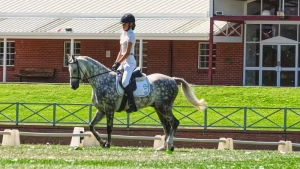
Horse planting is the moment a horse roots all four feet to the ground and refuses to step forward. In British yards it is often described as the extreme end of “napping” — the broader term for a horse that refuses an aid, plants, naps towards home or spins back to the gate. Leg, voice and whip aids seem to vanish; the rider feels powerless. Planting usually looks like pure stubbornness, but it is almost always a signal that something is blocking the horse’s confidence, comfort or understanding of what is being asked.
This guide covers the real causes of a horse planting, the welfare checks to rule out first, safe groundwork and ridden strategies, how to stop a horse napping towards or away from home, and when to bring in a vet, instructor or behaviourist. The approach is designed for leisure riders, novice owners and producers of young horses alike.
Table of Contents
What Is Horse Planting and Napping?
Napping is the UK term for a horse refusing to go in the direction the rider asks — whether that is leaving the yard, passing a hedge, or going forwards at all. Planting is the most dramatic form of napping: the horse stops, drops its head or shoulder, and sets its feet. Nothing in the leg aid, whip or voice makes the feet move. You may also see a horse going backwards, spinning, or jogging on the spot as variations on the same theme.
All of these are evasions — the horse has decided that not going forward is less aversive than going forward. Our job, as riders, is to work out why, address the underlying cause, and then retrain forward motion in a way the horse can succeed at.
Why Horses Plant and Nap
Physical discomfort and pain
Pain is the first possibility to rule out. Back injuries, kissing spine, navicular disease, ill-fitting tack, tooth hooks, gastric ulcers or subclinical lameness can all turn forward movement into something a horse wants to avoid. The horse may look sound loose in a field but freeze under saddle because the rider’s weight changes the load on a sore structure.
Mental stress, fear or overwhelm
A young horse, or one new to a yard, may be over-faced by a novel environment, a tricky obstacle, a lorry passing a hedge or even a sudden yard change. Horses freeze because flight no longer feels safe — a deeply wired survival response. Many owners describe horses planting immediately after a move, a change of companions or a traumatic incident.
Learned behaviour and inadvertent rider cues
If every time the horse stops, the rider gives up and goes home, the horse learns that planting works. The same applies if a rider stops driving forward in the moment the horse hesitates. Horses are extraordinarily good at reading the smallest shift in rider confidence, which is why one-off sharp napping often snowballs into a habit within a few rides.
Separation anxiety and herd pull
Most napping has a geographical or social component. The horse plants because it does not want to leave its companions, cross a boundary, or walk away from the yard. The pull of the herd is a powerful reinforcer, and it needs to be broken down gradually rather than ignored.
Rider confidence
Nervous riders often tense, grip with the knees, lift the hand and hold their breath as the horse hesitates — all of which a sensitive horse reads as “stop, something is wrong”. Improving the rider’s position and breathing can fix problems that look, on the surface, like pure horse behaviour.
Welfare Checks to Do First
Before any retraining, rule out the big four physical causes. A horse that is sore should never be “trained through” planting.
- Veterinary examination — book a lameness workup, flexion tests and a back assessment. Ask specifically about kissing spine, gastric ulcers and hind suspensory injuries, which commonly present as “napping”.
- Saddle fitter visit — use a Society of Master Saddlers qualified fitter. A saddle that fits the rider can still pinch, bridge or rock on the horse’s back.
- Dental check — a qualified British Association of Equine Dental Technicians (BAEDT) technician or equine dental vet should see the horse at least annually. Tooth hooks or wolf teeth catching on the bit cause sudden-onset napping.
- Hoof balance — have the farrier check balance, mediolateral symmetry and the horse’s comfort on both soft and firm going.
Only when pain is reasonably excluded does training begin.
Groundwork Solutions
Leading and in-hand work
If the horse plants in-hand, start there. Work in a safe, enclosed area. Ask the horse to lead forward to a light rope aid; if the horse plants, wiggle the rope in small energetic movements rather than pulling. The instant the horse shifts a single foot forward, stop the wiggle, reward and rest. This teaches “forward from light pressure” before any ridden retraining.
Lunging and long reining
Many planters respond well to long reining away from home. The absence of a rider often removes the fear component, and the horse can be encouraged forward with a voice aid and a light flick of the outside rein. Progress from a familiar arena to a short hack in-hand before attempting the same route under saddle.
Target and clicker training
Positive reinforcement, using a marker word or clicker and a food reward, builds a genuinely willing forward response. The horse learns that forward movement earns a click and a treat. Many habitual planters transform within six or seven focused sessions.
Under-Saddle Strategies
Keep the feet moving
The single most important rule is: do not let the horse stop and set. If you feel the horse beginning to plant, flex the neck gently to one side, ask for a small step sideways and keep the feet moving — even if the direction is not forwards. A horse that is turning, sidestepping or reversing is not planting, and you can gradually redirect the movement into forwards.
Use a clear forward aid, then release
Give one clear leg aid. If there is no response, repeat with a firmer leg and a verbal “walk on”. If still nothing, support with a schooling whip behind the leg. The moment the horse moves, release all pressure and praise. Repeated nagging without release is what teaches a horse to tune out the leg entirely.
Disengage the hindquarters
A horse cannot plant and turn its quarters at the same time. Ask for a tight turn on the forehand or a small leg-yield. The feet have to move, and you can then ride straight forward out of the yield. This is the Western-origin technique that British trainers now routinely use for sticky horses.
Ride with a companion first
A steady companion horse, ridden by a confident rider, gives a planter a template to follow. Ride behind, then alongside, then in front of the lead horse over several sessions before asking to go solo.
How to Stop a Horse Napping to the Gate
Gate napping — rooting towards the school gate, or planting on the way out of the yard — is the most common version of the problem. Try the following sequence:
- Work the horse close to the gate but never through it at the end of a session. Finish in the far corner of the arena, reward and dismount there.
- On hacks, make the yard the “work” place. When you return home, ask for a few minutes of trot-walk transitions in the yard, then ride past the gate and dismount at a different spot.
- Break up the route into small, rewarded pieces. If the horse plants at the end of the drive, ride only to that point and dismount there for several sessions. Gradually extend the distance.
- Vary the route so that no one path is strongly associated with “going home”.
Building Long-Term Confidence
Long-term success is about making forwards rewarding and making planting unrewarding — without turning any session into a fight. Keep a simple training diary: date, route, any planting events, what worked. Trends emerge quickly and tell you what to adjust.
- Ride little and often — five short, successful rides a week beat two long ones with an argument.
- End on a good note — always finish with something the horse finds easy.
- Build a forward button — do lots of trot and canter transitions in a safe school to sharpen the response to the leg.
- Reward generously — voice, rein release, a scratch on the wither, or a food reward at key moments.
Common Mistakes to Avoid
- Kicking repeatedly with no release — teaches the horse to tune out the leg.
- Hitting the horse once it has already planted — the horse has usually already decided, and punishment just raises the stress level.
- Turning for home when the horse plants — this directly rewards the behaviour.
- Ignoring saddle or dental issues — no amount of training fixes pain.
- Rushing to a bigger bit — a stronger bit does not make a horse go forward; it makes the horse more reluctant to take contact.
When to Seek Professional Help
Book an experienced British Horse Society (BHS) or Accredited Professional Coach if the horse is rearing, reversing dangerously or becoming explosive — these are escalation signs and are not safe to school through alone. A qualified equine behaviourist (ABTC-registered in the UK) is invaluable for horses with deep-set fear-based refusals. Ask your vet for a referral; many work closely with specific behaviourists.
For persistent, sudden-onset planting in a previously forward horse, always return to the vet. Gastric ulcers, PSSM and hind suspensory strain are frequently missed at first glance and produce exactly this presentation.
Final Thoughts on Encouraging Forward Motion
A horse that plants is not being deliberately difficult — it is telling you that forward feels wrong. Identify the “why”, remove the physical causes, retrain the response step by step, and make forwards the path of least resistance and most reward. Progress is often measured in months rather than days, but a sensibly rehabilitated planter usually becomes one of the most reliable horses on the yard: thinking, communicative and trusting of its rider.
For more groundwork ideas, read our guides to lunging a horse, long reining and pole exercises. External reading: the British Horse Society and Animal Behaviour and Training Council list qualified professionals.
Frequently Asked Questions
What is the difference between horse napping and horse planting?
Napping is the general UK term for a horse refusing to go where the rider asks — it can include spinning, running backwards, jogging on the spot or refusing to leave the yard. Planting is the specific form where the horse roots all four feet and stops dead.
Why does my horse plant when I try to leave the yard?
The most common reason is separation anxiety — the pull of the herd is stronger than the rider’s aids. Discomfort from tack or an old injury can also make leaving the yard aversive. Rule out pain first, then retrain the ride home so that the yard is not a place of pure rest.
How do I stop my horse napping back to the gate?
Finish sessions away from the gate, ride past the gate when returning, and work the horse briefly in the yard on return so “home” is not automatically equated with finishing. Disengage the quarters if the horse begins to drift, and reward any forward step immediately.
Should I use a whip on a horse that plants?
A schooling whip used once, lightly, behind the leg to reinforce a leg aid is appropriate. Repeated hitting a planted horse is not — it raises stress and rarely produces forwards. If the horse is habitually ignoring the leg, go back to in-hand and lunge work to rebuild the forward response from the ground.
Is planting a sign of pain?
It often is — especially if the behaviour is new, sudden or increasing in severity. Kissing spine, gastric ulcers, hind suspensory injuries and poor saddle fit are all common medical causes. Always get a thorough vet, dental, saddle and farrier check before committing to a training plan.
How long does it take to fix a horse that plants?
With pain ruled out and a consistent programme, most horses improve within 4–8 weeks of focused work. Long-standing habitual napping can take six months or more to resolve fully. Setbacks are normal; keep a diary and work with a qualified coach.