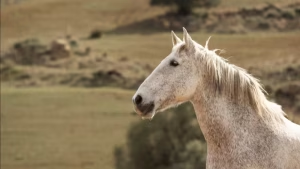
A cold backed horse is one that shows pain, tension or sudden reactivity through the back during the first few minutes of saddling, girthing or mounting. The signs typically ease as the horse warms up, which is why many owners write the behaviour off as a quirk. In reality, a cold back is almost always a welfare signal pointing at saddle fit, gastric ulcers, kissing spines, sacroiliac dysfunction or another underlying cause that deserves a proper veterinary work-up before it escalates into a serious problem.
Table of Contents
What Is a Cold Backed Horse?
The phrase “cold back” or “cold backed” is a long-standing British yard term for a horse that visibly objects to having a saddle placed on its back, the girth done up, or a rider mounting. Reactions range from a subtle dip and grunt to a full-blown explosive episode where the horse drops down, hump-jumps forward, or even bucks under the rider for the first few minutes of work. Critically, the behaviour usually settles once the horse is moving forward and the back muscles have warmed up.
Because the symptoms fade, generations of riders have treated the cold backed horse as a yard quirk to be ridden through. Modern veterinary thinking has moved on. A 2024 review in Equine Veterinary Education identified cold back as a non-specific clinical sign — meaning it points to an underlying issue the horse is trying to communicate, rather than being a diagnosis on its own. The job of the owner is to find the cause, not to ride past the warning.
Common Signs of a Cold Back
Cold back behaviour is rarely subtle once you know what to look for. The clearest signs cluster around the moments of greatest mechanical loading on the spine: tacking up, girthing and the first minutes under saddle.
- Dipping or hollowing the back as the saddle is placed on, often with ears pinned and a tail swish.
- Tensing or holding the breath when the girth is tightened, sometimes with a grunt or audible exhale.
- Stepping away, pawing, swinging the quarters or attempting to bite or kick during girthing.
- Refusing to stand at the mounting block, walking off as weight is taken in the stirrup.
- Hump-backed walk, short shuffling strides or a hollow, inverted outline for the first five to fifteen minutes of work.
- Small bucks, crow-hops or running forward in trot before the horse settles and lengthens through the back.
- Marked improvement after warm-up, with the horse becoming relaxed, swinging and apparently sound.
The “improvement after warm-up” part is the trap. It tempts owners to conclude that the horse is fine, and that the initial behaviour is an emotional or temperamental issue. In most cases it is not.
What Causes a Horse to Become Cold Backed?
There is rarely a single cause. The list below covers the most common drivers, and a horse may have two or three of them stacked at the same time.
Poor Saddle Fit
The single most common cause. A saddle that bridges, sits down on the wither, pinches behind the shoulder or rocks under the seat will cause sharp pressure points the moment the rider’s weight bears down. Horses change shape constantly with fitness, season and age — a saddle fitted in spring may not fit by autumn. A check by a Society of Master Saddlers (SMS) qualified fitter every six months is sensible practice.
Gastric Ulcers (EGUS)
Equine Gastric Ulcer Syndrome is now recognised in roughly 60% of leisure horses and over 90% of racehorses. Ulcers in the squamous (upper) region of the stomach are aggravated by the abdominal compression that happens during girthing and forward exertion, which is why so many ulcer cases present with girthing aversion or a cold-back reaction. Diagnosis requires gastroscopy and treatment with omeprazole. If your horse is grumpy at the girth, ulcers should be ruled out before behaviour is blamed.
Kissing Spines (Overriding Dorsal Spinous Processes)
The dorsal spinous processes are the bony projections that rise from each vertebra under the saddle area. In some horses they sit too close together and impinge under load, producing inflammation and pain. Kissing spines is diagnosed via radiography and often presents with a cold back, dropped back under the rider, reluctance to bend and stiffness on one rein. Modern treatment ranges from bisphosphonate injections and shockwave therapy to interspinous ligament desmotomy surgery.
Sacroiliac Dysfunction
The sacroiliac joints sit either side of the croup and transmit power from the hindquarters into the spine. Sprains, asymmetry or chronic inflammation in this area present as a stiff, hollow back, reluctance to engage behind, and a strong cold-back response when the rider’s weight loads the lumbar region. Diagnosis uses palpation, nerve blocks and bone scintigraphy, with treatment usually centred on rehabilitation, mesotherapy and corticosteroid injection.
Muscular and Soft Tissue Issues
Strained longissimus dorsi muscles, trigger points in the trapezius, and chronically tight thoracolumbar fascia all create the kind of cold, guarded reaction that defines cold back. These problems often follow a fall, a slip in the field, an unbalanced rider, or a sudden increase in workload.
Cold Weather and Stiff Muscles
British winters genuinely contribute. Horses living out or stabled in cold, draughty barns can have stiff back musculature first thing in the morning, particularly older horses with mild arthritis or chronic muscle injury. The phrase “cold back” was coined for a reason — temperature is part of the picture, even if it rarely explains the behaviour on its own.
Learned Behaviour and Anticipation
Once a horse has experienced repeated pain at tacking up, the response can become learned. Even after the underlying cause is resolved, the horse may continue to flinch at the saddle or hump up at mounting. This is real, but it is the last cause to consider — never the first.
Cold Back vs Behavioural Problem
One of the most damaging mistakes is to treat cold back as bad manners. The signs of a horse in pain through the back overlap heavily with what looks like grumpiness, naughtiness or “being fresh”, and the horse cannot tell you which is which. The differentiator is consistency.
- Cold back appears at the same point in the routine every time — saddling, girthing, mounting, the first few minutes — and improves once the back is warm.
- Behavioural resistance tends to be context-dependent. The horse may be fine in the school but explode at the start of a hack, or load badly only when going to one venue.
- True freshness usually means the horse is forward and willing once moving. A cold backed horse can be forward too, but the back stays braced and hollow until it warms up.
If in doubt, assume pain and rule it out. Unidentified pain that gets blamed on temperament is one of the most common pathways into a chronic, dangerous behavioural problem.
Veterinary Assessment: When to Call the Vet
Any cold-back behaviour that has appeared suddenly, worsened over time, or is accompanied by other signs (poor performance, reluctance to bend, weight loss, change in droppings) is a clear vet call. Even longstanding cases that have been “managed” for years deserve a fresh look — the British Equine Veterinary Association (BEVA) considers chronic back pain a welfare priority.
A thorough work-up typically involves:
- A static and dynamic palpation of the back, withers, lumbar region and sacroiliac joints.
- Watching the horse in walk, trot and canter on the lunge on both reins, and ridden if safe.
- Saddle assessment — ideally with the regular fitter present.
- Diagnostic imaging: radiography of the dorsal spinous processes, ultrasound of the soft tissues, and (where indicated) bone scintigraphy or MRI.
- Gastroscopy if there is any girthing aversion, weight loss or appetite change.
A diagnosis matters. Two horses with apparently identical cold-back signs may need completely different treatment plans — one for kissing spines, one for ulcers, one for an ill-fitting saddle. Treating the wrong cause wastes months and rarely resolves the behaviour.
Daily Management of a Cold Backed Horse
Even with a clean veterinary report, a horse with a history of cold back benefits from a thoughtful daily routine. The goal is to reduce muscular tension, support topline development and prevent the learned response from re-establishing.
- Maximise turnout. Movement is the best thing for a sore back. Where possible, aim for 12+ hours a day of free turnout in a field large enough to encourage proper movement.
- Use a quality back rug in winter. A well-fitting stable rug or exercise sheet helps keep the longissimus muscles relaxed in cold weather.
- Feed forage-first. Constant access to ad-lib hay or haylage protects against gastric ulcers and supports gut function.
- Schedule regular bodywork. A registered equine physiotherapist (Association of Chartered Physiotherapists in Animal Therapy) can pick up subtle muscular issues before they become clinical. Some owners also find complementary approaches such as Bowen therapy useful alongside conventional treatment.
- Get the saddle checked twice a year. Spring and autumn, with extra checks if condition or muscling changes noticeably.
- Keep workload progressive. Sudden jumps in intensity — going from light hacking to a clinic weekend — are a common trigger for back pain to re-emerge.
A Practical Warm-Up Protocol
For horses with confirmed-but-managed cold back behaviour, a slow, structured warm-up makes the difference between a productive session and a tense one. The protocol below is widely used by equine physiotherapists in the UK.
- Tack up gradually. Place the saddle on quietly, do the girth up two holes at a time, and walk the horse forward between each tightening. A horse should never be girthed up tight in one go.
- Use a mounting block — always. Mounting from the ground torques the spine sideways and is one of the most common triggers for an explosive cold-back reaction. A high block reduces the lateral pull on the saddle.
- Walk on a long rein for at least 10 minutes. Allow the horse to stretch the head and neck down. This activates the topline muscles and warms the longissimus before any contact is taken up.
- Add five minutes of light trot in rising, still on a long contact, before asking for any work in an outline.
- Introduce lateral work gradually. Leg yield in walk and shoulder-fore in trot help mobilise the back without loading it heavily, and structured gridwork can build topline strength once the horse is comfortable.
- Cool down properly. A long-rein walk for 5–10 minutes at the end of every ride helps prevent post-exercise stiffness the next day.
Saddle Fit and Tack Considerations
Because saddle fit underpins so many cold-back cases, it deserves its own section. The Society of Master Saddlers in the UK maintains a register of qualified fitters; if a horse is showing back signs, the fitter should always come out before the next vet visit. Things to flag:
- Visible white hairs developing under the saddle area — pressure point evidence.
- Dry patches in the saddle pad after work — a sign of uneven contact.
- Tack rocking, sliding back, or needing extra pads to hold position.
- The horse changing shape (weight gain, weight loss, fitness change, age) since the last fit.
- A new bridle, breastplate or numnah that may be sitting differently.
A short-term workaround such as a thicker pad or a half-pad rarely solves the problem and can make pressure distribution worse. Always go to the saddle, not around it.
Frequently Asked Questions
What does it mean when a horse is cold backed?
Cold backed means the horse shows pain, tension or reactivity through the back when being saddled, girthed or first ridden, with the symptoms typically easing once the horse warms up. It is a clinical sign rather than a diagnosis — the underlying cause is usually saddle fit, gastric ulcers, kissing spines or sacroiliac dysfunction.
Can a cold backed horse be ridden safely?
Once the underlying cause has been investigated and addressed, most cold backed horses can be ridden safely with a careful warm-up routine and good saddle fit. Riding a horse with active back pain through the symptoms is unsafe for both horse and rider, and tends to make the problem worse.
Is cold back the same as kissing spines?
No. Cold back is a behavioural symptom; kissing spines is one possible underlying cause. A horse can be cold backed because of ulcers, saddle fit or sacroiliac issues without ever having kissing spines, and many horses with mild kissing spines never present as cold backed. Diagnosis requires veterinary imaging.
Will a cold backed horse grow out of it?
Cold back rarely resolves on its own because it is symptom of an underlying problem. Saddle fit issues will continue until the saddle is changed; ulcers will continue until they are treated; kissing spines will worsen with continued loading. Investigation and management are needed — the horse will not simply outgrow the behaviour.
How long does it take to warm up a cold backed horse?
Most cold backed horses settle within 10–20 minutes of a careful warm-up that starts with at least 10 minutes of walk on a long rein, followed by light trot on a long contact. Horses with significant underlying back pain may take longer or never fully settle, which is a clear signal that the underlying cause needs further veterinary investigation.