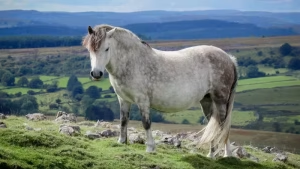
A broodmare is a mare kept for breeding rather than competition or work. Bringing a foal into the world is a year-long commitment that begins long before the stallion is selected and continues well past weaning. Whether you are managing a single thoroughbred broodmare in a UK stud or a small herd of warmblood broodmares on a private yard, the day-to-day care decisions you make through the eleven months of gestation directly determine the foal’s start in life. This guide covers what a broodmare needs through every stage — pre-breeding, conception, each trimester of pregnancy, foaling, and post-foaling — with the nutrition, vaccination, parasite control and welfare detail that the standard care articles tend to skip.
Table of Contents
What Is a Broodmare?
A broodmare is a mature female horse used for breeding. The term applies regardless of breed or discipline — a thoroughbred mare retired from racing to produce flat or jumps progeny, a warmblood mare standing for sport-horse breeding, a native pony broodmare producing showing or driving stock, or a coloured cob broodmare on a small UK stud all share the same designation.
The role of a broodmare is more demanding than it sounds. She must conceive reliably, carry to term, deliver safely, raise the foal through its first months and ideally cycle back into pregnancy on the next breeding season. The mares that do all of that consistently are the ones who define a successful breeding programme.
Weatherbys keeps the General Stud Book and registers every thoroughbred broodmare in the UK and Ireland, and the Thoroughbred Breeders’ Association is the breeders’ own body, while sport-horse studbooks (BWBS, AES, KWPN-UK) maintain pedigree and inspection records for warmblood broodmares. For the small private breeder, joining the relevant studbook adds value to the foal at sale and gives access to performance and health data on potential stallions.
Selecting a Broodmare
Selecting a broodmare comes down to three layers: pedigree, conformation and temperament, and reproductive history.
- Pedigree. Look beyond a famous sire — the dam line carries enormous influence on a foal’s eventual quality. Examine the produce records of the second and third dams as well.
- Conformation. A broodmare with poor conformation passes those flaws on. Pay particular attention to limb angles, hoof balance, length of back, and pelvic structure (which affects ease of foaling).
- Temperament. A nervous or sharp mare often raises a nervous foal. Mares that are confident, easy to handle and tolerant of human attention pass these qualities to the next generation.
- Reproductive history. Has she conceived previously? Has she carried to term? Has she had any dystocia, retained placenta or foal-rejection issues? A clean reproductive history is worth a great deal.
- Health and performance record. Mares with a competition record have proven athletic ability and demonstrate that their conformation is sound under work — both useful indicators for the foal.
Pre-Breeding Health Check
Before any mare is sent to a stallion or scheduled for AI, a pre-breeding work-up is sensible economics — covering fees and slots are expensive, and a problem detected before breeding is far cheaper than one found at the 14-day scan.
- General health and BCS. A body condition score around 5–6 (Henneke scale) is the target for breeding. Thin mares show reduced conception rates, but the idea that fat mares conceive less well does not hold up: in Kubiak et al. 1989 (Theriogenology) mares fed to a condition score of 9 all conceived and held their pregnancies.
- Reproductive ultrasound and uterine swab. The vet can identify endometrial cysts, fluid retention or low-grade endometritis that would compromise pregnancy.
- Caslick assessment. Mares with poor vulvar conformation may need a Caslick procedure to prevent windsucking and uterine contamination.
- Equine viral arteritis (EVA) testing. Required for many UK stud-book mares.
- Equine infectious anaemia (EIA) testing. Required for movement to many EU studs.
- Up-to-date vaccinations and worming. Bring everything current six weeks before breeding so any reactions are well clear of conception.
The Equine Pregnancy: 11 Months Explained
Equine gestation averages 340 days — roughly 11 months — though anything between 320 and 360 days is normal. The pregnancy is divided into three trimesters, each with distinct demands.
First Trimester (0–4 months)
The fertilised embryo migrates around the uterus until about day 16, when it becomes fixed in place. That is fixation, not implantation: the embryo does not attach to the uterine wall until around days 40-42 (Allen and Wilsher 2009, Placenta). The 14-day scan confirms pregnancy and rules out twins (which in horses must be reduced to one — twin pregnancies almost always end in late-term abortion or stillbirth). A second scan at around 28 days confirms the heartbeat. Mares are typically scanned again at 45 and 60 days.
Foetal development in the first trimester is steady but the mare’s energy requirements barely increase. Maintenance feeding is appropriate — over-feeding here is a common mistake and contributes to early-pregnancy losses.
Second Trimester (5–8 months)
Foetal growth is moderate. The mare may begin to show externally from around month 6, though many maiden mares show very little until much later. Light, regular work is acceptable through this period, and many mares are happiest staying in light hacking work into mid-pregnancy.
Third Trimester (9–11 months)
Around 60% of foetal growth occurs in the last three months. Energy and nutrient demands rise sharply. The mare’s abdomen visibly enlarges, the udder begins to develop in the last few weeks, and the pelvic ligaments soften in the final fortnight. Horse & Hound’s breeding FAQ advises that ideally she should not be ridden after 200-230 days of gestation, which is months 7 to 8, not month 9. Continue gentle turnout — movement supports good foaling outcomes.
Nutrition Through Pregnancy
Feeding a broodmare is one of the most under-discussed parts of breeding management. The headline rule is that the foetus draws nutrients from the mare regardless of what she is given — a poorly fed mare will give birth to a foal but will deplete her own reserves doing it, which causes problems on the next cycle.
- Months 1–7 (early to mid-pregnancy): maintain at maintenance level. Good-quality forage as the bulk of the diet, plus a balancer to cover micro-nutrient gaps. Avoid sudden feed changes.
- Months 8–11 (late pregnancy): energy requirements rise approximately 10–20%, protein requirements rise more sharply (target around 14% protein in the concentrate), and demand for calcium, phosphorus, copper, zinc and selenium climbs significantly. A specific stud cube or mare-and-foal feed delivers the right ratios.
- Throughout: ad-lib good-quality forage. Hay should be analysed where possible and any silage or haylage must be free of mould — botulism risk is significant in late pregnancy.
- Avoid endophyte-infected tall fescue in late pregnancy. Tall fescue carrying the Neotyphodium coenophialum fungus causes prolonged gestation, weak foals, agalactia (no milk) and retained placenta. It is chiefly a US pasture problem, not a reason to fear fescue in general, and the Merck Veterinary Manual’s advice is to move pregnant mares off it about a month before foaling rather than to check the pasture before breeding.
- Provide salt and clean water. A broodmare in late pregnancy can drink 60+ litres a day.
- Lactation. Once the foal is on the ground, the mare’s energy demand peaks — often double maintenance — and feed levels should be increased accordingly through the first three months of lactation.
Vaccination and Parasite Control
The aim with a broodmare is to maximise antibody transfer to the foal through the colostrum, which means careful timing of late-pregnancy vaccines.
- Equine herpesvirus (EHV-1, EHV-4): vaccinate at months 5, 7 and 9 of pregnancy to reduce the risk of abortion caused by EHV-1. That is the licensed claim on the UK Equip EHV 1,4 datasheet: it lowers the risk, and the HBLB’s EHV code is clear that it will not prevent every vaccinated mare from aborting.
- Tetanus and equine influenza: give a combined flu and tetanus booster about 4-6 weeks before the predicted foaling date, as the HBLB’s equine influenza guidance advises, so the colostrum carries peak antibody levels to the foal. Being up to date on routine boosters is not the same thing.
- Rotavirus: some studs vaccinate at months 8, 9 and 10. Worth discussing with the vet, particularly on yards with a history of foal scours.
For parasite control, a faecal worm egg count is the modern starting point. Most broodmares only need targeted worming based on FEC results, plus a late autumn or winter dose for encysted small redworm. That dose must be moxidectin or a five-day course of fenbendazole: ivermectin does not kill the encysted stages, so an ivermectin dose does not cover it (Westgate Labs). There is also no rule limiting a pregnant mare to ‘basic ivermectin’ in the first or last month: the UK datasheets for Equest, Eqvalan, Equimax, Panacur and Strongid-P all cover use in pregnant mares. Always check the data sheet on any wormer for pregnancy contraindications.
Recognising the Signs of Foaling
Foaling itself is fast in horses — typically 15–30 minutes from waters breaking to a foal on the ground. The window for intervention if anything goes wrong is short, which is why so many UK studs use foaling alarms and 24-hour cameras through the final fortnight.
- Final 2–4 weeks: udder gradually enlarges and fills.
- Final 1–2 weeks: pelvic ligaments soften and the area either side of the tail head appears to drop. The vulva lengthens.
- Final 6–48 hours: waxing – small beads of dried colostrum on the teats. The Merck Veterinary Manual puts it at 6-48 hours before foaling in about 95% of mares, but some never wax and some wax days early, so it cannot time the birth. The udder may drip a clear or yellow fluid.
- Final hours (stage 1 of labour): mare becomes restless, paws, sweats on the flanks, may lie down and get up repeatedly, often passes droppings repeatedly. Many mares prefer to foal in the early hours of the morning when the yard is quiet.
- Stage 2: starts when the waters break, which ends stage 1 rather than beginning it. The white amnion appears at the vulva, then two front feet, soles down, with the muzzle following.
- Stage 3: the placenta passes within three hours. A retained placenta is a veterinary emergency.
Always have the vet on standby through the foaling period. Any deviation — only one foot showing, a foot upside down, no foal delivered within 20 minutes of the waters breaking (the clock starts at the waters, not when you first see feet), or a placenta still attached at three hours — needs an immediate call.
Post-Foaling Care
The first 12 hours determine the foal’s start in life. Three checks anchor the routine:
- Standing within 1 hour, nursing within 2 hours, passing meconium within 4 hours. Failure of any of these milestones warrants a call to the vet.
- The vet’s 24-hour check. A standard post-foaling check includes IgG (passive immunity) testing, mare reproductive tract examination, placenta inspection (every piece must be present), navel check and foal physical exam.
- Tetanus antitoxin for the foal if the mare’s vaccination status is uncertain.
The mare returns to fertility quickly — the “foal heat” is typically 7–10 days after foaling, and many UK studs cover on the second cycle (around 30 days post-foaling) to keep mares on a tight breeding schedule. Whether you cover on foal heat depends on the mare’s individual recovery and the vet’s assessment of uterine condition.
For the lactating broodmare, the priority shifts to milk production. She needs significantly more energy and protein than at any other point in the breeding cycle. Continue ad-lib forage, increase the stud feed in line with manufacturer guidance, and monitor body condition weekly — broodmares can lose condition rapidly in early lactation.
When to Retire a Broodmare
Mares can produce foals into their late teens and occasionally into their early twenties, but conception rates drop and early pregnancy losses rise from the mid-teens: Carnevale and Ginther (1992) found a day-12 pregnancy rate of 32% in mares aged 15 and over against 100% in 5 to 7-year-olds. The decision to retire a broodmare should be guided by:
- Reproductive efficiency. Repeated failures to conceive, persistent uterine fluid or chronic endometritis are clear signs.
- Foaling difficulties. Mares with a history of dystocia, retained placenta or premature foals carry higher risk on each subsequent pregnancy.
- General health. Cushing’s disease, severe arthritis or chronic laminitis make the demands of pregnancy and lactation hard on the mare.
- Condition through previous lactation. A mare that struggles to maintain weight while feeding a foal is signalling she has reached her limit.
Retired broodmares often make excellent companion horses, particularly for youngstock. Many UK studs keep an experienced retired mare on the yard for exactly that reason — a quiet, settled herd presence that teaches the foals manners.
Frequently Asked Questions
What is a broodmare?
A broodmare is a mature female horse used for breeding rather than competition or work. The term applies across breeds — from registered thoroughbred broodmares in UK racing studs to native pony broodmares producing showing or driving stock — and refers to a mare’s role rather than her breed or pedigree.
How long is a horse’s pregnancy?
Equine gestation averages 340 days, roughly 11 months. Anything between 320 and 360 days is considered normal. Gestations beyond 360 days warrant a vet check, particularly if the mare has been grazing fescue.
When does a mare go off ridden work during pregnancy?
Horse & Hound’s breeding FAQ says that ideally she should not be ridden after 200-230 days of gestation, roughly months 7 to 8, with light hacking and gentle schooling acceptable into mid-pregnancy if the mare is fit and comfortable. Listen to the mare — many will tell you when they have had enough.
What does a broodmare cost to keep?
On a UK private yard, the running cost of a broodmare through pregnancy and lactation is typically 30–50% higher than a non-breeding mare due to extra feed, vet visits, scanning, vaccination protocol and foaling-down preparation. Stallion fees, AI charges and stud fees are separate.
What is the 1-2-3 rule for newborn foals?
The 1-2-3 rule is a simple foaling benchmark: a healthy foal should be standing within 1 hour of birth, nursing from the mare within 2 hours, and the mare should pass the placenta within 3 hours. The American Association of Equine Practitioners publishes it as the 1-2-3 post-foaling rule, and its version also expects the foal to pass meconium (the first droppings) within 3 hours. Failure to hit any of these milestones is a prompt to call the vet.
How often can a broodmare have a foal?
Most broodmares can produce a foal every year if covered on foal heat or the next cycle. Whether they should is a different question. Skipping a year on alternate seasons gives the mare time to rebuild condition and often improves her conception rate the following year. The standard practice on commercial UK thoroughbred studs is annual covering; sport-horse and private breeders often choose alternate years.