The Morgan Horse is one of the oldest breeds developed in America and still one of the most versatile. Descended from a single stallion — Figure, later known as Justin Morgan’s horse — the breed has contributed bloodlines to the Quarter Horse, Standardbred, Tennessee Walking Horse and Saddlebred, yet remains distinctive in its own right: compact, tireless, elegant, and famously willing.
For British and South African riders, the Morgan is still a relatively uncommon sight, but the breed has growing numbers at affiliated shows and a loyal following thanks to an exceptional temperament, sound conformation, and true all-round ability. This guide covers the Morgan’s origins, breed standard, uses, temperament, health considerations, and how to buy one.
Table of Contents
Morgan Horse at a Glance
| Origin | Vermont, United States (late 18th century) |
| Foundation sire | Figure (born 1789), owned by Justin Morgan |
| Height | 14.1–15.2 hh (145–157 cm) |
| Weight | 400–500 kg (900–1,100 lb) |
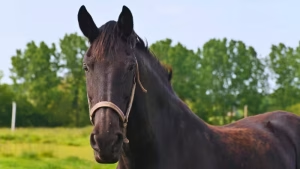
| Colours | Bay, black, chestnut (all common); palomino, buckskin, grey, roan, pinto also registered |
| Temperament | Willing, alert, people-oriented, sensible |
| Lifespan | 25–35 years |
| Registry | American Morgan Horse Association; British Morgan Horse Society |
| Typical uses | Dressage, driving, endurance, showing, pleasure riding, ranch work |
Origin and History
The entire Morgan breed descends from a single stallion known simply as Figure, foaled in West Springfield, Massachusetts in 1789. Given to schoolteacher Justin Morgan as partial settlement of a debt around 1792, Figure stood about 14 hands and weighed perhaps 450 kg. He was small, dark bay, and nothing special to look at — but he was astonishingly strong, fast, and enduring.
Figure became locally famous for out-pulling heavier horses at logging competitions, out-running faster horses under saddle and in harness, and still working a full day’s farm labour. Crucially, he stamped his type on every foal he sired. By the time he died in 1821, his three principal sons — Sherman, Bulrush, and Woodbury — had carried the type into hundreds of breeding lines, and the horses were being referred to by the name of the man who had once owned the foundation sire: Morgans.
Through the 19th century the breed filled every working role in New England and the expanding West. Morgans pulled stage coaches, worked cavalry remounts (including the Union Army’s famous First Vermont Cavalry in the American Civil War), raced under harness, and farmed. When trotting races split off into the Standardbred, and pleasure riding split into the Saddlebred, both breeds carried heavy Morgan blood.
By the late 1800s the pure Morgan had become scarce as crosses proliferated. The U.S. Department of Agriculture established a government Morgan breeding farm in Vermont in 1907 to preserve the type. Today the breed is bred worldwide, with around 175,000 registered Morgans globally and small but active populations in Britain, South Africa, Australia and Continental Europe.
Breed Standard and Conformation
The AMHA Standard of Perfection calls for a compact, upstanding horse of obvious quality. Key conformation points:
- Head: Well-shaped, clean-cut, with a straight or slightly dished profile, large expressive eyes set well apart, small alert ears, and a fine muzzle.
- Neck: Elegant, with a clean throatlatch, slightly arched top line, blending smoothly into well-laid shoulders.
- Shoulders: Long and sloping, giving the breed its characteristic high head and neck carriage.
- Back: Short and strong; deep girth; well-sprung ribs.
- Hindquarters: Muscular and rounded with a well-set tail that the horse carries proudly.
- Legs: Clean, short cannons, dense flat bone, correct hock and knee placement. Feet are notably hard and well-shaped.
- Overall: The impression is of a horse that looks too small to do what it can do — a small engine with no wasted parts.
Modern Morgans are broadly divided into several type preferences — the Park Morgan bred for showy, animated action; the Sport Morgan bred for dressage, eventing and jumping with longer, flatter movement; and the traditional or Working Morgan which sits between the two. The AMHA registers all of them to the same standard.
Colours and Markings
Bay, black, and chestnut are the traditional Morgan colours and together account for around 85% of the registered population. Over the last thirty years the registry has also accepted palomino, buckskin, cremello, perlino, silver dapple, grey, roan and pinto.
White markings on the face and legs are common but modest — a star, snip, stripe, or small sock. Extensive white (stockings, blazes) occurs but isn’t typical. The coat has a notable quality: dense in winter, short and glossy in summer, with a thick mane and tail that are often left long in the English show ring.
Temperament
If a single quality defines the Morgan, it is temperament. Breeders describe them as “people horses” — attentive, affectionate, endlessly curious, and unusually willing to please. Unlike some hot breeds, the Morgan combines a lively, forward attitude under saddle with a settled, sensible mind on the ground.
Common temperament traits:
- Trainable — picks up new disciplines quickly, retains what it learns.
- Bold — crosses water, hacks alone, doesn’t spook at much.
- Social — prefers human company; can become demanding if under-worked.
- Honest — rarely tricky or sour when treated fairly.
- Energetic — a Morgan has more “go” than many modern sport horses and needs a job.
For amateur riders, the breed is often an excellent match. Morgans are common picks for confident beginners moving up, for adult re-riders, and for children moving off ponies — all because the brain stays settled while the body does the work.
Gaits and Movement
Morgans have four naturally flat gaits: walk, trot, canter and gallop (the breed is not gaited in the technical sense — it doesn’t have a running walk or rack). What sets them apart is the quality of those gaits.
- Walk: Active, ground-covering, four-beat and square.
- Trot: Elastic, with natural elevation and engagement. Park-type Morgans trot with a dramatic high-stepping action; sport types trot with more reach.
- Canter: Balanced, rhythmic, comfortable to sit — a product of the sloping shoulder and deep hock.
- Gallop: Genuine speed over short distances; steady cruising pace over long.
Morgans frequently have a naturally high head carriage and proud tail set. The effect — even on a small horse — is of real presence.
Uses and Disciplines
The Morgan is a working horse by history and a versatile sport horse by present use. Disciplines where the breed excels:
- Dressage: Modern Morgans compete through the levels successfully, with several reaching Prix St Georges. The elastic trot and willing temperament suit the work.
- Driving: Morgans dominate combined driving in the United States and are increasingly popular in UK driving events. They are tough, brave, and quick on their feet in hazards.
- Endurance: The breed’s soundness and stamina make it well-suited to 50-mile and 100-mile rides.
- Showing: Both Western and English — including saddle seat, park, pleasure and driving classes.
- Pleasure and hacking: Sensible hacks, long-distance trail horses, farm horses.
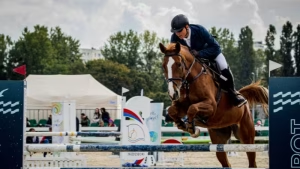
- Jumping and eventing: Not the breed’s specialism at the top level, but Sport Morgans compete successfully at Affiliated level.
- Ranch work: Still used on working cattle operations in the American West.
The breed is also a popular choice for therapeutic riding programmes thanks to the tolerant temperament and comfortable movement.
Health and Care
Morgans are among the hardier modern breeds, but they come with two specific concerns owners should know about.
Equine Metabolic Syndrome and Laminitis
As a breed adapted to thin New England pasture and working hard on little feed, the Morgan is an efficient converter of calories. In a modern environment of rich grazing, hard feed, and less work, that efficiency becomes a liability. Morgans are considered an “easy keeper” breed and are predisposed to equine metabolic syndrome (EMS), insulin resistance, and laminitis.
Management points:
- Restrict grazing on lush spring/autumn grass. Use a grazing muzzle or track system.
- Feed a low-sugar, low-starch forage-based diet. Soak hay if it’s high in sugar.
- Avoid cereal-based concentrates — a ration balancer with vitamins and minerals is usually all a working Morgan needs.
- Keep the horse in steady work. Morgans do not tolerate being idle and fat.
- Monitor body condition monthly; weigh regularly if possible.
PSSM1
Polysaccharide Storage Myopathy type 1 (PSSM1) occurs in a small percentage of Morgans. It’s a genetic muscle condition that causes tying-up. Breeding stock should be DNA-tested (the GYS1 mutation test is widely available). Affected horses can usually be managed with a low-starch, high-fat diet and consistent exercise.
General Care
Beyond metabolic management, the Morgan is a sound, long-lived breed. Many work into their mid-twenties and some well into their thirties. Their feet are naturally hard — many Morgans stay barefoot for life. Standard equine healthcare applies: regular farrier visits, dental checks every 6–12 months, up-to-date vaccinations and worming.
The Morgan in the UK
The British Morgan Horse Society was formed in 1975 and maintains the UK stud book under the parent AMHA registry. Morgans have been imported to Britain in small numbers since the 1960s, with a steady increase from the 1990s as sport and driving types became better known.
The UK population is estimated at around 300–400 horses. Expect to see Morgans at BEF-affiliated dressage and combined driving, Native Pony Performance Society events, and at the breed society’s annual show. Prices for a ridden Morgan in the UK range from around £6,000 for a young unbroken horse to £15,000+ for a competition-ready adult.
Buying a Morgan Horse
If you’re considering a Morgan, look for the following:
- Registered with AMHA or BMHS — the pedigree should be traceable to the foundation sire.
- DNA-tested for PSSM1 (GYS1) — standard practice for breeding stock, increasingly common for riding horses.
- Five-stage vet check — as with any purchase, but pay particular attention to feet, body condition, and any history of laminitis or EMS.
- Matches the type you want — a Park-type Morgan is a different ride from a Sport-type. Try the horse in the discipline you intend to use it for.
- Viewed more than once — Morgans put everything into the first meeting because they enjoy attention. A second visit tells you what the horse is like on an ordinary day.
Other British and American breeds with similar characteristics worth considering alongside the Morgan include the Welsh Cob (Section D), the Connemara, and the American Saddlebred for different but comparable all-rounder profiles.
Frequently Asked Questions
How tall is a Morgan Horse?
Morgans stand between 14.1 and 15.2 hands (145–157 cm), with most mature horses around 14.3 to 15.0 hh. The breed is compact rather than tall, but substantial in bone and muscle — a 15.0 hh Morgan can carry the same weight as a much larger sport horse.
What is the Morgan Horse known for?
The Morgan is known for versatility, temperament, and endurance. It is the only American breed descended from a single foundation sire, and it has influenced almost every other U.S. breed. Morgans work successfully in dressage, driving, endurance, showing, and ranch work — few breeds cover as wide a range.
Are Morgan Horses good for beginners?
Yes, with caveats. The typical Morgan has a sensible, willing temperament that suits confident beginners, re-riders and families — but the breed is naturally forward-going and alert, so a nervous first-time rider may find a quieter type more suitable. An older, well-schooled Morgan is one of the best horses an amateur can own.
Can Morgan Horses jump?
Yes. Morgans are not specialists at high-level showjumping or eventing, but they jump happily and well up to around 1.10 m, and some sport-type Morgans compete successfully at Affiliated level. Their short back and strong hindquarters give them natural jump.
How long do Morgan Horses live?
The average lifespan is 25–35 years. Many Morgans stay in ridden or driven work well into their twenties, and sound, well-managed individuals reaching their thirties are common. Good management of metabolic health is the key to longevity.
How much does a Morgan Horse cost in the UK?
Prices range from around £3,000 for an unbroken youngster to £15,000+ for a schoolmaster or a proven competition horse. Expect to pay a premium for sport-type Morgans with show or dressage records. Importing from the United States adds roughly £5,000–£7,000 once transport, quarantine and testing are factored in.