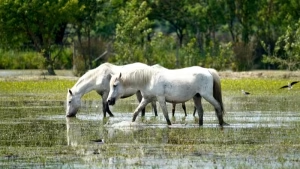
The Fell pony is one of England’s finest native breeds — a strong, hardy, versatile working pony from the fells and moorlands of Cumbria and the north Pennines, and one of the best loved of all native British breeds. Standing up to 14 hands high, the Fell combines the rugged toughness of a mountain pony with an elegant bearing, flowing mane and tail, and the kind of willing temperament that makes it equally at home on the hill, in the show ring or on a family hack.
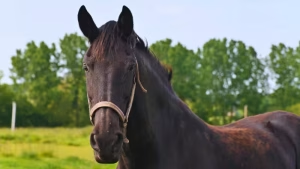
Predominantly black with striking feathered heels, the Fell pony has a distinctive look that is instantly recognisable. Despite growing popularity as a riding and driving pony, the breed remains on the Rare Breeds Survival Trust Watchlist, making conservation and careful breeding as important as ever.
Table of Contents
Breed Standard at a Glance
| Feature | Detail |
|---|---|
| Height | Not exceeding 14 hands (142 cm) |
| Weight | 350–450 kg |
| Colours | Black (most common), brown, bay, grey; chestnut is rare |
| Markings | Small white star permitted; excessive white discouraged |
| Head | Small, well chiselled, broad forehead, bright eyes, small ears |
| Neck | Strong, of good length, well set onto sloping shoulders |
| Body | Deep through the heart, well-sprung ribs, muscular loins |
| Legs | Good flat bone (minimum 20 cm below the knee), short cannons |
| Feather | Fine, straight, silky feather at the heel |
| Movement | Smart, true, ground-covering trot with good knee and hock action |
| Lifespan | 25–30+ years |
| Conservation status | At Risk (RBST Watchlist) |
| Breed society | The Fell Pony Society (est. 1916) |
History of the Fell Pony
Ancient Origins
The Fell pony’s origins stretch back thousands of years to the wild ponies that roamed the hills of northern England. The word “fell” comes from the Old Norse fjall, meaning hill or mountain — a fitting name for a breed shaped by the harsh upland landscape of what is now Cumbria, Northumberland and County Durham.
Some breed historians believe the Fell pony was influenced by horses brought to Britain during the Roman occupation. The Roman cavalry stationed along Hadrian’s Wall used Friesian-type horses from the Low Countries, and these may have crossed with the native hill ponies, contributing to the Fell’s black colouring, strong bone and distinctive high-stepping trot.
The Pack Pony Era
For centuries, Fell ponies were the lorries of the north. They carried lead ore from the Pennine mines to the coastal smelters, wool to market towns, and general goods along the drove roads. A single pony could carry up to 100 kg of lead ore over 30 kilometres of rough terrain in a day, travelling in long pack trains known as “jaggers.” This work demanded stamina, sure-footedness and a calm, reliable temperament — all qualities the breed retains today.
Fell ponies were also used for shepherding on the open fells, for light farm work, and as riding ponies for the farming families of Cumberland and Westmorland. Their versatility made them indispensable to the rural economy of northern England.
Trotting Races
The Fell pony’s distinctive fast, ground-covering trot made it a natural for the trotting races that were hugely popular in the north of England from the 17th to 19th centuries. These races, held on roads and tracks, tested endurance and speed over distances of up to 16 kilometres. The trotting tradition shaped the breed’s movement — that characteristic active, balanced trot remains one of the Fell pony’s most prized qualities.
The Fell Pony Society
The Fell Pony Society was founded in 1916 to preserve the breed as mechanisation began replacing working ponies. The society maintains the stud book, sets the breed standard and promotes Fell ponies through shows, sales and educational events. It remains the breed’s guardian to this day.
Physical Characteristics
Conformation
The Fell pony is a strong, well-built pony that should give the impression of power and substance without coarseness. The breed standard emphasises a pony that is compact, muscular and deep through the body, with good bone and hard, round feet — all qualities bred into the Fell by its working heritage.
The head is small, well chiselled and alert, with a broad forehead, large bright eyes, small neat ears and wide nostrils. The neck is strong and of good length, set onto well-laid-back shoulders. The body is deep through the girth with well-sprung ribs, a strong back and muscular hindquarters.
One of the Fell’s defining features is its bone — the breed standard requires a minimum of 20 cm of bone below the knee, giving these ponies the substance to carry adult riders despite their relatively modest height.
Colours
Black is by far the most common colour, and many people associate the Fell pony exclusively with this striking colouring. However, brown, bay and grey are all accepted under the breed standard. Chestnut occurs but is exceptionally rare. A small white star on the forehead is permitted, and a small amount of white on the hind fetlocks is acceptable, but excessive white markings are discouraged.
Feather, Mane and Tail
The Fell pony carries fine, straight, silky feather at the heels — an important breed characteristic that distinguishes it from coarser-feathered breeds. The mane and tail should be full and flowing, with a natural abundance that provides protection against wind and rain. Many Fell ponies also grow a distinctive “beard” of hair under the jaw in winter.
Movement
The Fell pony’s movement is one of its greatest assets. The breed is known for a smart, ground-covering trot with good knee and hock action — a legacy of the trotting races that shaped the breed. Movement should be straight and true, with the pony tracking up well behind. The walk should be active and purposeful, and the canter balanced and comfortable.
Temperament and Character
The Fell pony’s character has been shaped by centuries of working alongside people in demanding conditions. These ponies are known for being:
- Intelligent and quick to learn — they pick up new skills readily and retain their training
- Calm and sensible — not prone to spookiness or overreaction
- Willing and honest — they try hard for their rider without being hot or sharp
- Sure-footed — generations on rocky fell terrain have bred exceptional natural balance
- Hardy and self-reliant — they cope well with limited management and poor weather
- People-oriented — they form strong bonds with their handlers
This combination makes the Fell pony suitable for a wide range of riders, from confident children to adults looking for a reliable all-rounder. They are particularly valued by adult riders who want a pony with enough bone and substance to carry them comfortably over varied terrain.
Fell Pony vs Dales Pony
The Fell and Dales pony are closely related breeds from adjacent regions of northern England and are often confused. Here is how they compare:
| Feature | Fell Pony | Dales Pony |
|---|---|---|
| Origin | Western Pennines (Cumbria) | Eastern Pennines (Yorkshire/Durham) |
| Max height | 14 hh (142 cm) | 14.2 hh (147 cm) |
| Build | Lighter, more riding-pony type | Heavier, more cob-like build |
| Weight | 350–450 kg | 400–500 kg |
| Common colours | Predominantly black | Black, bay, brown, grey; roan also accepted |
| Feather | Fine, straight, silky | Heavier, more abundant |
| Movement | Active trot with good knee action | Powerful, high-stepping trot |
| Primary historic role | Pack pony (lead ore, wool) | Pack pony (lead ore) and farm work |
| Temperament | Willing, versatile, slightly livelier | Calm, steady, very docile |
| Conservation status | At Risk (RBST) | Critical (RBST) |
| Health concern | FIS (Foal Immunodeficiency Syndrome) | FIS (shared genetic condition) |
Both breeds make excellent riding and driving ponies. The Fell tends to be the more versatile under saddle due to its lighter build and active movement, while the Dales is the stronger choice for heavier riders or more demanding draught work. Both are affected by Foal Immunodeficiency Syndrome (FIS) — see the health section below.
Uses and Disciplines
Riding
Fell ponies are outstanding riding ponies. Their combination of substance (minimum 20 cm bone), comfortable gaits and sensible temperament makes them capable of carrying adults up to about 89 kg over demanding terrain. They excel at hacking, trail riding and trekking, where their sure-footedness is a real advantage.
Driving
The breed has a long tradition in harness, and Fell ponies are highly regarded as driving ponies. They compete in single, pairs, tandem and team classes, and their smart trot makes them eye-catching in the ring. They are equally suited to pleasure driving and competitive carriage driving.
Showing
Fell ponies have a strong presence in the show ring, particularly in Mountain and Moorland classes. Their natural presence, flowing mane and tail, and active movement make them competitive at all levels. The breed also appears in ridden M&M classes, where their versatility as genuine riding ponies shines through.
Endurance
The stamina that once carried pack loads across the Pennines translates well to modern endurance riding. Fell ponies have completed competitive endurance rides successfully, their natural hardiness and efficient metabolism giving them an advantage over longer distances.
Dressage and Jumping
While not traditional dressage ponies, Fells perform well at lower levels thanks to their natural balance and willingness to work on the flat. They are also capable show jumpers and working hunter ponies, with many competing successfully at Pony Club and local level.
Conservation Grazing and Practical Work
Fell ponies still do practical work in their home landscape. They assist with conservation projects in the Lake District, carrying materials to repair footpaths in areas inaccessible to vehicles. Their traditional role in shepherding continues on some Cumbrian hill farms. The breed also plays a role in conservation grazing, managing upland vegetation to maintain biodiversity — much like the Highland pony does in Scotland.
The Royal Connection
The Fell pony has a long association with the British Royal Family. Queen Elizabeth II was patron of the Fell Pony Society and kept a herd of Fell ponies at the Royal Stud at Hampton Court, with mares also running on the fell at Balmoral. Her Majesty was regularly photographed riding her Fell ponies well into her later years, and the breed’s association with the Crown has done much to raise its profile both nationally and internationally.
Conservation Status
The Fell pony is classified as “At Risk” by the Rare Breeds Survival Trust (RBST). While the breed’s popularity has grown significantly in recent decades, the number of registered breeding mares remains relatively small, and maintaining genetic diversity is an ongoing challenge.
Key organisations working to protect the breed include:
- The Fell Pony Society — maintains the stud book and breed standard since 1916
- RBST — monitors population numbers and supports conservation breeding
- Fell Pony Breeders Association — coordinates breeding and foal registrations
The breed has also gained international interest, with registered Fell ponies now found across Europe and North America, though the core breeding population remains in Cumbria and the surrounding counties.
Care Guide
Feeding
Fell ponies are classic good doers. They evolved to thrive on the sparse, rough grazing of the northern fells and maintain condition easily on relatively little feed. A diet based on good-quality hay or haylage with a vitamin and mineral balancer is usually sufficient for ponies in light to moderate work.
Overfeeding is a real risk — rich pasture, particularly in spring and summer, can quickly lead to weight gain and increase the risk of laminitis. Restricted grazing, strip grazing or a grazing muzzle may be necessary during peak grass growth. Hard feed is rarely needed unless the pony is in heavy work, breeding or elderly.
Turnout and Housing
Fell ponies are happiest living out. Their thick, weather-resistant coats, including the characteristic dense winter coat, mean they cope well with British winters. A field shelter or natural windbreak provides adequate protection in most situations. Stabling is only necessary for management reasons such as weight control or box rest.
Avoid rugging unnecessarily — these ponies are designed to self-regulate their temperature, and over-rugging can cause sweating, skin conditions and an inability to grow a proper winter coat.
Feather and Hoof Care
The Fell pony’s fine, silky feather requires regular attention. Keep the feather clean and dry to prevent mud fever (pastern dermatitis), which can develop in wet, muddy conditions. Some owners wash and dry the feather regularly, while others prefer to let it dry naturally and brush out mud once it is dry.
Fell ponies generally have excellent, hard feet that rarely require shoeing unless in regular roadwork. A farrier visit every six to eight weeks for trimming keeps the feet in good shape.
Grooming
The flowing mane and tail are part of the breed’s character and should be maintained rather than pulled or plaited. Gentle detangling with a wide-toothed comb preserves the natural fullness. Regular body grooming keeps the coat healthy and provides an opportunity to check for lumps, cuts and skin conditions.
Health Considerations
Fell ponies are generally robust and long-lived, but owners should be aware of these breed-specific and native-pony health considerations:
- Foal Immunodeficiency Syndrome (FIS) — the most significant breed-specific health concern. FIS is an inherited autoimmune condition where affected foals are born with a severely compromised immune system and typically die within the first few months of life. A DNA test is available to identify carriers, and responsible breeders test all breeding stock to avoid producing affected foals. Both the Fell and Dales pony carry the gene.
- Laminitis — as with all native breeds, the Fell pony’s efficient metabolism makes it prone to laminitis, particularly from rich grazing and obesity. Careful weight management is essential.
- Equine Metabolic Syndrome (EMS) — linked to obesity and insulin resistance, EMS increases laminitis risk. Regular body condition scoring and weight monitoring help catch problems early.
- Mud fever — the feathered heels can trap moisture and bacteria, making Fell ponies susceptible to pastern dermatitis in wet conditions. Good feather management is the best prevention.
- Sweet itch — some Fell ponies are affected by this allergic reaction to midge bites, particularly those kept in lowland areas away from their native upland habitat.
Routine care should include regular worming (ideally guided by faecal egg counts), annual vaccinations for tetanus and equine influenza, and twice-yearly dental checks.
Buying a Fell Pony
The Fell Pony Society is the best starting point for finding registered Fell ponies. The society maintains a breeders directory and holds an annual breed sale.
Key considerations:
- FIS status — always ask whether the pony and its parents have been tested for Foal Immunodeficiency Syndrome. Responsible breeders will have test results available.
- Registration — ensure the pony is registered with the Fell Pony Society. Unregistered ponies described as “Fell types” may not meet the breed standard.
- Purpose — consider your intended use. Fell ponies bred from ridden lines tend to have more forward, athletic movement, while those from more traditional fell lines may be hardier but less suited to competitive riding.
- Pre-purchase vetting — always have a prospective purchase examined by an independent vet, with particular attention to feet, limbs and signs of previous laminitis.
- Rehoming — organisations such as the Fell Pony Society occasionally have ponies available for rehoming, and the breed’s hardiness makes them relatively straightforward to manage.
Frequently Asked Questions
How big do Fell ponies get?
Fell ponies must not exceed 14 hands high (142 cm) under the breed standard. They typically weigh between 350 and 450 kg. Despite being classified as ponies, their strong bone and substance mean they can comfortably carry adult riders up to around 89 kg.
What is the difference between a Fell pony and a Dales pony?
Both are northern English native breeds, but the Dales pony is slightly taller (up to 14.2 hh), heavier and more cob-like in build, originating from the eastern Pennines. The Fell pony is lighter and more of a riding-pony type, from the western Pennines in Cumbria. Fells are predominantly black, while Dales also come in roan. Both breeds share the FIS gene and have similar working histories carrying lead ore.
Are Fell ponies good for beginners?
Fell ponies are well suited to confident beginners and intermediate riders. Their calm, sensible temperament and sure-footedness make them forgiving and trustworthy. However, they are stronger and more forward-going than very small ponies, so complete beginners (particularly young children) may find them a step up from a lead-rein pony.
Can adults ride Fell ponies?
Yes. Fell ponies are one of the best native breeds for adult riders. Their strong bone (minimum 20 cm below the knee), deep body and powerful build mean they can carry adults comfortably. Many adult riders choose Fell ponies specifically because they combine pony hardiness and low maintenance with enough size and substance for a grown-up.
What is Foal Immunodeficiency Syndrome (FIS)?
FIS is an inherited autoimmune condition found in Fell and Dales ponies. Affected foals are born with a severely weakened immune system and typically do not survive beyond a few months. A DNA test can identify carrier animals, and responsible breeders test all breeding stock to avoid mating two carriers. FIS does not affect the health of carrier ponies themselves — only foals born to two carrier parents are at risk.
How much does a Fell pony cost?
In the UK, an unbroken Fell pony youngster typically costs between £1,500 and £4,000, while a well-schooled, registered adult with good movement or a competition record usually ranges from £4,000 to £10,000 or more. Proven show ponies, in-foal mares from sought-after bloodlines and ridden lines command the highest prices. Always factor in FIS test results and registration with the Fell Pony Society when comparing prices.