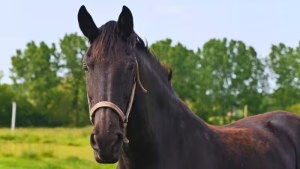
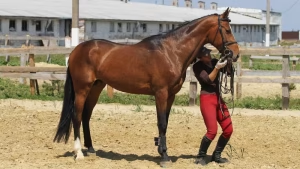
The Shire horse is the giant of the British countryside — a calm, cathedral-quiet draught horse that once pulled the ploughs, drays and barges that built the modern British economy, and that today still works in royal parks, brewery turnouts and ridden pleasure homes across the world. With stallions reaching 18 hands and beyond, weighing more than a small car and pulling loads measured in tonnes, the Shire is one of the largest horse breeds on the planet.
This guide explains what makes a Shire horse, how big they really get, the four traditional colours of the breed, the difference between a Shire and a Clydesdale, the breed’s near-extinction in the 20th century, and how the Shire Horse Society is working to bring numbers back. Whether you are reading for general interest, considering a Shire for ridden work, or trying to identify a horse you’ve spotted at a show, here is the practical, plain-English breed profile.
Table of Contents
What Is a Shire Horse?
The Shire horse is a heavy draught horse breed native to the English Midlands and the only true “great horse” of England still in widespread existence. The breed is registered with the Shire Horse Society, founded in 1878, and is one of three British heavy horse breeds (along with the Clydesdale and the Suffolk Punch).
The breed is officially classified as “at risk” by the Rare Breeds Survival Trust (RBST), with annual UK foal registrations only in the low hundreds — a long way short of the tens of thousands that worked British fields and city streets a century ago. Despite the numbers, Shires are highly visible: they appear at every major county show, work the brewery dray turnouts (most famously for Wadworth, Thwaites and Samuel Smith’s), give carriage rides in Richmond Park and ploughing displays at heritage farms across the country.
A Brief History of the Shire Horse
The Shire is a direct descendant of the English “Great Horse” — the heavy mediaeval war horse that carried armoured knights into battle. As armour became obsolete and field artillery replaced cavalry, the great horse’s role shifted to agriculture, road haulage and canal work. By the 17th and 18th centuries, breeders in the East Midland counties of Lincolnshire, Cambridgeshire, Derbyshire and Leicestershire had refined the type into the bone-heavy, feather-legged, tractable animal we recognise today.
Native English mares were crossed with imported Friesian, Flemish and Dutch heavy stock to add height, weight and movement. The “Old English Black Horse” of the 18th century is generally considered the direct precursor to the modern Shire. The Shire Horse Society was founded as the English Cart Horse Society in 1878 and renamed the Shire Horse Society in 1884, with the studbook closed shortly afterwards.
Numbers peaked around the early 1900s, with hundreds of thousands of Shires working British farms and cities. Mechanisation in the 1920s and 30s, then dramatic post-war agricultural change, almost wiped the breed out — by the 1960s, the entire UK Shire population had fallen below 80 active breeding mares. The Shire Horse Society’s preservation work since then has steadily rebuilt the population, but the breed remains vulnerable.
Shire Horse Height, Weight and Size
Few horse breeds elicit “how big do they get?” more than the Shire. The breed standard sets minimum heights but no maximum — and they consistently produce some of the tallest horses on record.
Standard Shire dimensions
- Stallions: minimum 17 hands (173 cm) at the wither. Many mature stallions stand 17.2–18.0 hh (178–183 cm).
- Geldings: minimum 16.2 hands (168 cm). Often 17.0–17.3 hh.
- Mares: minimum 16 hands (163 cm). Most mature mares stand 16.2–17.2 hh.
- Weight: 850–1,100 kg in working condition. Stallions can exceed 1,100 kg.
Record-breakers
The largest horse ever recorded is generally accepted to be Sampson (later renamed Mammoth), a Shire gelding foaled in Toddington Mills, Bedfordshire in 1846. By age four he stood 21.2 hands (219 cm) and weighed an estimated 1,524 kg (3,360 lb). The current title-holder for tallest living horse — Big Jake at 20.275 hands until his death in 2021 — was a Belgian draft, not a Shire, but Shires consistently feature among the tallest pedigree horses on Earth.
Breed Standard and Conformation
The Shire Horse Society’s breed standard prizes a powerful, free-moving, tractable working horse. Modern judging criteria emphasise three things: a kind, intelligent head; a deep, powerful body; and clean, true movement that takes a Shire stallion from the inspection ring straight to a turnout vehicle.
Head and neck
- Long, lean head with a slightly Roman or convex profile.
- Bold, kind eye and a wide forehead.
- Long, sharp ears.
- Strong, muscular neck of moderate length, set well into the shoulder.
Body and limbs
- Long, sloping shoulder for ground-covering paces.
- Deep chest with a powerful girth.
- Short back, well-coupled to a long, muscular hindquarter.
- Big, dense, flat bone — a measurement of 11–12 inches just below the knee is typical of a quality stallion.
- Heavy, silky feathering on the heels (never coarse curl).
- Large, dense, deep heels and “blue” horn feet.
Movement
The Shire’s trot must be straight, powerful and free, with the horse stepping deeply into the ground without rolling or paddling. The breed is famous for its measured, deliberate walking pace — long, true and economical, the gait that allowed Shires to plough an acre a day and pull eight-tonne barges along the Grand Union Canal.
Shire Horse Colours and Markings
The Shire Horse Society stud book recognises four colours. White markings are encouraged on the legs and face but should not extend up the body.
- Black — the most traditional Shire colour, particularly common in stallions.
- Bay — widely seen, often with rich, mahogany shades.
- Brown — including dark and seal browns.
- Grey — accepted, especially in mares; born dark and lightening with age.
Chestnut is no longer accepted as a Shire colour for stallions and is rare in the modern stud book. Excessive white above the knee or hock and white “splashes” on the body are penalised at inspection.
Temperament and Character
The breed’s nickname — “the gentle giant” — is well earned. Generations of close working contact with farmers, draymen and bargemen produced a horse that is unusually calm, biddable and patient.
- Calm and unflappable. Shires are bred to work in heavy harness in busy yards, town streets and on the canal towpath. Modern Shires retain that steady disposition.
- Willing and trainable. They learn quickly and rarely sour with sensible handling.
- Affectionate. Many Shire owners describe them as “labrador-with-hooves” — sociable, friendly and people-oriented.
- Heavy enough to need respect. A 1,000 kg horse with poor ground manners is not a small problem; the Shire’s temperament makes ground work easy, but training must still be consistent.
Uses and Disciplines Today
Tractors replaced Shires on the field, but the breed has found a steady set of modern roles.
Working roles
- Brewery turnouts — Wadworth, Thwaites, Samuel Smith’s, Hook Norton, the Tetley Heritage and several heritage breweries still run pairs of Shires for delivery and exhibition work.
- Royal Parks — Richmond Park’s Shires pull carriage rides, harrow the gallops and work alongside foresters.
- Conservation and forestry — Shires extract timber from sensitive woodland where machinery would compact soil.
- Heritage farms and ploughing matches — across the UK, working Shires give the public a window into pre-mechanised agriculture.
- Funeral horses — Shires are the traditional choice for full state funeral teams and equine-drawn hearses.
Ridden and competition
Shires are increasingly seen under saddle:
- Ridden showing — heavy horse classes at county and breed shows, plus traditional in-hand classes.
- Dressage — well-schooled Shires reach Novice and Elementary, occasionally higher. The trot is impressive when it comes round.
- Hunting — the breed pops a hedge surprisingly well at a hunting pace.
- Pleasure riding and trekking — for adult riders wanting a substantial, calm horse.
- Western riding — Shires turn up in western pleasure and trail classes too.
Shire Horse vs Clydesdale: How to Tell Them Apart
The two breeds are often confused. Both are British heavy draught horses with feathered legs, white face markings and a calm temperament. The differences are real but subtle:
| Trait | Shire | Clydesdale |
| Origin | English Midlands | Scotland (Lanarkshire / River Clyde) |
| Size | Generally larger; 16.2–18+ hh | Slightly smaller; 16–18 hh |
| Build | Heavier, more massive bone | Lighter and more refined draught type |
| Colours | Black, bay, brown, grey | Bay, black, brown, chestnut, with widespread white and roaning |
| Markings | Moderate white on face and legs | Often extensive white on legs, belly and face |
| Feathering | Heavy, silky feather all round | Fine, silky feather; more refined |
| Movement | Big, ground-covering trot | High, snappy knee-and-hock action |
The simplest field test: a horse with even white markings and heavy “Christmas-cracker” feather, in a black or bay coat — usually a Shire. A horse with a wide blaze, four high white stockings, often roan body markings and very high knee action — usually a Clydesdale.
Care, Feeding and Health
Feeding the Shire
Shires are big — but most modern leisure Shires are not in heavy work, and the classic mistake is feeding them like they are.
- Build the diet around plentiful good-quality forage — meadow hay or haylage.
- Use a high-spec balancer rather than concentrate hard feed for ponies in light to medium work.
- Add chaff, alfalfa or sugar-beet pulp for chewing time and condition where needed.
- Provide a salt lick and clean fresh water at all times — a Shire can drink 90 litres a day in heat.
- Watch sugar load. Native and heavy-type horses are predisposed to laminitis.
Routine health and welfare
- Mud fever and feather mites — the heavy feather is a magnet for both. Wash, dry thoroughly and check the heels weekly in winter.
- Chronic Progressive Lymphoedema (CPL) — a chronic, progressive swelling of the lower limbs and feathered areas, more common in heavy feathered breeds (Shire, Clydesdale, Friesian). Prompt vet input slows progression but does not cure it.
- Polysaccharide Storage Myopathy (PSSM) — a hereditary muscle disease seen in heavy horse lines; managed by diet and exercise.
- Laminitis and Equine Metabolic Syndrome — managed by tight grazing and condition control.
- Dental, vaccinations, farriery — annual dental check, six-weekly farrier, full flu and tetanus cover. Shire shoes are huge — a working Shire can carry up to a 26 cm horseshoe.
Stabling, fields and fencing
Shires need bigger everything. Stable boxes need to be a minimum of 4 m × 4 m (about 13 ft × 13 ft). Fence height should be at least 1.4 m (4 ft 6 in), with strong post-and-rail or horse-grade tape rather than barbed wire. Field troughs and feed bins must be sized for a head a foot wider than a Thoroughbred’s.
Owning a Shire Horse
Shires are not the cheapest horse to buy or to keep. Realistic costs to plan for:
- Purchase price. A young, partly-broken three-year-old typically £2,000–£5,000. A schooled, established adult £5,000–£10,000+, with proven driving or showing horses going considerably higher.
- Feed. Around 1.5–2.5 % of bodyweight a day in forage — for a 1,000 kg Shire that is 15–25 kg of hay equivalent. Bigger bales, more frequent deliveries, larger storage.
- Farriery. Specialist heavy-horse shoes cost more than a Thoroughbred set. Six-weekly visits.
- Tack. XL-fit bridles, draught collars (if driving), 17.5–18 inch wide-tree saddles and double-extra-large rugs.
- Transport. Single-Shire trailers and lorries need 9-10 ft headroom and a strong floor — many standard trailers are not big enough.
That is the honest picture. The reward is one of the most calm, willing and historically significant horses on the planet — a horse most owners describe as a “once in a lifetime” experience.
Frequently Asked Questions
How big does a Shire horse get?
Shire stallions stand a minimum of 17 hands (173 cm) at the wither, with many mature stallions reaching 17.2–18.0 hh (178–183 cm). Mature mares stand 16.0–17.2 hh and geldings 16.2–17.3 hh. Adults weigh 850–1,100 kg in working condition.
What was the largest Shire horse ever?
The largest Shire on record was Sampson (later renamed Mammoth), foaled in 1846 in Toddington Mills, Bedfordshire. By age four he stood 21.2 hands (219 cm) and weighed an estimated 1,524 kg (3,360 lb).
What is the difference between a Shire horse and a Clydesdale?
The Shire is English (Midlands), generally larger and heavier with massive bone, more conservative white markings and a steady, ground-covering trot. The Clydesdale is Scottish (Lanarkshire), slightly smaller and lighter with extensive white markings, often body roaning and a high, snappy knee-and-hock action.
What colours are Shire horses?
The Shire Horse Society stud book recognises black, bay, brown and grey. White markings are common on the face and legs. Chestnut is no longer accepted in stallions and is rare in the modern stud book.
Are Shire horses good for riding?
Yes. The breed is best known for its draught and harness work, but Shires increasingly appear in ridden showing, lower-level dressage, hunting and pleasure riding. Their calm temperament and patience make them a popular choice for adult riders wanting a substantial, settled horse.
Are Shire horses rare?
Yes. The Shire is listed on the Rare Breeds Survival Trust watchlist, with only a few hundred foals registered each year in the UK — far fewer than the breed’s peak in the early 1900s. Conservation efforts by the Shire Horse Society have stabilised numbers but the breed remains vulnerable.
How long do Shire horses live?
Shires typically live to around 25 years with sensible management. Some heavy-horse health issues (CPL, PSSM) can shorten useful working life, but well-cared-for Shires routinely remain sound and useful into their early-to-mid twenties.
How much does a Shire horse cost?
A young, partly-broken three-year-old usually costs £2,000–£5,000. A schooled adult Shire ranges £5,000–£10,000+, with proven show, driving or breeding horses at the top end going considerably higher.