The Percheron is one of the world’s most recognisable draught horse breeds — powerful enough to haul timber yet refined enough to turn heads in the show ring. Originating in the Perche region of north-western France, the breed combines raw strength with an elegance rarely seen in heavy horses, thanks to centuries of Arabian influence.
Standing between 15.1 and 18.1 hands (155–185 cm) and weighing 820–1,200 kg, Percherons are imposing animals. Yet their calm, willing temperament makes them surprisingly approachable — equally suited to forestry work, carriage driving, and family riding. In the UK, they’ve earned a loyal following through the British Percheron Horse Society, which has promoted the breed since 1918.
This guide covers everything you need to know about the Percheron horse: its history, physical characteristics, temperament, health considerations, and modern uses in the UK and beyond.
Table of Contents
Percheron at a Glance
| Height | 15.1–18.1 hh (155–185 cm) |
|---|---|
| Weight | 820–1,200 kg |
| Origin | Perche, north-western France |
| Colours | Grey, black (occasionally bay, roan) |
| Temperament | Calm, intelligent, willing, energetic |
| Lifespan | 25–30 years |
| Main uses | Forestry, carriage driving, riding, showing |
| Typical UK price | £2,000–£8,000+ |
| UK breed society | British Percheron Horse Society (1918) |
History and Origins
The Percheron takes its name from the Perche province, a fertile area near Normandy in north-western France. The region’s rich pastureland and temperate climate created ideal conditions for breeding strong, hardy horses.
Early Development
The breed’s earliest ancestors were warhorses, selectively bred to carry armoured knights into battle. During the 8th century, Arabian stallions captured during the Moorish invasions were crossed with local mares, introducing the refinement and endurance that distinguish Percherons from other draught breeds. Further Arabian blood was added during the Crusades, cementing the breed’s characteristic blend of power and elegance.
The Diligence Horse Era
By the 17th century, Percherons had evolved into lighter, faster animals used to pull stagecoaches — known as diligences — across France. These “Diligence Horses” were valued for their stamina on long journeys and their ability to maintain a steady trot over rough roads.
The Agricultural Shift
The 19th century brought a dramatic change. As European agriculture expanded, farmers needed heavier horses for ploughing and hauling. Breeders in Le Perche responded with selective breeding programmes that produced the larger, more muscular Percheron we know today. The French government established a stud book in 1883, formalising the breed standard.
Wartime and Decline
Percherons served in both World Wars, hauling artillery, supplies, and ambulances. Their calm temperament under fire made them invaluable. However, post-war mechanisation decimated draught horse numbers across Europe. By the 1950s, the breed’s population had plummeted. A revival began in the 1960s, driven by renewed interest in traditional farming, forestry, and showing.
Physical Characteristics
The Percheron is a well-proportioned heavy horse that carries its considerable size with surprising grace.
Size and Build
- Height: 15.1–18.1 hands (155–185 cm)
- Weight: 820–1,200 kg
- Build: Deep, wide chest; muscular hindquarters; short, strong back; well-sprung ribs
French-bred Percherons tend to be slightly lighter and more refined, while those bred in the UK and elsewhere are often heavier and more solidly built.
Head and Neck
The Percheron has a broad forehead, large expressive eyes, small upright ears, and a straight or slightly dished profile — a legacy of its Arabian ancestry. The neck is long, well-arched, and muscular, blending smoothly into prominent withers.
Legs and Feet
Unlike the Clydesdale and Shire, the Percheron has clean legs with minimal feathering. This is a practical advantage — less feather means less mud retention, lower risk of conditions like mud fever, and easier daily grooming. The hooves are large, hard, and well-shaped, reflecting the breed’s origins on firm French soil.
Colour
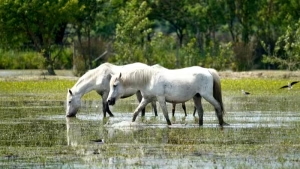
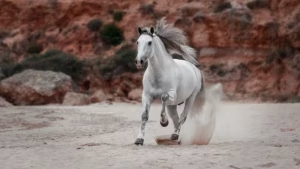
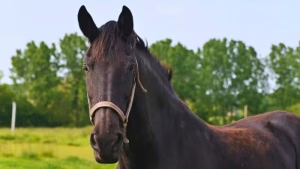
Most Percherons are grey or black. In France, only grey horses are registered — they are born black and gradually lighten with age. The British and American registries also accept black, and occasionally bay, roan, or chestnut individuals appear, though these are uncommon.
Movement
For a horse of its size, the Percheron moves with remarkable freedom. The walk is long-striding and purposeful, and the trot is energetic and ground-covering — one reason the breed excelled as stagecoach horses. This active movement sets Percherons apart from many other draught breeds.
Temperament and Behaviour
The Percheron’s temperament is one of its greatest assets. These horses are:
- Calm and steady — rarely spooky or reactive, even in busy environments
- Intelligent — quick to learn and responsive to training
- Willing — they genuinely want to work and please their handler
- Gentle — despite their size, Percherons are typically safe around children and inexperienced handlers
- Hardy — they cope well with varied climates and conditions
This combination of power and docility is what makes the Percheron so versatile. They have more natural energy than many people expect from a draught breed — they’re willing workers, not sluggish plodders.
Percheron vs Clydesdale vs Shire
The three most popular heavy horse breeds in the UK are often compared. Here’s how they differ:
| Feature | Percheron | Clydesdale | Shire |
|---|---|---|---|
| Origin | France | Scotland | England |
| Height | 15.1–18.1 hh | 16–18 hh | 16.2–19 hh |
| Weight | 820–1,200 kg | 820–1,000 kg | 900–1,100 kg |
| Feathering | Minimal | Heavy | Heavy |
| Common colours | Grey, black | Bay, brown, roan | Black, bay, grey |
| Temperament | Energetic, willing | Active, bold | Calm, gentle |
| Best for | Forestry, driving, riding | Showing, driving | Showing, draught work |
Percherons are generally heavier and more muscular than Clydesdales, though Shires can be taller. The Percheron’s lack of feathering is a significant practical advantage in the UK’s wet climate.
Modern Uses
Forestry and Conservation Grazing
Percherons are highly valued in forestry operations where machinery would damage sensitive woodland. Their ability to extract timber from tight spaces with minimal ground disturbance makes them ideal for selective logging and conservation work. Several UK estates and the Forestry Commission use draught horses — including Percherons — for environmentally sensitive sites.
Driving and Carriage Work
The breed excels in harness. Percherons are popular for carriage driving, wedding carriages, brewery deliveries, and ceremonial work. Their steady temperament in traffic and crowds makes them reliable in urban settings.
Riding
While not a traditional riding horse, the Percheron’s comfortable movement and calm nature make it suitable for leisure riding, particularly for larger or more nervous riders who appreciate a steady, confidence-giving mount. Their free-moving trot is surprisingly comfortable for a heavy horse.
Crossbreeding
Percheron crosses — particularly with Thoroughbreds — produce versatile sport horses with substance, bone, and a good temperament. These crosses can excel in dressage, show jumping, and eventing, combining the Percheron’s strength with the Thoroughbred’s athleticism.
Showing
Heavy horse showing remains popular across the UK. Percherons compete in in-hand and turnout classes at county shows, agricultural fairs, and breed society events. The annual Percheron breed show is a highlight of the heavy horse calendar.
Health and Common Conditions
Percherons are generally robust horses with a life expectancy of 25–30 years. However, their size predisposes them to certain conditions:
Equine Polysaccharide Storage Myopathy (EPSM)
EPSM is a muscle condition common in draught breeds where glycogen is stored abnormally in muscle tissue. Affected horses may show stiffness, reluctance to move, and tying up after exercise. Management involves a low-starch, high-fat diet and regular, consistent exercise rather than sporadic work.
Osteochondritis Dissecans (OCD)
Fast-growing young Percherons can develop OCD, where cartilage and bone fragments detach within the joint. This causes lameness and swelling, typically in the hocks or stifles. Early veterinary assessment and appropriate nutrition during growth are essential for prevention — see our full guide to OCD in horses for diagnosis and treatment options.
Shivers Syndrome
This neuromuscular condition causes involuntary muscle tremors, particularly in the hindquarters. It’s more common in tall, heavily muscled breeds. There is no cure, but mild cases can be managed with regular exercise and careful farriery.
Lymphoedema
Some draught horses develop chronic swelling in the lower legs due to impaired lymphatic drainage. While Percherons are less prone to this than heavily feathered breeds, it can still occur. Regular exercise and leg care help manage the condition.
Weight Management
Like many native and draught breeds, Percherons are good doers — they maintain weight easily and can become obese on rich pasture. Obesity increases the risk of laminitis and joint strain, so careful dietary management is essential.
Care Requirements
Feeding
A Percheron in light to moderate work typically thrives on good-quality hay or haylage with a balancer or vitamin and mineral supplement. Working Percherons may need additional concentrates, but avoid high-starch feeds — a high-fibre, high-fat diet suits the breed best, particularly for horses prone to EPSM.
As a rough guide, a 1,000 kg Percheron needs approximately 12–15 kg of forage daily (1.2–1.5% of bodyweight), adjusted for work level and condition. Access to good pasture should be managed carefully to prevent excessive weight gain.
Grooming
The Percheron’s clean legs are a significant grooming advantage over feathered breeds. A standard grooming kit is sufficient — no specialist feather care needed. Their dense winter coat benefits from regular currying to remove dead hair and promote circulation. Grey Percherons do require more effort to keep clean, particularly on muddy winter turnout.
Hoof Care
Percherons have large, strong hooves that generally hold shoes well. Regular farrier visits every 6–8 weeks are essential — their considerable weight means even minor hoof imbalances can lead to joint and tendon strain. Some owners keep unshod Percherons successfully on softer ground.
Stabling
These are big horses. A standard 3.6 m × 3.6 m (12 ft × 12 ft) stable is the minimum — larger is better. Doorways, ceilings, and headcollars all need to accommodate their size. Many Percherons live happily at grass year-round with access to a field shelter, provided they have adequate forage in winter.
Percherons in the UK
The breed arrived in Britain during the First World War, when French Percherons were imported for military use. Many remained after the war, and the British Percheron Horse Society was founded in 1918 to establish a breed register and promote the Percheron in the UK.
Today, the British Percheron population is modest but dedicated. The breed society organises shows, maintains the stud book, and supports breeders across the country. Percherons can be found working in forestry, competing at county shows, pulling carriages at stately homes, and serving as steady riding horses.
For those considering buying a Percheron in the UK, prices typically range from £2,000 to £8,000+ depending on age, training, and breeding. The British Percheron Horse Society is the best starting point for finding registered breeders.
Frequently Asked Questions
Generally, yes. Percherons typically weigh 820–1,200 kg, while Clydesdales usually weigh 820–1,000 kg. In height, both breeds overlap considerably (15.1–18.1 hh for Percherons, 16–18 hh for Clydesdales), but the Percheron tends to be more heavily muscled and broader through the chest and hindquarters.
Yes. While Percherons are primarily draught horses, their comfortable movement and calm temperament make them suitable for leisure riding. They’re particularly popular with larger riders and those who want a steady, confidence-giving mount. Percheron–Thoroughbred crosses are also used in dressage, show jumping, and eventing.
Percherons typically live 25–30 years with proper care. Their longevity is comparable to other draught breeds. Good nutrition, regular veterinary care, appropriate exercise, and careful management of breed-specific conditions like EPSM all contribute to a long, healthy life.
In the UK, Percherons typically cost between £2,000 and £8,000+, depending on age, training level, and breeding. Unbroken youngstock is at the lower end, while well-trained adults with competition or driving experience command higher prices. Running costs are higher than average due to their size — expect larger feed, farrier, and veterinary bills.
The main challenges are their size-related costs (more feed, larger stabling, bigger rugs, specialist farriery) and their predisposition to conditions like EPSM and OCD. They need experienced handling simply due to their strength, and finding appropriately sized tack can be difficult. They’re also prone to weight gain on rich pasture, requiring careful grazing management.