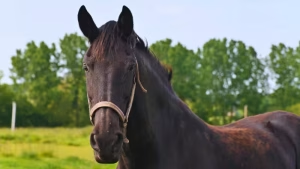
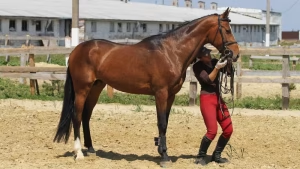
The miniature horse packs the proportions, presence, and personality of a full-sized horse into a frame barely taller than a large dog. Standing under 34 to 38 inches at the withers, these tiny equines have become hugely popular across the UK and beyond — as companions, driving and showing animals, therapy and assistance horses, and a gentle introduction to horse care for children. This guide explains what defines a miniature horse, where the breed came from, how to care for one, and the specific health risks their small size brings.
Table of Contents
What Is a Miniature Horse?
A miniature horse is defined by height rather than by a single bloodline. The American Miniature Horse Association (AMHA) caps registered horses at 34 inches (86cm), measured at the last hairs of the mane where it meets the withers. The American Miniature Horse Registry (AMHR) allows two divisions: “A” horses up to 34 inches and “B” horses from 34 to 38 inches. Unlike most equines, miniatures are measured in inches or centimetres, not hands.
Importantly, a miniature horse is bred to look like a scaled-down horse, not a small pony. Good examples have refined heads, proportionate limbs, and balanced conformation — the silhouette of a full-sized horse in miniature.
History and Origins
Small horses have been deliberately bred for centuries. From the 1600s, European nobility kept miniature horses as novelties and curiosities in royal courts and private menageries. At the same time, far less glamorous small horses and ponies were worked underground in British and continental coal mines, valued for their ability to move through low tunnels.
The modern miniature draws on several of these strands, including small Shetland-type ponies and other downsized European stock. The most influential dedicated miniature breed is the Falabella, developed by the Falabella family in Argentina from the mid-19th century. The Falabella is a true miniature horse breed in its own right, prized for its consistent small size and refined type, and it sits behind many modern miniature bloodlines worldwide.
Through the 20th century, breeders in the United States and Europe selected systematically for size, soundness, and conformation, and formal registries followed. Today the miniature horse is a recognised type with its own thriving show scene and breed societies on both sides of the Atlantic.
Physical Characteristics
A well-bred miniature horse is a balanced, athletic animal in miniature. The body should be in proportion, with a refined head, good limbs, and free, straight movement. Miniatures come in every equine colour and pattern — solid bays, chestnuts, and blacks, as well as spotted, pinto, and palomino colouring. They are remarkably long-lived, frequently reaching 25 to 35 years, considerably more than many full-sized horses.
Their tiny stature does not make them delicate; miniatures are generally hardy and robust. But the same small frame creates specific management challenges around diet, dentistry, and weight, which are covered below.
Miniature Horse at a Glance
| Height | Under 34 inches (AMHA) or up to 38 inches (AMHR division B) |
| Weight | Roughly 70–100kg |
| Lifespan | 25–35 years |
| Classification | Horse (not pony) by registries, despite size |
| Colours | All equine colours and patterns |
| Temperament | Friendly, bold, intelligent, sociable |
| Common uses | Companion, in-hand driving, showing, therapy |
| Key health risks | Obesity, laminitis, dental crowding, hyperlipaemia |
Miniature Horse vs Pony
This is the most common point of confusion. A pony — such as a Shetland — is defined by height (under 14.2 hands) but typically has pony characteristics: a stockier build, shorter legs relative to the body, a thicker neck, and heavier bone. A miniature horse is bred specifically to retain horse-like proportions and refinement, simply at a much smaller scale.
In short, ponies are judged by a height limit, while miniature horses are judged by both a height limit and their horse-type conformation. A Shetland pony is not a miniature horse, even though both are small. The distinction matters in the show ring, where the two are judged against different standards.
Temperament and Personality
Miniature horses are famous for their big characters. They are friendly, curious, intelligent, and intensely sociable, forming strong bonds with people and other equines. Many owners describe them as bold and confident well out of proportion to their size.
That intelligence cuts both ways: bored or spoiled miniatures can become pushy or develop bad manners, precisely because their small size lets handlers tolerate behaviour they would never accept from a full horse. Consistent, respectful handling — treating a mini as a horse, not a toy — produces a well-mannered, delightful animal.
Uses and Activities
Miniature horses are too small to be ridden by adults and, in most cases, by all but the smallest children, so their work is almost entirely on the ground or in harness. Popular activities include:
- In-hand driving — miniatures make excellent driving animals, pulling lightweight show or pleasure vehicles.
- Showing — in-hand conformation classes, obstacle and agility courses, and liberty are all popular.
- Therapy and assistance — their calm temperament and long lifespan make them effective therapy animals in hospitals and care homes, and some are trained as guide horses.
- Companionship — they are superb companions for horses, other livestock, and people.
- Learning horse care — a mini lets children learn grooming, leading, and husbandry at a manageable scale (always with supervision).
Owning a Miniature Horse in the UK
It is a common misconception that a miniature horse is cheap or low-maintenance because it is small. In reality, a mini needs the same core care as a full-sized horse: annual vaccinations, regular worming, routine dentistry, and farriery every six to eight weeks. They also need equine company, shelter, and safe, well-fenced grazing.
Purchase prices in the UK typically range from around £500 for an unregistered companion to £3,000 or more for a quality registered show or breeding animal. In South Africa, expect roughly R8,000 to R40,000 depending on bloodlines and training. Ongoing costs — vet, dentist, farrier, feed, and insurance — are broadly similar to keeping any equine, so the commitment is real despite the small size.
Health Considerations
The miniature horse’s small frame brings a distinct set of health risks that owners must manage proactively.
Obesity and laminitis. Miniatures are extremely efficient at holding weight and gain condition rapidly on rich UK grass. Excess weight drives equine metabolic syndrome and laminitis, the painful and potentially crippling inflammation of the hoof. Strict grazing management is essential.
Hyperlipaemia. This is the risk that catches owners out. Miniatures (like donkeys and ponies) are highly prone to hyperlipaemia — a dangerous, sometimes fatal mobilisation of fat into the bloodstream that is triggered when an overweight mini stops eating, often because of stress, illness, or dental pain. A miniature that goes off its food is a veterinary urgency, not something to “wait and see.”
Dental problems. Miniatures carry a full set of horse teeth in a much smaller jaw, which causes overcrowding, retained baby teeth, and malocclusions. This leads to quidding (dropping half-chewed food) and weight loss, so regular dental checks — at least annually — are non-negotiable.
Dwarfism and Cushing’s. Some bloodlines carry dwarfism genes, producing foals with disproportionate limbs and serious health problems; responsible breeders test and avoid pairing carriers. Older miniatures are also prone to Cushing’s disease (PPID), which further raises laminitis risk. Colic, while less breed-specific, must always be taken seriously in a small horse.
Care and Management
Sensible, slightly stricter-than-average management keeps a miniature healthy and happy:
- Control grazing — use track systems, grazing muzzles, or restricted turnout to prevent obesity, especially in spring and autumn.
- Weigh and condition-score regularly — it is hard to judge a fluffy mini by eye, so use a weigh tape and body-condition scoring.
- Feed appropriate forage — base the diet on low-sugar hay, with hard feed only if genuinely needed.
- Book routine dentistry — at least once a year, more for youngsters and veterans.
- Maintain farriery — small feet still need a regular farrier visit; overgrown or unbalanced feet cause lasting damage.
- Avoid over-rugging — minis are hardy and rarely need the heavy rugs owners are tempted to use.
- Provide company — they are herd animals and should never be kept entirely alone.
Frequently Asked Questions
Can you ride a miniature horse?
No, not as a general rule. Miniature horses are too small to carry adults and even most children safely. They are worked in hand, driven in harness, shown, and kept as companions rather than ridden. Very young, light children may sometimes be led briefly, but the breed is not a riding animal.
How big do miniature horses get?
Registered miniature horses stand under 34 inches (86cm) at the withers under AMHA rules, or up to 38 inches in the AMHR’s taller division. That is roughly the height of a large dog.
How long do miniature horses live?
Miniatures are notably long-lived, commonly reaching 25 to 35 years with good care — often outliving larger horses. Careful weight and dental management is a big part of that longevity.
Are miniature horses good pets?
They make wonderful companions for the right home, but they are livestock with the same core needs as any horse — company, grazing, vaccinations, dentistry, and farriery. They are not low-maintenance pets, and they should not be kept alone.
What is the difference between a miniature horse and a Falabella?
The Falabella is a specific, pure miniature horse breed developed in Argentina, whereas “miniature horse” is a broader category defined by height that includes many bloodlines. All Falabellas are miniature horses, but not all miniature horses are Falabellas.