The Irish Draught horse is Ireland’s national breed — a powerful, versatile animal developed over centuries to work the land, carry riders to hounds, and pull the family cart to market. Today, this remarkable breed remains one of the most sought-after foundations for sport horse breeding, whilst purebred Irish Draughts continue to prove themselves as exceptional all-rounders in their own right.
Table of Contents
Irish Draught at a Glance
| Height | Mares 15.2–16.2 hh; Stallions 16–17 hh |
|---|---|
| Weight | 550–700 kg |
| Origin | Ireland |
| Colours | Bay, brown, grey, chestnut, black |
| Temperament | Sensible, brave, honest, willing |
| Lifespan | 25–30 years |
| Main uses | Hunting, eventing, show jumping, dressage, driving, leisure |
| Typical UK price | £3,000–£20,000+ |
| Conservation status | Endangered maintained (FAO); threatened (Livestock Conservancy 2024) |
History and Origins of the Irish Draught
The Irish Draught’s roots stretch back to the 12th century, when Norman invaders brought heavy war horses to Ireland and crossed them with the native Irish Hobby — a small, agile riding horse now extinct. Over the following centuries, Spanish and Arabian blood was introduced, partly through horses that came ashore from wrecked Armada vessels in 1588, and partly through deliberate imports by Irish landowners seeking to refine their stock.
By the 18th and 19th centuries, the Irish Draught had evolved into the quintessential Irish farm horse. Small tenant farmers needed a single animal that could plough fields during the week, carry the family to church on Sunday, and gallop across country behind hounds on a hunt day. This extraordinary demand for versatility shaped a breed unlike any other — heavy enough to work, athletic enough to jump, and sensible enough for anyone to ride.
The First World War devastated the breed’s numbers. Thousands of Irish Draughts were requisitioned as cavalry and artillery horses, and few returned. Mechanisation of farming in the mid-20th century further reduced demand, pushing the breed towards extinction. By the 1970s, purebred numbers had fallen so critically low that the Irish Draught Horse Society was established in 1976 to create a formal studbook and conservation programme.
In Great Britain, the Irish Draught Horse Society (GB) — known as IDHS(GB) — was founded in 1979 and remains the principal registry for the breed in Britain, organising inspections, stallion gradings, and breed shows across the country.
Physical Characteristics
The Irish Draught is a substantial horse with clean, flat bone and a distinctly athletic build that sets it apart from heavier draught breeds. Key physical traits include:
- Height: Stallions typically stand 16.0–17.0 hh; mares 15.2–16.2 hh
- Weight: 550–700 kg (1,210–1,540 lb)
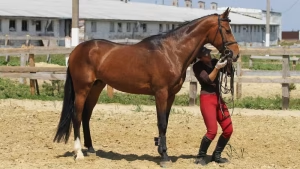
- Build: Deep chest, strong sloping shoulders, powerful hindquarters with a long, sloping croup
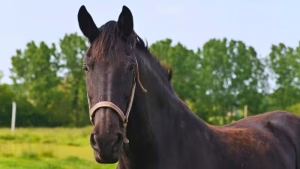
- Head: Generous, honest head with a broad forehead and large, kind eyes set well apart
- Legs: Strong, clean bone with plenty of flat bone below the knee — typically 9 inches or more. No feathering
- Feet: Hard, sound hooves — historically one of the breed’s greatest assets, forged by working on rough Irish terrain
- Colours: Bay, brown, grey, chestnut, and black. Excessive white markings are discouraged in the breed standard
The absence of feathering on the legs is an important distinction. Unlike Clydesdales or Shires, the Irish Draught was bred to work in wet, boggy Irish conditions where heavy feathering would trap mud and moisture, leading to conditions like mud fever. Clean legs were a practical necessity, not an aesthetic choice.
Movement
The Irish Draught should move with a free, straight, ground-covering action. The breed standard calls for an active, rhythmic walk and a balanced, powerful trot with good flexion of the hocks. In canter and gallop, the Irish Draught demonstrates the athletic scope that makes it such an effective cross for producing sport horses.
Temperament and Personality
Ask anyone who has owned an Irish Draught what makes the breed special, and temperament will invariably top the list. These are genuinely kind, sensible horses with an innate willingness to work and an unflappable nature that makes them suitable for riders of all experience levels.
Key temperament traits include:
- Intelligence: Quick to learn and retentive — Irish Draughts rarely need to be taught something twice
- Bravery: Bold across country and unfazed by traffic, crowds, or unusual situations
- Generosity: Willing to try hard for their rider, even when tired or unsure
- Common sense: A pragmatic, level-headed outlook that keeps both horse and rider out of trouble
This combination of courage and common sense explains why Irish Draughts are frequently chosen as police horses. The Garda Mounted Unit in Dublin relies heavily on the breed, and Irish Draughts and Irish Draught crosses serve in mounted police units across the UK.
Irish Draught vs Irish Sport Horse
The Irish Sport Horse (ISH) is not a separate breed in the traditional sense — it is the product of crossing a purebred Irish Draught with a Thoroughbred or registered warmblood. This cross combines the Irish Draught’s bone, substance, temperament, and jumping ability with the Thoroughbred’s speed, stamina, and athleticism.
The results speak for themselves. Irish Sport Horses have competed at the highest levels of eventing, show jumping, and dressage at multiple Olympic Games. Notable examples include:
- Donn Donn — ridden by Virginia Leng (now Elliott) to individual European Eventing gold
- Dorans Pride — a legendary National Hunt racehorse demonstrating the Irish Draught’s stamina
- Dorada — ridden by Ginny Elliot at Badminton and Burghley
However, the popularity of the Irish Sport Horse has created a paradox for the purebred Irish Draught. Many breeders produce first-cross sport horses rather than breeding purebred to purebred, which steadily reduces the purebred gene pool. Conservation efforts now focus on encouraging breeders to maintain purebred lines alongside sport horse production.
Uses and Disciplines
The Irish Draught’s versatility is its defining characteristic. Purebred Irish Draughts excel in a remarkably wide range of disciplines:
Hunting
This is arguably where the Irish Draught is most at home. Their stamina, jumping ability, sure-footedness, and bold temperament make them outstanding hunters. A good Irish Draught can carry a heavyweight rider across country all day, tackle any fence that presents itself, and still hack home sound at the end.
Eventing and Show Jumping
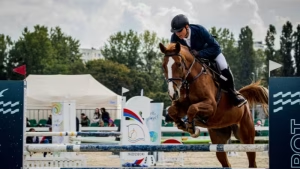
Purebred Irish Draughts compete successfully at affiliated level in both disciplines. Their natural scope, careful technique over fences, and trainable nature make them competitive at Riding Club, British Eventing, and British Showjumping level. Irish Draught crosses dominate at international level.
Dressage
Whilst not traditionally associated with dressage, the Irish Draught’s natural balance, rhythm, and willingness to work make them capable performers. Their movement may lack the extravagance of purpose-bred warmbloods, but they compensate with consistency and trainability.
Leisure and Hacking
For many owners, the Irish Draught is simply the ideal all-rounder. Sensible in traffic, comfortable to ride, willing to go anywhere, and easy to manage on the ground — they make outstanding family horses and confidence-givers.
Driving
The breed’s draught heritage makes it a natural in harness. Irish Draughts compete in combined driving events and are popular choices for pleasure driving.
Conservation Status
The Irish Draught is classified as an “endangered maintained” breed by the Food and Agriculture Organization of the United Nations, and in 2024 the Livestock Conservancy listed it as “threatened” on their Conservation Priority List. The Rare Breeds Survival Trust (RBST) in the UK also monitors the breed’s status.
The primary threat is not a lack of interest in the breed — demand for Irish Draughts remains strong — but the tendency to cross them with Thoroughbreds rather than breeding purebred. Each mare used to produce a sport horse foal is one fewer producing a purebred foal, and with a relatively small global population, every breeding decision matters.
Both the Irish Draught Horse Society (Ireland) and IDHS(GB) run incentive programmes to encourage purebred breeding, including premium schemes, performance awards, and reduced registration fees for purebred foals.
Health and Care
Irish Draughts are generally robust, hardy horses — a legacy of centuries of natural selection on Irish farms where only the toughest animals survived. However, there are breed-specific health considerations to be aware of:
Common Health Issues
- Developmental Orthopaedic Disease (DOD): Foals and young Irish Draughts can be susceptible to osteochondrosis (OCD) and other developmental conditions, particularly if diet and growth rate are not carefully managed
- Degenerative joint disease: Older horses, especially those that have had long competitive careers, may develop arthritis in the hocks or fetlocks
- Weight management: As a breed developed to thrive on limited rations, Irish Draughts are excellent doers. On rich British pasture, they can easily become overweight, increasing the risk of laminitis and metabolic issues
Feeding
Most Irish Draughts in light to moderate work thrive on good-quality forage with a balancer. Overfeeding concentrates is a common mistake — their efficient metabolism means they need considerably less hard feed than a Thoroughbred of similar size doing similar work.
Hoof Care
The breed is renowned for its hard, sound feet, but regular farrier visits every six to eight weeks remain essential. Many Irish Draughts work well without shoes, particularly on softer ground, making them good candidates for barefoot management.
Grooming
Their clean legs and relatively fine coat make grooming straightforward. Regular brushing promotes circulation and coat health, and their lack of feather means less time spent dealing with mud — a significant practical advantage during a British winter.
Buying an Irish Draught in the UK
If you’re considering an Irish Draught, start with the IDHS(GB) (idhsgb.org.uk), which maintains a register of approved breeders and regularly hosts breed shows and inspections across the country. Key things to look for:
- Registration: Ensure the horse is registered in the Irish Draught Studbook — either the main book (fully inspected) or the supplementary register
- Grading: Stallions should carry an IDHS or Horse Sport Ireland grading. Mares may be inspected and class-graded
- Vetting: Always arrange a full five-stage pre-purchase vetting, with X-rays of the feet and hocks if the horse is intended for sport
- Temperament: Ride the horse in a variety of situations before committing — a genuine Irish Draught should be calm, straightforward, and willing
Prices for registered purebred Irish Draughts in the UK typically range from £3,000–£8,000 for an unbroken youngster to £8,000–£20,000+ for a proven, backed or competed adult, depending on breeding, grading, and performance record.
Frequently Asked Questions
Is an Irish Draught a warmblood or a coldblood?
The Irish Draught occupies a unique position — it is neither a true coldblood nor a warmblood in the continental European sense. It is classified as a draught breed with significant hot blood influence from Thoroughbred, Arabian, and Spanish lines. This blend gives it more athleticism and refinement than typical heavy draught breeds, whilst retaining the substance and bone associated with draught types.
How rare is the Irish Draught horse?
The Irish Draught is classified as “endangered maintained” by the UN’s Food and Agriculture Organization and was listed as “threatened” by the Livestock Conservancy in 2024. Whilst the breed is not at immediate risk of extinction, the global purebred population remains small, and conservation organisations actively encourage purebred breeding to maintain genetic diversity.
Can Irish Draught horses jump?
Absolutely. The Irish Draught is renowned for its natural jumping ability — powerful hindquarters, a bold attitude to fences, and careful technique make them outstanding jumpers. Purebred Irish Draughts compete successfully in show jumping and eventing, and when crossed with Thoroughbreds to produce Irish Sport Horses, they have competed at Olympic level.
Are Irish Draughts suitable for beginners?
Yes, their gentle temperament, patience, and willingness to forgive rider errors make Irish Draughts an excellent choice for less experienced riders. Their sensible nature and steady way of going provide confidence, whilst their versatility means they can grow with a rider’s ability. Many riding schools and Riding Clubs use Irish Draughts and Irish Draught crosses as schoolmasters.
What is the difference between an Irish Draught and an Irish Sport Horse?
An Irish Draught is a purebred — both parents are registered Irish Draughts. An Irish Sport Horse is a cross, typically between an Irish Draught and a Thoroughbred or registered warmblood. The Sport Horse tends to be lighter, faster, and more athletic, whilst the purebred Irish Draught offers more bone, substance, and a calmer temperament. Both are registered through Horse Sport Ireland.