The Welsh Section B — known formally as the Welsh Pony of Riding Type — is one of Britain’s most influential pony breeds. Standing between 12 and 13.2 hands, finer and more elegant than the foundation Welsh Mountain Pony (Section A) but smaller than the Section C Welsh Pony of Cob Type, the Section B carries Arabian and Thoroughbred refinement layered over the native Welsh Mountain hardiness. The result is a versatile, scopey, free-moving riding pony that competes equally well in show jumping, dressage, eventing and in-hand showing — and one that was, for the first time in the breed’s recorded history, added to the Rare Breeds Survival Trust (RBST) watchlist in 2024. This 2026 guide covers Welsh Section B history, breed standards, temperament, conservation status, and what UK and SA owners need to know about buying and looking after one.
Table of Contents
History and Origins
The Welsh Section B descends from the hardy Welsh Mountain Pony (Section A) of the Welsh hills, with deliberate infusion of Arabian and Thoroughbred blood from the late 19th and early 20th centuries to produce a finer-boned, longer-legged riding pony. Two stallions in particular shaped the modern breed: the Arabian Sahara (a foundation sire of refined Section A and early Section B types) and the Welsh Mountain stallion Tanybwlch Berwyn (1924), an athletic, free-moving pony whose bloodlines run through the majority of registered modern Section Bs.
The Welsh Pony and Cob Society (WPCS), founded in 1901 in Aberystwyth, formalised the four-section structure (A, B, C and D) of the Welsh Stud Book that is still used today. Section B was formally separated from the broader Welsh Pony category in the 20th century and has since become the most internationally exported of the Welsh sections, with active breeders in the Netherlands, Germany, Australia, the United States and South Africa.
Physical Characteristics
The WPCS breed standard for the Welsh Section B is detailed and strictly applied at registered classes.
- Height: Not exceeding 13.2 hands (137.2 cm). Most mature Section Bs are between 12.2 and 13.2 hh.
- Head: Refined and pony-character, with small alert ears, broad clean jaw, large kind eye and fine muzzle. Dished profile (showing Arabian influence) is desirable.
- Neck: Lengthy and well set on, sloping shoulders, well-laid back
- Body: Deep through the girth, well-sprung ribs, strong back, well-developed hindquarters with a level croup and well-set tail
- Limbs: Clean, flat, short cannon bones with strong tendons. Hard, well-shaped hooves.
- Colour: All solid colours permitted (bay, chestnut, grey, black, brown, dun, roan, palomino, cremello). Piebald and skewbald (broken-coat patterns) are not permitted for purebred registration.
- Distinguishing features: The free, straight, balanced action with a clear moment of suspension at the trot — Section Bs should move from the shoulder, not the knee, with quick, low-going extension
Movement and Action
Welsh Section B movement is closer to that of a small Thoroughbred or Connemara than to the higher-stepping Welsh Section C cob. The walk should be brisk and purposeful with a four-beat overstride. The trot is the breed’s defining gait — quick, free, straight and ground-covering, with a clear moment of suspension and natural athletic balance. The canter is uphill and balanced, with the breed’s small frame producing surprisingly long strides for its size.
This combination of low, fast trot and uphill canter is exactly what makes a Section B competitive at British Show Pony Society Ridden Show Pony classes, junior eventing and Pony Club show jumping — the breed produces a workmanlike, naturally forward-going ride that suits ambitious junior riders without needing the artificial elevation of higher-stepping pony breeds.
Temperament and Trainability
Section Bs are generally bold, intelligent, sensible and willing — without being stoic. They are alert, take in their surroundings, and reward consistent quiet handling. The breed has a deserved reputation as a brilliant children’s pony, but with one important caveat: a Section B is athletic and forward-going, and a green Section B paired with a green child rider can be a recipe for problems. The best matches are an experienced rider on a young Section B, or a confident competent child on a well-schooled older Section B.
Like all native British pony breeds, Section Bs are unusually long-lived and active. A 25-year-old Section B is often still actively competing in lead-rein, ridden showing and even Pony Club show jumping classes.
Uses and Disciplines
In-Hand Showing
The WPCS and its affiliated breed shows (the Royal Welsh Show in Builth Wells every July, the Lampeter Stallion Show in March, the Glanusk and Ponies UK Northleach shows) form the backbone of the in-hand showing calendar. The Royal Welsh is the spiritual home of the Welsh breeds — Section B classes regularly attract entries from across Europe.
Ridden Showing
British Show Pony Society (BSPS) Welsh Section B Ridden Classes, BSPS Heritage Mountain & Moorland Working Hunter Pony classes and Royal International Horse Show (RIHS) Mountain & Moorland qualifications give Section Bs a deep ridden showing calendar in the UK.
Show Jumping and Eventing
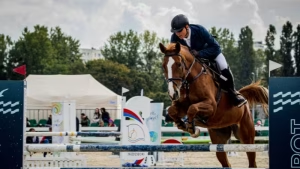
Section Bs are highly competitive in Pony Club show jumping up to 1.10 m, British Eventing Pony classes (BE80-90 cm) and unaffiliated jumping. The breed’s combination of scope, courage and intelligence makes it punch well above its height.
Dressage
Section Bs are popular Pony Club dressage mounts and the British Dressage Pony series (Intro to Elementary) sees consistent Section B representation each year. The breed’s natural forward gait and steady mindset suits ambitious junior dressage riders well.
Family and Leisure Riding
The natural breed for a family looking for one pony to do everything from lead-rein up to British Novice show jumping with a 14-year-old rider. Section Bs hack confidently, school willingly, and have the temperament for shared family use.
Foundation for Part-Bred Crosses
Welsh Section B × Thoroughbred and Welsh Section B × Warmblood crosses are extremely popular for producing competition sport ponies for the BSPS Sport Horse, Riding Pony and Hunter Pony classes. These crosses are registrable in the WPCS Part-Bred Register.
Care and Management
Feeding
Welsh Section Bs are native ponies and are excellent feed converters. They maintain on good-quality hay or haylage (see our haylage guide) and a low-starch, low-sugar pony balancer such as Spillers Lite Balancer, Topspec Balancer or Baileys Lo-Cal Balancer. Most adult Section Bs in light to moderate work do not need any concentrate feed beyond a balancer. The breed’s tendency toward easy weight gain means daily monitoring of body condition (see body condition scoring guide) and careful management of spring grass is essential to avoid laminitis.
Rugging
Section Bs are native ponies and rarely need heavy rugging in a UK winter — most cope perfectly well unclipped, with shelter and ad-lib hay. Over-rugging is one of the most common management mistakes with native ponies and contributes to obesity and rug-rub problems.
Feet and Hoof Care
The breed has hard, well-shaped, naturally healthy feet. Many Section Bs work barefoot successfully. UK farrier visits every 6-8 weeks (or 8-10 weeks barefoot) are standard. Watch for hoof cracks in particularly dry summer ground — see our hoof cracks guide.
Turnout and Field Management
Section Bs benefit from track systems, strip grazing in spring and summer, and limited access to rich pasture. Track-system grazing for native ponies has become standard advice in the UK and is increasingly used in SA highveld livery yards.
Health Considerations
Laminitis
The most significant health risk for any native pony breed. Watch closely for warning signs through spring and autumn grass flushes — see our laminitis guide.
Equine Metabolic Syndrome (EMS) and PPID/Cushing’s
Older Section Bs are prone to PPID (equine Cushing’s disease) — see our Cushing’s guide — and EMS, which is closely linked to obesity and the chronic laminitis risk above.
Sweet Itch
Section Bs can be affected by Culicoides midge hypersensitivity (sweet itch), particularly during peak midge season. UK control measures include sweet-itch rugs, fly masks, midge repellents and turnout management around dawn and dusk. See our sweet itch and ticks guide.
Conservation Status and the RBST Watchlist
In April 2024, the Rare Breeds Survival Trust (RBST) added the Welsh Section B to its annual Equine Watchlist for the first time in the breed’s recorded history. The decision followed a period of declining UK registrations: WPCS reported a steady fall in Section B foal registrations during the 2010s and into the 2020s, with concerns about the loss of genetic diversity, the loss of older breeding bloodlines and the broader contraction of native-pony breeding in Britain.
The RBST decision sparked widespread coverage in the equestrian press, on ITV Wales and across social media. The Welsh Section B is now monitored alongside the Section A (also on the RBST watchlist), the Section C and the Cleveland Bay. Welsh Pony and Cob Society initiatives launched in 2024-2026 include:
- The Glanusk Section B Performance Sire programme: identifying and incentivising performance-proven Section B stallions
- Foal registration discounts: in line with WPCS conservation policy
- RBST grants: small grants for Section B breeders to maintain rare bloodlines
- Heritage Mountain & Moorland championship qualification: increased prize money at major UK shows
For UK buyers, the RBST watchlist status is a strong positive: buying a registered Welsh Section B foal or breeding mare is now an active contribution to the conservation of a native British breed.
Buying a Welsh Section B
Indicative 2026 UK price ranges:
- Unregistered Section B foal: £600-£1,400
- WPCS-registered foal (purebred): £1,200-£3,500
- Backed and produced 4-6yo: £3,000-£8,000
- Show pony with HOYS or RIHS qualifications: £6,000-£20,000+
- WPCS approved breeding stallion or top performance mare: £8,000-£40,000+
South African pricing typically runs R15,000-R40,000 for a registered foal, R30,000-R90,000 for a backed riding pony and R80,000+ for top performance stock. The South African Welsh Pony and Cob Society holds an annual breed show each spring (October-November) at venues in Gauteng and the Western Cape.
Buyer due diligence: insist on WPCS registration papers (or Stud Book Society of Southern Africa equivalent), a five-stage vet exam, current vaccinations and worming history. The compact breed makes pre-purchase vetting straightforward and affordable.
Section B vs Other Welsh Sections
| Section | Type | Height | Best Suited For |
|---|---|---|---|
| A | Welsh Mountain Pony | Up to 12 hh | Lead-rein, in-hand showing, foundation breed |
| B | Welsh Pony (riding type) | Up to 13.2 hh | Junior ridden showing, Pony Club, dressage, jumping |
| C | Welsh Pony of Cob Type | Up to 13.2 hh | Driving, family riding, working hunter pony, more substance |
| D | Welsh Cob | 13.2 hh and over (no upper limit) | Adult riding, eventing, dressage, driving, sport |
See our companion guides: Welsh Mountain Pony (Section A), Welsh Section C and Section D.
Frequently Asked Questions
What is a Welsh Section B pony?
The Welsh Section B is the Welsh Pony of Riding Type — one of four Welsh Pony and Cob Society sections, standing up to 13.2 hh, with Arabian and Thoroughbred refinement layered over native Welsh Mountain Pony bloodlines. It is the most athletic and finest-built of the four Welsh sections and a popular British and international junior performance pony.
How tall is a Welsh Section B?
Maximum height is 13.2 hands (137.2 cm). Most mature Section Bs are between 12.2 and 13.2 hh.
What is the difference between Welsh Section A and Section B?
Section A (Welsh Mountain Pony) tops out at 12 hh and is the foundation native Welsh breed. Section B is taller (up to 13.2 hh), finer and more refined, with Arabian and Thoroughbred blood adding a riding-pony build. Both are RBST watchlist breeds in 2026.
Are Welsh Section B ponies on the RBST watchlist?
Yes. The Welsh Section B was added to the RBST Equine Watchlist in 2024 — the first time in the breed’s recorded history. Falling UK registration numbers and concerns about genetic diversity prompted the listing.
Are Welsh Section B ponies good for beginners?
A well-schooled older Section B is excellent for a competent child rider. They are athletic and forward-going, so a green Section B paired with a green child rider is rarely a successful match. An experienced rider on a young Section B, or a confident child on a settled older Section B, is the right combination.
How much does a Welsh Section B cost in the UK?
WPCS-registered foals typically £1,200-£3,500 in 2026. Backed riding ponies £3,000-£8,000. Show pony with qualifications £6,000-£20,000+. WPCS approved stallions and top performance mares £8,000-£40,000.
What colours can a Welsh Section B be?
All solid colours are permitted: bay, chestnut, grey, black, brown, dun, roan, palomino and cremello. Piebald and skewbald patterns are not permitted for purebred WPCS registration.