The Welsh C pony — formally the Welsh Pony of Cob Type, or Welsh Section C — is the rarest and arguably the most versatile of the four Welsh Pony and Cob Society sections. Standing no taller than 13.2 hands (137 cm), it carries the hardiness of the mountain pony and the bone, presence and engine of the Welsh Cob in one compact package. Children outgrow them, adults love them, and the show ring, hunting field and driving lanes are all happy hunting grounds for a well-bred Section C.
If you are weighing up a Welsh C pony for the family, the show team or the trap, this guide pulls together the breed standard, history, temperament, height, colours and disciplines, alongside how the C compares with Sections A, B and D. Expect honest detail — Welsh C ponies are wonderful, but they are also strong, sharp and not for every novice.
Table of Contents
What Is a Welsh C Pony?
The Welsh C pony is officially classified as the Welsh Pony of Cob Type (Section C) in the Welsh Stud Book. It is a substantial, free-moving riding and driving pony that must not exceed 13.2 hands at maturity. Think of it as a Welsh Cob in miniature — same powerful trot, same generous bone, same Roman-nose-free profile and bold eye, but in a height that suits children, smaller adults and the showing classes for native ponies up to 13.2hh.
Section C ponies trace their origins to the same hill-bred stock as the Welsh Cob (Section D) and the Welsh Section B, but the type is distinct: heavier, more substantial and with feather on the heels. The breed is registered with the Welsh Pony & Cob Society (WPCS) in the UK and the WPCSA in the United States. The Rare Breeds Survival Trust currently lists the Section C on its watchlist, reflecting how relatively few are bred each year compared with the more numerous Sections A and D.
A Brief History of the Welsh Section C
The Welsh hills have produced hardy ponies for at least 1,500 years. Roman cavalry records reference small, sure-footed Welsh mounts, and selective breeding under farmers and drovers refined the type through the centuries. The Welsh C, as a recognisable section, emerged from crossing the Welsh Mountain Pony (Section A) with the larger Welsh Cob (Section D) — producing a pony with the cob’s strength and trot, scaled down to a manageable height.
For generations, Section C ponies earned their keep on Welsh hill farms. They pulled milk floats, traps and ploughs, carried farmers and shepherds across rough ground, and served families that needed one animal to do the work of three. Their stamina, surefootedness and temperament were forged on hill turf and hard winters. The first WPCS stud book opened in 1901, with the four sections formalised soon after, and the Section C designation has been protected and promoted ever since.
Welsh C Pony Breed Standard and Conformation
The breed standard is identical in spirit to that of the Welsh Cob (Section D) — only the height ceiling differs. The WPCS describes the Section C as “strong, hardy and active, with pony character and as much substance as possible.”
Height and weight
- Height: Up to 13.2 hands (137 cm). There is no lower limit, but mature Cs typically stand 12.2–13.2 hh.
- Weight: Approximately 230–300 kg, depending on type and condition.
- Build: Compact, deep-bodied, well-coupled and powerful through the hindquarters.
Head and neck
- Small, well-set head with a tapering muzzle and a bold, kind eye.
- Concave or straight profile — never Roman-nosed.
- Neat, pricked ears.
- Strong, slightly arched neck running well into the shoulder.
Body, limbs and feet
- Long, sloping shoulder for ground-covering paces.
- Deep girth and well-sprung ribs.
- Strong, level back with powerful loin and quarters.
- Short, flat-boned cannons with at least 7–8 inches of bone below the knee.
- Well-shaped, dense, blue horn feet.
- Moderate silky feather on the heels — never coarse.
Movement
The hallmark of any Welsh of cob type is the trot: free, straight and powerful, with hocks well engaged and knees lifted. Sections C and D should “knock fire” out of the ground when they extend, but movement must remain true and economical, not flashy and laboured.
Welsh C Pony Colours and Markings
Welsh Cs come in any solid colour. Skewbalds and piebalds are not accepted by the WPCS for any of the four Welsh sections. Common coat colours include:
- Bay and dark bay (the most common)
- Black
- Chestnut and liver chestnut
- Grey (born dark and lightening with age)
- Brown, dun, palomino, cream and roan
White markings on the face and legs are common and acceptable. Excessive white above the knee or hock can attract penalties in the show ring but does not affect registration.
Temperament and Character
Welsh Cs are sharp, intelligent and forward — and that is exactly the point. They were bred to think for themselves on hill ground and to keep going when bigger horses gave up. Expect a pony with:
- Pony cunning. They learn fast, including how to open gates, undo rugs and avoid work they dislike.
- Bold temperament. Confident in traffic, in company and on their own once they trust the rider.
- Generous nature. When asked correctly, they try their hearts out — across country, in the trap or in the dressage arena.
- Sensitivity. They respond best to consistent, firm but quiet handling. Rough riding sours them quickly.
For these reasons, a Welsh C is not always the right first pony for a true beginner. Confident pony-club children and capable adult riders get the best out of them. Novices benefit from a settled, schoolmaster Section C — they exist, but they take finding.
Uses and Disciplines
Few native ponies are as genuinely dual-purpose as the Welsh C. The same individual can be hacked out on Sunday, taken hunting on Monday, shown in-hand mid-week and harnessed to a cart at the weekend.
Ridden disciplines
- Mountain & Moorland (M&M) showing — the natural home of the Welsh C, both in-hand and ridden.
- Working hunter pony classes — the C’s bone, scope and bravery suit a built course.
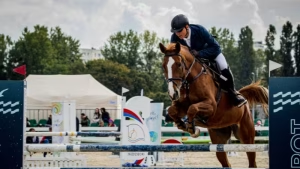
- Show jumping at pony level — clever and quick across a track.
- Pony Club — eventing, mounted games, tetrathlon and rallies.
- Dressage — the trot is a gift; the canter takes more polish but rewards the work.
- Hunting and team chasing — they pop hedges, cope with mud and stay sound.
- Long-distance and endurance riding — built for stamina on rough going.
Driven and harness work
The Welsh C is the British driving pony. Single, pair or tandem, in a gig or a private drive, they are bold, trainable and powerful enough to pull a fully-loaded vehicle without flagging. The British Driving Society and the FEI scurry-driving scene both feature C-type ponies prominently.
Family and leisure
For a family wanting one pony to take Mum or Dad hacking and a confident child to Pony Club, a sensible Welsh C is hard to beat. They thrive on variety and dislike standing in.
Welsh Sections A, B, C and D Compared
The four Welsh sections often confuse newcomers. Here is the practical breakdown:
| Section | Type | Height | Build | Best Suited To |
| A | Welsh Mountain Pony | Up to 12.0 hh | Light, refined, dished face | Small children, lead rein, in-hand showing |
| B | Welsh Pony | Up to 13.2 hh | Riding-pony type, refined | Children’s ridden, showing, jumping |
| C | Welsh Pony of Cob Type | Up to 13.2 hh | Compact, substantial, light feather | Families, driving, M&M, working hunter |
| D | Welsh Cob | Over 13.2 hh (no upper limit; usually 14.2–15.2 hh) | Powerful, full feather, heavy bone | Adults, driving, hunting, ridden showing |
The simplest rule: A is the smallest and finest, D is the largest and heaviest, B is the riding pony in between, and C is the small cob — pony height with cob substance.
Care, Feeding and Health
Feeding the Welsh C
Like all native types, Welsh Cs are good doers — they hold condition on grass and fibre that would barely sustain a Thoroughbred. The classic mistake is overfeeding.
- Base the diet on hay or haylage, with grazing strictly managed.
- Restrict spring and autumn grass to reduce the risk of laminitis.
- Use a balancer rather than concentrate feed for ponies in light work.
- Provide a salt lick and clean water at all times.
- Track-system grazing or a strip-grazed paddock works well.
Routine health and welfare
Welsh Cs are robustly healthy when managed sensibly. Key points to watch:
- Weight management: Body condition score regularly — most Welsh Cs run a half-grade fatter than they should.
- Laminitis and Equine Metabolic Syndrome: Native ponies are at high risk on improved pasture.
- Mud fever: The light feather on a C catches mud; clip out, dry off and barrier-cream the heels in winter.
- Sweet itch: Some Cs are sensitive to Culicoides midges; rugs and repellents help.
- Dentistry, vaccinations and hoof care: Standard intervals — annual dental, six-weekly farrier, up-to-date flu and tetanus.
Grooming the feather
Welsh C feather is silky rather than dense. Wash, dry thoroughly and check the heels weekly in wet conditions to prevent mud fever and feather mites. Many owners trim back lightly for clean turn-out without ever clipping the cob feathering away.
Buying a Welsh C Pony
Demand is strong, supply is limited and a well-bred, well-schooled Section C holds its value. Expect to pay anywhere from around £2,000 for a youngster to £15,000+ for a proven show-ring or driving pony. A few practical pointers:
- Buy registered. Section C ponies registered with the WPCS carry a Welsh Stud Book passport and verifiable bloodlines. Unregistered “Welsh C type” is not the same animal.
- Vet the pony. A two-stage or five-stage pre-purchase exam is money well spent — particularly for sarcoids, sweet itch history and mild laminitic episodes.
- See it ridden and driven, if possible. Sales videos lie. Ride and drive what you intend to use.
- Check the breeder. Established Welsh studs (Synod, Llanarth, Menai, Maesmynach lines and others) are highly respected. Ask for references.
- Consider age and experience. A first-time Welsh C owner is better with a school-mastered 8–14-year-old than with a green four-year-old.
If you are buying for a child, ride the pony as an adult first. Welsh Cs reward an honest test and quickly tell you whether they will look after a less experienced rider.
Frequently Asked Questions
What is a Welsh C pony?
A Welsh C pony is the Welsh Pony of Cob Type — a registered native British breed standing up to 13.2 hands (137 cm). It combines the height of a pony with the substance, bone and trot of a Welsh Cob, and is registered with the Welsh Pony & Cob Society.
What is the difference between a Welsh B and a Welsh C?
Both stand up to 13.2 hh, but the Welsh B is a refined riding pony with light bone and a clean leg, while the Welsh C is a small cob with greater substance, heavier bone and silky feathering on the heels. A B is built for the show pony ring; a C is built to ride, drive and work.
How big does a Welsh C pony get?
The breed standard sets the upper limit at 13.2 hh (137 cm). Mature Welsh Cs typically stand between 12.2 and 13.2 hh and weigh 230–300 kg, with the substance of a small cob rather than a riding pony.
Are Welsh C ponies good for beginners?
A settled, older schoolmaster Welsh C can be a superb confidence-giver. A young, green or under-worked Welsh C is forward, sharp and not the right choice for an absolute beginner. Match the pony’s experience and temperament to the rider — not just its height.
Can adults ride a Welsh C pony?
Yes. Welsh Cs routinely carry adults of around 70 kg — and frequently more — thanks to their bone and substance. They are a popular choice for smaller adults wanting a hardy hacking, hunting or driving pony.
How long do Welsh C ponies live?
Welsh Cs are long-lived. Many remain sound and useful into their late twenties, and well-managed ponies often live to 30 or beyond.
Are Welsh C ponies rare?
Comparatively, yes. The Section C is on the RBST Watchlist, with significantly fewer animals registered each year than Sections A or D. Demand from leisure, showing and driving homes typically outstrips supply.