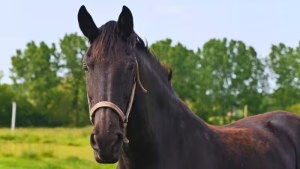
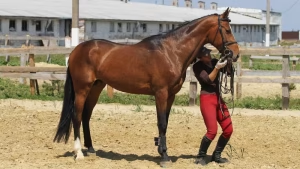
The Dartmoor pony is one of Britain’s most beloved native breeds — a hardy, elegant little horse shaped by centuries of life on the wild moorlands of Devon. Standing no taller than 12.2 hands, these ponies combine the toughness needed to survive Dartmoor’s granite tors and driving rain with a gentle, willing temperament that makes them ideal for children, novice riders and families.
Despite their popularity as riding and show ponies, the registered Dartmoor pony is classified as a rare breed. Understanding their history, breed standard and care requirements helps both prospective owners and enthusiasts appreciate what makes this breed so special.
Table of Contents
Breed Standard at a Glance
| Feature | Detail |
|---|---|
| Height | Not exceeding 12.2 hands (127 cm) |
| Weight | 250–350 kg |
| Colours | Bay, brown, black, grey, chestnut, roan |
| Not permitted | Piebald, skewbald, or excessive white markings |
| Head | Small, well-set, bloodlike with large, kind eyes |
| Neck | Strong but not coarse, of medium length |
| Shoulders | Well laid back, sloping |
| Body | Medium length, strong loins, deep girth |
| Legs | Straight, hard flat bone, short cannons |
| Feet | Hard, well-shaped |
| Movement | Free, low, straight from the shoulder |
| Lifespan | 25–30 years |
| Conservation status | Rare (RBST Watchlist) |
| Breed society | Dartmoor Pony Society |
History of the Dartmoor Pony
Ancient Origins
Ponies have roamed Dartmoor for thousands of years. Archaeological evidence suggests domesticated ponies existed on the moor as far back as 1500 BC, and the harsh granite landscape has shaped the breed’s extraordinary hardiness ever since. The first written record dates to the will of Aelfwold of Crediton in 1012 AD, which mentions wild horses on the moor.
Medieval and Industrial Use
During the medieval period, Dartmoor ponies became essential working animals. They carried heavy loads of tin ore from the stannary mines across the moor — work that demanded sure-footedness, stamina and a calm disposition. Later, they served on farms throughout Devon for shepherding, light draught work and general riding.
In the 19th century, crossbreeding with Shetland ponies, Welsh ponies and even small Thoroughbreds and Arabians was introduced to refine the breed. While this improved the riding qualities of the registered Dartmoor, it also diluted the original moorland type. The Dartmoor Pony Society was founded in 1899 to establish breed standards and protect the pony’s identity.
Twentieth Century Decline
Two world wars hit the breed hard. During the Second World War, Dartmoor was used as a military training ground, scattering the herds. By the mid-twentieth century, numbers had fallen drastically. A concerted effort by breeders and the Dartmoor Pony Society helped rebuild the registered population, though the breed remains classified as rare to this day.
Dartmoor Prison also played an unusual role in the breed’s history — ponies were bred at the prison in the early 1900s for use by guards patrolling the moor.
Physical Characteristics
Conformation
The Dartmoor pony is a quality small pony — refined without being delicate, sturdy without being coarse. The breed standard describes a pony that should give the impression of being well-balanced, with substance and good bone relative to its height.
The head is one of the breed’s most distinctive features: small and bloodlike (showing quality), with large, generous eyes set wide apart, small alert ears and a broad forehead. The neck is strong and of medium length, well set onto sloping shoulders — a conformation point that gives the breed its characteristically good, free movement.
The body is compact with a deep girth, strong loins and well-muscled hindquarters. The legs should be straight with hard, flat bone, short cannons and well-shaped, hard feet — the result of generations navigating Dartmoor’s rocky terrain.
Colours
Accepted colours include bay, brown, black, grey, chestnut and roan. Piebald, skewbald and excessive white markings are not permitted under the breed standard. Bay and brown are the most common colours seen, with grey also popular in the show ring.
Mane and Tail
Dartmoor ponies carry a full, flowing mane and tail — not only attractive but functional, providing protection against Dartmoor’s notorious wind and rain. The mane and tail hair should be silky rather than coarse.
Temperament and Character
The Dartmoor pony’s temperament is one of its greatest assets. These ponies are known for being:
- Kind and gentle — naturally patient with children and nervous riders
- Intelligent — quick to learn and willing to please
- Brave — confident in new situations, a trait bred into them by moorland life
- Sensible — not given to spookiness or hot-headedness
- Versatile — happy to turn their hoof to any discipline
This combination of temperament and ability makes the Dartmoor one of the most recommended breeds for young riders taking their first steps in equestrianism. They are also popular as family ponies, with many staying in the same family for decades thanks to their long lifespan.
Dartmoor Pony vs Exmoor Pony
The Dartmoor and Exmoor pony are both native Devon breeds, but they are distinct in several important ways:
| Feature | Dartmoor Pony | Exmoor Pony |
|---|---|---|
| Max height | 12.2 hh (127 cm) | 12.3 hh (130 cm) |
| Build | Refined, riding-pony type | Stockier, more primitive |
| Head | Small, bloodlike | Broad, with distinctive “toad eye” (mealy muzzle) |
| Colours | Bay, brown, black, grey, chestnut, roan | Bay, brown or dun only (no white markings) |
| Mane | Flowing, silky | Shorter, with distinctive “ice tail” fan |
| Temperament | Gentle, willing, ideal for children | More independent, can be strong-willed |
| Breeding history | Some outcrossing (Arab, TB, Welsh influence) | Pure, no documented outcrossing for centuries |
| Conservation status | Rare (RBST Watchlist) | Endangered (RBST) |
Both breeds are superb native ponies. The Dartmoor tends to be the better choice as a children’s riding pony due to its more refined build and willing nature, while the Exmoor appeals to those interested in conservation and a more primitive type. For other hardy British natives, compare the Dales pony and the Fell pony, or browse our guide to native British breeds.
Uses and Disciplines
Children’s Riding Pony
This is the Dartmoor’s most celebrated role. Their size, kind temperament and smooth action make them ideal first ponies. Many children learn to ride on Dartmoors and go on to compete at local and national level.
Showing
Dartmoor ponies excel in the show ring, particularly in Mountain and Moorland classes. The breed’s elegant conformation and naturally good movement make them competitive at all levels, from local shows to the Royal International and Horse of the Year Show.
Driving
Their steady temperament and willing nature make Dartmoors excellent driving ponies. They compete in both single and pairs classes and are popular for pleasure driving.
Dressage and Jumping
Dartmoor ponies are surprisingly athletic for their size. They compete successfully in dressage, show jumping and working hunter pony classes. Their natural balance and willingness to learn make them responsive to training.
Therapy and Assisted Learning
The Dartmoor’s calm, empathetic nature has made them increasingly popular for equine-assisted therapy programmes. Their small size is less intimidating for people with limited mobility or anxiety, while their patience makes them trustworthy partners in therapeutic settings.
Conservation Grazing
On the moor itself, Dartmoor ponies serve a vital ecological role. Their grazing habits help manage vegetation, preventing scrub encroachment and maintaining the biodiversity of the moorland habitat. This makes them living conservation tools as well as cultural heritage animals.
Life on the Moor
Semi-Feral Herds
Around 1,000 ponies still live in semi-feral conditions on Dartmoor, though most of these are not registered pedigree Dartmoor ponies but rather hill ponies of mixed breeding. Each pony on the moor belongs to a local commoner — a farmer with historic grazing rights on the common land.
These ponies roam freely across the open moor, grazing on rough grasses, gorse and heather. Generational knowledge is passed from mare to foal about where to find shelter, water and the best grazing — a form of cultural transmission rarely seen in domestic animals.
The Drift
Each autumn, commoners organise “drifts” — the traditional round-ups of moorland ponies. During a drift, riders on horseback gather the ponies from the open moor and bring them into handling pens. Here, foals are weaned and checked, mares are inspected for health, and ownership marks are verified. It is one of Dartmoor’s oldest continuing traditions.
Visitor Guidance
Visitors to Dartmoor National Park will often encounter ponies grazing beside roads and car parks. While they appear tame, these are semi-wild animals and should be observed from a distance. Feeding moorland ponies is prohibited — human food can cause colic and other digestive problems, and hand-feeding encourages ponies to approach vehicles, leading to road traffic accidents.
Conservation Status
The registered Dartmoor pony is classified as a rare breed by the Rare Breeds Survival Trust (RBST), sitting on their Watchlist category. While the semi-feral moorland population numbers around 1,000, only a fraction of these are pedigree registered animals.
Several organisations work to protect the breed:
- Dartmoor Pony Society — maintains the stud book and breed standard since 1899
- Dartmoor Pony Heritage Trust — promotes the welfare and conservation of moorland ponies
- Dartmoor Commoners’ Council — manages grazing rights and pony welfare on the moor
- RBST — monitors population numbers and supports rare breed conservation nationally
Breeding programmes focus on maintaining genetic diversity within the registered population while preserving the breed’s essential character and conformation.
The future of the moorland herds has become a live conservation debate. In 2026, proposals linked to Natural England’s review of upland grazing raised the prospect of dramatically reducing the number of hill ponies allowed on parts of the moor — some commoners warned this could remove a large share of the population. Supporters of the ponies argue that their grazing is essential to maintaining the very moorland habitats the policy aims to protect, underlining how closely the breed’s survival is tied to traditional commoning rights.
Care Guide
Feeding
Dartmoor ponies are excellent good doers — they evolved to thrive on sparse moorland grazing and maintain condition easily. This means owners must be careful not to overfeed them. A diet based on good-quality hay or haylage with a vitamin and mineral balancer is usually sufficient. Rich pasture should be managed carefully all year, not only through the spring and summer flush. A GB cohort study found laminitis occurred throughout the year with no significant difference between seasonal incidence estimates (Pollard et al., Equine Vet J 2019), and a GB case-control study found summer and winter carried an increased risk compared with spring (Wylie et al., Vet J 2013).
Hard feed is rarely necessary unless the pony is in regular work, growing, breeding or elderly. If supplementary feeding is needed, choose a low-calorie, high-fibre option rather than a conditioning feed.
Turnout and Housing
As a native breed, Dartmoor ponies are happiest living out. They grow thick winter coats and are well adapted to British weather conditions. A field shelter or natural windbreak (hedgerow, trees) provides adequate protection in most situations. Stabling is only necessary in extreme conditions or for management reasons such as box rest.
Hoof Care
Dartmoor ponies have naturally hard, well-shaped feet that rarely need shoeing unless in regular roadwork. A farrier visit every six to eight weeks for trimming keeps feet in good condition. Their feet evolved on granite — softer lowland ground can sometimes lead to flaring if trimming intervals are stretched.
Grooming
Regular grooming keeps the coat healthy and provides an opportunity to check for cuts, lumps and skin conditions. The flowing mane and tail benefit from gentle detangling rather than aggressive brushing. Many owners use a detangling spray to preserve the full, silky mane that is characteristic of the breed.
Exercise
Dartmoor ponies benefit from regular exercise or free movement. If kept on limited turnout, daily ridden or lunging work helps maintain fitness and prevent weight gain. Even ponies not in regular work should have access to enough space to move freely.
Health Considerations
Dartmoor ponies are generally robust and healthy, but their good-doer nature predisposes them to certain conditions:
- Laminitis — the single biggest health risk for native ponies. Caused by excess weight, rich grazing or metabolic dysfunction. Prevention through careful weight management is essential.
- Equine Metabolic Syndrome (EMS) — a metabolic condition linked to obesity and insulin resistance, which in turn increases laminitis risk. Regular weight monitoring and restricted grazing help manage this.
- Sweet itch — an allergic reaction to midge bites causing intense itching. Some Dartmoor ponies are affected, particularly those moved to lowland areas where midges are more prevalent.
- Cushing’s disease (PPID) — common in older ponies of all breeds. Watch for a long, curly coat that fails to shed, increased drinking and laminitis episodes.
Routine preventative care should include regular worming (ideally based on faecal egg counts), annual vaccinations (tetanus and influenza), and twice-yearly dental checks.
Buying a Dartmoor Pony
When looking for a Dartmoor pony, the Dartmoor Pony Society is the best starting point. They maintain a register of breeders and often list ponies available through their website and social media channels.
Key points to consider:
- Registered vs unregistered — a registered Dartmoor pony has documented parentage meeting the breed standard. Unregistered “Dartmoor-type” ponies from the moor may look similar but lack the consistent temperament and conformation of the registered breed.
- Purpose — consider what the pony will be used for. Show-quality ponies command higher prices than those suited to general riding or companionship.
- Vetting — always have a prospective purchase examined by an independent vet, particularly checking for signs of previous laminitis.
- Rescue and rehoming — the Dartmoor Pony Heritage Trust and other organisations occasionally have ponies available for rehoming, offering a rewarding alternative to buying privately.
Frequently Asked Questions
How big do Dartmoor ponies get?
Dartmoor ponies must not exceed 12.2 hands high (127 cm) under the breed standard. They typically weigh between 250 and 350 kg. Despite their small size, they are strong and well-built ponies capable of carrying children and small adults comfortably.
Are Dartmoor ponies a rare breed?
Yes. The registered Dartmoor pony is classified as rare by the Rare Breeds Survival Trust and sits on their Watchlist category. While around 1,000 ponies live on Dartmoor itself, most of these are unregistered hill ponies rather than pedigree Dartmoor ponies. Dedicated breeders are working to increase registered numbers.
What is the difference between a Dartmoor pony and an Exmoor pony?
Both are native Devon breeds, but they differ in several ways. The Dartmoor is more refined with a riding-pony build and comes in multiple colours, while the Exmoor is stockier and more primitive-looking, found only in bay, brown or dun. Dartmoors have had some historic outcrossing (Arab, Thoroughbred, Welsh), while Exmoors are considered genetically pure. Dartmoors are generally more suited as children’s riding ponies due to their willing temperament.
Are Dartmoor ponies good for beginners?
Dartmoor ponies are one of the best breeds for beginner riders, particularly children. Their kind, patient temperament, sensible nature and smooth movement make them ideal first ponies. They are also forgiving of rider mistakes without being lazy, which helps young riders build confidence and develop their skills.
Can you feed wild Dartmoor ponies?
No. Feeding ponies on Dartmoor is prohibited and can cause serious harm. Human food and treats can lead to colic and digestive problems. Hand-feeding also encourages ponies to approach cars and roads, increasing the risk of traffic accidents. If you see a pony on Dartmoor that appears unwell or injured, contact the Dartmoor Livestock Protection Society rather than approaching it yourself.
Can Dartmoor ponies be ridden?
Yes. Registered Dartmoor ponies make excellent riding ponies, especially for children and small adults. Their free, low movement, sensible temperament and weight-carrying bone make them well suited to hacking, Pony Club, showing, dressage and working hunter classes. The semi-feral ponies living on the moor itself, however, are unhandled and should never be approached or ridden.
What is special about Dartmoor ponies?
The Dartmoor pony combines exceptional hardiness with one of the kindest temperaments of any British native breed. Shaped over thousands of years on Devon’s granite moorland, it has hard feet, dense bone and a calm, willing nature that makes it a superb first pony. It is also a living piece of cultural heritage, still grazing the moor under ancient commoning traditions, and is recognised as a rare breed by the RBST.