The Dales pony is one of Britain’s most impressive native breeds — a powerfully built, sure-footed pony with a rich history rooted in the Yorkshire Dales of northern England. Classified as one of the nine mountain and moorland breeds of the United Kingdom — see our roundup of native British horse breeds — the Dales pony combines remarkable strength with a gentle, willing temperament that makes it equally suited to competitive riding, driving, and family use.
Despite its many qualities, the Dales pony remains critically endangered, with fewer than 300 breeding mares registered in the UK. Understanding and appreciating this breed is vital to its continued survival.
| Dales Pony — at a glance | |
| Height | Up to 14.2 hh (148 cm) |
| Colours | Predominantly black; also bay, brown, grey, roan |
| Origin | Eastern Pennines, Yorkshire Dales, England |
| Temperament | Calm, bold, willing, sure-footed |
| Best for | All-round riding, driving, novice and adult riders |
| Conservation status | Critical (RBST) — fewer than 300 UK breeding mares |
Table of Contents
History and Origins of the Dales Pony
The Dales pony evolved in the eastern Pennines, specifically the upper dales of Teesdale, Weardale, Swaledale, and the surrounding valleys of County Durham and North Yorkshire. These ponies developed over centuries to meet the demands of life in some of England’s most unforgiving terrain — rocky hillsides, boggy moorland, and harsh winters that would test any animal’s endurance.
The breed’s ancestry traces back to the native Pennine pony, with significant influence from the now-extinct Galloway. During the 18th and 19th centuries, selective crossing with Norfolk Trotters, Welsh Cobs, and Clydesdales refined the breed’s high-stepping trot and added substance without sacrificing hardiness.
Lead Mining Heritage
The Dales pony’s primary role for centuries was as a packhorse for the Pennine lead mining industry. These ponies carried lead ore in panniers from remote mines to smelting mills, typically transporting loads of up to 100 kg (16 stone) over rough tracks. A single pony train could cover 400 kilometres in a week, travelling in strings of up to 20 ponies led by a single handler — known locally as a “jagger”.
This demanding work shaped the breed’s defining characteristics: dense, flat bone; large, well-shaped hooves; extraordinary stamina; and an unerring sense of footing on treacherous ground.
The World Wars and Near Extinction
Both World Wars took a devastating toll on the Dales pony population. During the First World War, many were requisitioned for artillery work. The Second World War proved even more catastrophic — ponies were taken for military transport duties, and by 1955, only four Dales pony foals were registered with the breed society. The breed came perilously close to extinction.
A small group of dedicated breeders, working with the Dales Pony Improvement Society (later the Dales Pony Society, established in 1916), embarked on a careful recovery programme. Some Fell Pony blood was introduced to broaden the genetic base, and numbers slowly began to recover.
Physical Characteristics and Breed Standard
The Dales pony is the largest of the hill pony breeds native to the British Isles. The breed standard, set by the Dales Pony Society, defines a strong, compact animal built for power and endurance rather than speed.
Height and Build
- Height: Up to 14.2 hands (148 cm). Most adults stand between 14.0 and 14.2 hh.
- Weight: Approximately 400–500 kg
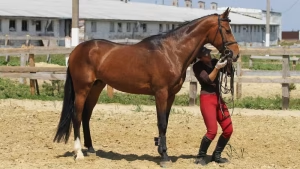
- Build: Short-coupled with a deep body, well-sprung ribs, and muscular quarters. The back is short and strong, and the shoulder should be long and sloping for a free, ground-covering stride.
The head is neat and intelligent, with a broad forehead, bright eyes, and small, alert ears. The neck is strong and of good length, set well into the shoulder.
Legs and Feet
The legs are a defining feature of the breed. Dense, flat bone (minimum 20–22 cm below the knee) gives the Dales its characteristic solidity. The hooves are large, round, and exceptionally hard — often described as “blue” horn — ideal for working on rocky ground without shoes. Generous feathering covers the legs from knee and hock downwards, providing protection from wet and thorny vegetation.
Colours
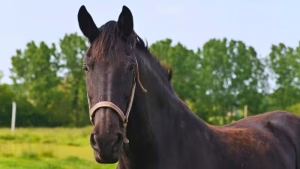
The predominant colour is black, which accounts for the majority of registered ponies. Other accepted colours include:
- Bay
- Brown
- Grey
- Roan (particularly blue roan, which is highly sought after)
White markings are minimal and restricted to a small star and/or snip on the face, and white on the hind fetlocks only. Excessive white is discouraged in the breed standard.
Movement
The Dales pony’s trot is one of its most striking features — a high-stepping, powerful action inherited from its Norfolk Trotter ancestry. At trot, the pony should move with drive from behind, tracking up well, with the knees lifting and the hocks flexing energetically. This flashy, ground-covering movement makes the breed stand out in the show ring and in harness.
Temperament and Personality
The Dales pony is renowned for its calm, sensible, and courageous nature. Centuries of working closely with people in demanding conditions have produced a breed that is:
- Willing and cooperative — responds well to consistent, fair handling
- Intelligent — learns quickly and retains training well
- Bold — confident in traffic, new environments, and challenging terrain
- Sure-footed — instinctively careful on rough or slippery ground
- Hardy — thrives outdoors in all weathers with minimal fuss
This combination of strength and gentleness makes the Dales pony an excellent choice for a wide range of riders. They are reliable mounts for nervous or novice riders, yet have enough scope and ability to keep experienced riders challenged. Their weight-carrying capacity relative to their height also makes them popular with adult riders who find other native ponies too small.
Dales Pony vs Fell Pony: What’s the Difference?
The Fell Pony and the Dales pony are close relatives — both originate from the Pennine hills and share common ancestors in the native Pennine pony and the Galloway. They look similar at first glance, but there are distinct differences:
| Feature | Dales Pony | Fell Pony |
|---|---|---|
| Origin | Eastern Pennines (Yorkshire Dales) | Western Pennines (Cumbria/Westmorland) |
| Height | Up to 14.2 hh | Up to 14.0 hh |
| Build | Heavier, more substantial | Lighter, more refined |
| Feathering | Heavier feathering | Silky, less abundant |
| Trot | Higher-stepping, flashier action | Lower, more economical stride |
| Historical role | Pack pony for lead mines | General farm and riding pony |
| Bone | Heavier (20–22 cm) | Lighter (18–20 cm) |
Both breeds are critically endangered and managed by separate breed societies. While Fell blood was used to help recover the Dales breed post-war, the two are now bred strictly to their own standards.
What Are Dales Ponies Used For?
Modern Dales ponies are remarkably versatile. Their strength, movement, and temperament suit them to a broad range of equestrian disciplines:
Riding
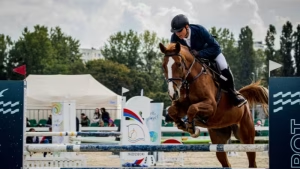
The Dales pony excels as an all-round riding pony. Their comfortable paces, sure-footedness, and calm nature make them ideal for hacking, trekking, and long-distance riding. Many Dales ponies compete successfully in dressage, with some reaching advanced medium level — impressive for a native breed.
Driving
With their powerful build and high-stepping trot, Dales ponies are natural carriage horses. They excel in competitive driving events, from pleasure classes to combined driving. Their steady temperament is an asset in the sometimes unpredictable environment of driven work.
Conservation Grazing
Increasingly, Dales ponies are used in conservation grazing projects across the north of England. Their ability to thrive on poor-quality upland grazing and their careful browsing habits — like those of the Highland and New Forest pony — make them valuable tools for habitat management on moorland and grassland sites.
Showing
Dales ponies have a strong showing scene, with classes at most major native breed shows. The Dales Pony Society organises its own breed show and performance awards, encouraging owners to work their ponies across disciplines.
Conservation Status
The Dales pony is classified as “critical” by the Rare Breeds Survival Trust (RBST). With fewer than 300 breeding mares in the UK and an estimated global population of around 1,500, this is one of Britain’s most endangered native breeds.
Key conservation challenges include:
- Small gene pool — limited genetic diversity after the post-war bottleneck
- FIS carrier frequency — approximately 12% of the UK population carries the gene for Foal Immunodeficiency Syndrome
- Declining interest in native breeds — competition from continental sport horse breeds
- Loss of traditional working roles — fewer farms using ponies for draught work
The Dales Pony Society coordinates breeding programmes, maintains the stud book, and promotes the breed through events and education. Several conservation studs across the north of England are dedicated to maintaining genetic diversity within the breed.
Caring for a Dales Pony
Feeding and Diet
Dales ponies are extremely efficient metabolisers — a trait that served them well on sparse moorland grazing but can cause problems in domesticated settings. Like many native breeds, they are prone to obesity if given unrestricted access to rich pasture or hard feed.
- Base the diet on good-quality forage (hay or haylage)
- Limit or strip-graze lush pasture, particularly in spring and autumn
- Most Dales ponies in light to moderate work need little or no concentrate feed
- Follow forage-first principles from our horse feeding guide, and provide a broad-spectrum vitamin and mineral supplement if forage alone doesn’t meet requirements
- Monitor body condition regularly — aim for a score of 2.5–3 out of 5
Grooming and Feather Care
The Dales pony’s abundant feathering requires regular attention to prevent mud fever (pastern dermatitis). In wet conditions:
- Allow feathering to dry naturally before brushing out mud and debris
- Check skin beneath the feather regularly for scabs, heat, or swelling
- Avoid washing feathering excessively — this strips natural protective oils
- Apply a barrier cream or pig oil to clean, dry feathering before turnout in muddy conditions
Hoof Care
Although Dales ponies have naturally hard, well-shaped feet, regular farrier visits (every 6–8 weeks) are essential. Many Dales ponies work well without shoes, but those in regular roadwork or on abrasive surfaces may need front shoes. Daily hoof picking and inspection help prevent problems such as thrush — particularly in ponies with heavy feathering that traps moisture around the frog.
Exercise and Turnout
Dales ponies thrive with ample turnout and regular work. They are naturally hardy and cope well living out year-round with access to shelter. Their thick double coat, dense mane, and heavy feathering provide excellent natural protection against wind, rain, and cold. Most Dales ponies do not need rugging unless clipped.
Common Health Issues
Foal Immunodeficiency Syndrome (FIS)
FIS is a fatal autosomal recessive condition specific to Dales and Fell ponies. Affected foals are born apparently healthy but develop severe anaemia and immunodeficiency within the first few weeks of life, and rarely survive beyond three months.
A DNA test is available to identify carriers. Both parents must carry the gene for an affected foal to be born. Responsible breeders test all breeding stock and avoid carrier-to-carrier matings. The Dales Pony Society strongly encourages testing as part of its conservation strategy.
Laminitis
Laminitis is a significant risk for Dales ponies due to their efficient metabolism and tendency to gain weight easily. Preventing obesity through careful diet management (see our laminitis guide) and regular exercise is the most effective way to reduce the risk. Restrict grazing during periods of high grass sugar content (typically warm, sunny days following cold nights) and monitor for early signs such as a shortened stride, reluctance to walk on hard ground, or increased digital pulse.
Equine Metabolic Syndrome (EMS)
Native pony breeds, including the Dales, are predisposed to EMS — a condition characterised by insulin dysregulation, regional fat deposits (particularly a cresty neck), and increased laminitis risk. Maintaining a healthy body weight and providing regular exercise are the cornerstones of management.
Routine Care
Beyond breed-specific concerns, Dales ponies require standard preventive care:
- Annual vaccinations (tetanus and equine influenza as a minimum)
- Regular worming based on faecal egg count results
- Annual dental checks, with rasping as needed
- Routine veterinary examinations