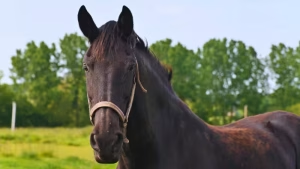
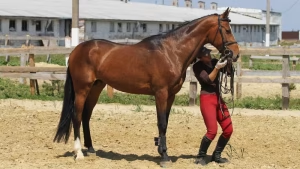
The Black Forest Horse (German: Schwarzwälder Kaltblut, and often called the Schwarzwälder Fuchs or “Black Forest Fox”) is one of Europe’s rarest and most photogenic light draught breeds. Native to the wooded uplands of Baden-Württemberg in southern Germany, it is instantly recognisable by its deep liver-chestnut coat and flowing flaxen mane and tail. Recent estimates put the global population at only around 700 to 1,000 breeding mares, which keeps the Black Forest Horse firmly on Germany’s list of endangered native breeds.
This breed profile covers where the Black Forest Horse comes from, how big it gets, what it is like to handle, what it is used for today, and what UK and South African buyers can realistically expect to pay. Whether you are weighing one up for carriage driving, light work or simply as a kind family horse – or you have spotted the breed in Star Stable Online and want the real story – you will find the practical detail here.
Table of Contents
Origins in the Black Forest
The Black Forest Horse can be traced to at least the 15th century, when farmers in the Schwarzwald were already breeding a chestnut, flaxen-maned working horse for forestry, light agriculture and timber haulage. The monastery of St. Märgen, in the southern Black Forest, is one of the recognised early centres of the breed, and well-kept monastic records help document its long history. The landscape shaped the horse: steep, wooded and snowbound for much of the year, the region needed a sure-footed, hardy animal rather than a tall, heavy artillery type.
The breed carries clear influence from the Noriker of the eastern Alps and from the cold-blooded horses of the Rhine valley. Local mares belonging to smallholding upland farmers were put to a small number of foundation stallions, and over generations the population spread across the whole Black Forest district. The official studbook has been maintained since the late 19th century, and the breed’s principal performance testing remains associated with the State Stud at Marbach – founded in 1573 and the oldest state stud in Germany.
Black Forest Horse Names and Regional Variants
The breed goes by several names, all describing the same population. Recognising them helps when reading German-language pedigrees or older bloodstock records:
- Schwarzwälder Kaltblut – the official German registry name, literally “Black Forest Coldblood”.
- Schwarzwälder Fuchs – “Black Forest Fox”, a colour-based name reflecting the liver-chestnut hue.
- Black Forest Coldblood – the standard English-language reference, used across international breed databases.
- Wälderpferd – an informal local term meaning simply “forest horse”.
In English, “Black Forest Horse”, “Black Forest cold blood horse” and “Black Forest Coldblood” all refer to the same animal – there is no difference between them.
How Rare Is the Black Forest Horse?
How rare is the Black Forest Horse? Genuinely rare. Like most European working draughts, the breed was pushed to the brink when mechanisation replaced horse power on farms and in forestry after the Second World War. Breeding-mare numbers fell to only around 160 by the late 1970s, and the breed was formally recognised as endangered.
Recovery has been steady rather than dramatic. Targeted breeding subsidies, a tightly closed studbook that protects the chestnut-and-flaxen colour standard, and renewed interest in carriage driving have since lifted numbers back to an estimated 700 to 1,000 breeding mares – the great majority in Germany, with small populations in Switzerland, Austria, the Netherlands and a handful of other countries. The Black Forest Horse is still classed as conservation-dependent: no longer in freefall, but a long way from secure. It sits alongside heritage breeds such as Britain’s own endangered Suffolk as a working horse quietly clawing its way back from near-extinction.
Black Forest Horse Size and Physical Characteristics
Compared with the Belgian or the Shire, the Black Forest Horse is a smaller, lighter draught – and that compact frame is exactly what allowed it to work the steep, wooded slopes of its homeland. The breed standard rewards soundness, balance and an even temperament over sheer bulk.
- Height: stallions stand roughly 150–160 cm (about 14.3–15.3 hands); mares 148–156 cm (around 14.2–15.1 hands).
- Weight: approximately 500–600 kg (1,100–1,320 lb) – notably lighter than most cold-bloods.
- Coat colour: almost always dark liver chestnut (“dunkelfuchs”) with a flaxen mane and tail; white markings are accepted only as a small star or snip.
- Conformation: strong, well-set withers, a broad chest and deep girth, a powerful sloping shoulder and a short, muscular back.
- Limbs: clean, dry legs with minimal feather, well-shaped hooves and strong joints built for upland work.
- Action: a free, ground-covering trot prized in the driving ring, and a calm, careful walk over rough terrain.
- Lifespan: typically 25–30 years, longer than many heavy draught breeds.
So how big is a Black Forest Horse in practice? At an average of around 15 hands it is a “light” draught – substantial and broad through the body, but closer to a large riding horse in height than to a towering Shire. That middle-ground size is a big part of its appeal as an all-rounder.
Temperament and Personality
Temperament is the single most cited reason people fall for the breed. Black Forest Horses are widely described as kind, willing and remarkably forgiving, even with novice handlers. They bond closely with their people, take new tasks in their stride and are far less reactive than a typical Warmblood. Star Stable Online, which added the breed to its game, memorably calls it a “Prince Charming in horse form” – a description that has introduced a whole new audience to the real animal and driven a noticeable rise in searches.
In practical terms, that makes a Black Forest Horse well suited to a confident teenager or a returning adult rider. It copes calmly with unpredictable surroundings and is rarely “sharp” in the way many sport-horse types can be. The honest trade-off is that this is not a fast or especially athletic horse, and expecting one to perform like a competition Warmblood is unrealistic.
What Are Black Forest Horses Used For?
The breed’s working role has shifted rather than disappeared. Today the Black Forest Horse earns its keep in four main areas:
- Carriage driving: the dominant modern discipline. The breed’s free trot and steady head make it a regular and competitive sight at driving events.
- Forestry and ecological logging: a small but growing number still work as Holzrückepferde (log-skidding horses) on protected woodland sites where machinery would cause too much soil compaction.
- Therapeutic and pleasure riding: the calm temperament and sure-footed gait make the breed a fixture at riding-for-the-disabled centres and a dependable hacking horse.
- Tourism and heritage events: carriage rides through the Schwarzwald and seasonal agricultural festivals keep the breed visible to the public.
Is a Black Forest Horse a Good Riding Horse? Pros and Cons
For the right home, yes – a Black Forest Horse makes a genuinely good riding and driving horse, particularly for leisure riders, returning adults and therapeutic programmes. It is less suited to riders chasing competition results in dressage or jumping. Weigh the pros and cons before you commit:
Pros:
- Exceptionally calm, honest temperament – forgiving of nervous or novice handlers.
- Sure-footed and hardy; an “easy keeper” that thrives on simple forage.
- Versatile: equally at home under saddle and in harness.
- Long-lived and generally sound, with few breed-specific health problems.
Cons and things to weigh:
- Not fast or naturally athletic – the wrong choice for serious dressage or show jumping.
- Genuinely hard to find outside Germany, so buying usually means importing.
- As easy keepers, they gain weight quickly on rich UK or South African pasture, raising the risk of laminitis.
- A true light draught: broad and powerful, so tack fit and rider size need thought.
Care, Health and Lifespan
The Black Forest Horse is famously hardy. Its mountain ancestry has produced an easy keeper that does well on relatively coarse forage and shrugs off cold weather. UK and SA owners should adjust their management accordingly – richer pasture and warmer climates call for careful weight monitoring rather than heavy feeding.
- Forage-led diet: good-quality hay or haylage with limited hard feed. Native-type breeds are prone to laminitis on rich spring grass – restrict grazing through late spring and early summer.
- Body condition: aim for a body condition score of around 5/9. Avoid over-rugging in winter unless the horse is clipped.
- Hoof care: strong feet that often work well barefoot; a six- to eight-week trimming cycle is typical.
- Health watch-points: few breed-specific problems. As with all cold-bloods, keep an eye on the lower limbs for chronic progressive lymphoedema (CPL), although the breed’s light feathering makes it less prone than heavily feathered draughts.
- Routine care: a standard vaccination and worming programme – tetanus and equine influenza cover, with faecal worm-egg counts through the year.
- Lifespan: commonly 25–30 years, with many continuing light driving work well into their twenties.
How Much Does a Black Forest Horse Cost? Buying in the UK and SA
How much does a Black Forest Horse cost? Because the breed is so scarce, price is driven far more by availability than by any settled market rate. As a rough guide, expect somewhere around €6,000–€15,000 for a started youngster bought in Germany, with trained driving horses commanding more. The UK population is very small – likely only a few dozen registered animals – so most buyers source directly from German breeders or through the Dutch and Belgian secondary market. Two practical routes:
- Direct from Germany: the regional breeders’ association in Baden-Württemberg maintains approved-stallion and breeder listings, and sales at Marbach State Stud are open to international buyers. This is the most reliable way to buy a horse with verified papers.
- UK secondary market: listings appear occasionally on general marketplaces such as Horsemart and the Horse & Hound classifieds, and within breed-specific groups. Always check pedigree against the official studbook before committing.
Import logistics add to the headline price. Bringing a horse into the UK post-Brexit typically adds around £2,500–£4,000 once transport, paperwork, health certification and quarantine are accounted for. South African buyers should be aware that the breed is virtually unknown locally, and that South Africa’s strict equine import health protocols and quarantine make importing a slow, expensive undertaking – budget generously and plan a long lead time.
Black Forest Horse vs Other German Draughts
Germany has several distinct cold-blood breeds, and the Black Forest Horse is the lightest and most rideable of them. This table shows how it compares with its closest relatives:
| Breed | Origin | Height | Typical Use | Coat |
|---|---|---|---|---|
| Black Forest Horse | Baden-Württemberg | 14.2–15.3hh | Light draught, driving | Liver chestnut, flaxen mane |
| South German Coldblood | Bavaria | 15.2–16.2hh | Heavy draught, agriculture | Bay, chestnut, black |
| Rhenish German Coldblood | Rhineland | 16.0–17.0hh | Heavy haulage | Bay, chestnut, roan |
| Schleswig Coldblood | Schleswig-Holstein | 15.2–16.0hh | Farm work, carriage | Mostly chestnut |
| Haflinger | South Tyrol / Austria | 13.2–15.0hh | Riding, light driving | Chestnut with flaxen |
For a British point of comparison, it is worth reading our profiles of the Suffolk horse and the Cleveland Bay – two heritage breeds that, like the Black Forest Horse, are prized precisely because they are now so rare.
Frequently Asked Questions
The Black Forest Horse rewards patience. It is a striking, gentle, ancient working breed that has come back from the brink of extinction to find a new life in carriage driving, therapeutic work and leisure riding. For anyone after a kind, unflappable all-rounder – and willing to do the legwork of tracking one down – it is a quietly remarkable choice, and a living piece of southern Germany’s agricultural heritage. To learn more, read on with our full library of rare and heritage breed profiles.
Further reading: Black Forest Horse (Wikipedia) and An Uncommon Draft: The Black Forest Horse (Kentucky Equine Research).